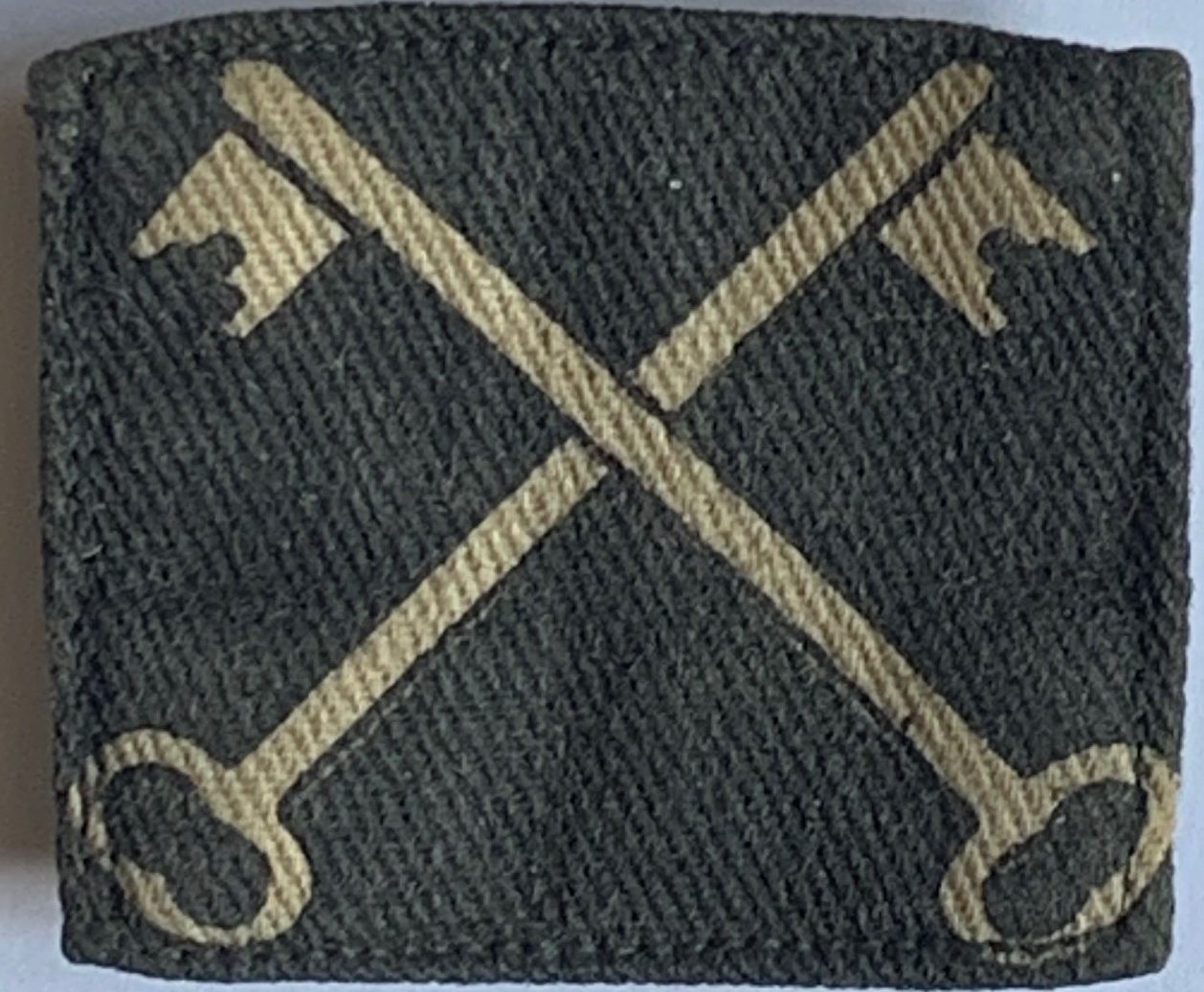

Charles Pawsey
In 1944, Charles Pawsey was Deputy Commissioner for the Naga Hills. As such, he was responsible for colonial administration of 6,400 square miles of territory (80% the size of Wales), home to more than 40,000 indigenous people, the Naga. Pawsey cared deeply about the welfare of these people, to whom he showed a deep empathy that they recognized & valued. He spoke their lingua franca fluently & travelled amongst them by mule, acting as magistrate to settle disputes.

Pawsey was born in Surbiton in 1894 & matriculated in 1913 to study classics at Wadham College, Oxford. He volunteered when war broke out & was commissioned to join 1/8 Worcestershire Regiment in France in 1915. He was awarded the Military Cross, for repeatedly crawling into no-man’s-land in broad daylight to rescue the wounded, until caught in a gas attack & invalided from the front. He received a bar to this MC in 1916, for his conduct on the Somme. In 1917, his unit was transferred to the Italian front, where he was captured by the Austrians in a melee on the Asiago plateau, above Lake Garda. He remained a prisoner-of-war until the Armistice.
Despite his absence from Oxford, Pawsey was awarded a degree in 1918 as Declared to have Deserved Honours (DDH), a system that persists to this day. He joined the Indian Civil Service in 1919 & became Deputy Commissioner for the Naga Hills in 1935.

Pawsey worked with eminent anthropologists & took many photographs of the people around him & how they lived.

He was based in Kohima, living in a spacious wooden bungalow with a red tin roof, surrounded by rhododendrons.

Behind the bungalow, a series of terraced gardens, with a tennis court & club house, rose to a hill with a summerhouse. In 1944, the hill was dubbed Garrison Hill, the tennis court was bitterly contested, & the bungalow reduced to rubble.

As a civilian, Pawsey had been invited to leave Kohima before the Japanese arrived. He insisted on staying, believing this an important demonstration to the Nagas that the British would not abandon them. He based himself on Garrison Hill & displayed inspiring courage by calmly visiting the troops in their trenches, despite the constant danger from snipers. In a trilby hat, carrying an umbrella and escorted by two Nagas, Pawsey made a strong impression on Private Ray Street of the Royal West Kents:
“He was a kind chap & moved around the hill lifting our spirits as he moved between our trenches & Battalion HQ. He stopped & talked to us saying that relief would get through & told us not to worry too much … He seemed without fear of bullets & shells as he strolled along in the open, as if defying the enemy.” (6)
After the siege of Kohima was lifted, Pawsey moved to Dimapur to organise aid for the Nagas who had been displaced from their homes by the war. When the fighting moved away, he oversaw the rebuilding of Kohima & creation of its war cemetery. He conveyed to the Nagas the gratitude of Lieutenant General Slim & presented to them Lord Mountbatten, Supreme Commander, South East Asia.

Charles Pawsey was knighted in 1948, became Companion of the Indian Empire and received the Star of India. He settled in Suffolk as a gentleman farmer & married in 1954, at the age of 60. He always maintained a close interest in the unsettled politics of the Naga Hills, which he visited again in 1965 to assist in negotiations.

An excellent webinar by Stephen White about the life of Charles Pawsey can be found on the Kohima Educational Trust website by clicking here.
Robert Scott
At the Battle of Kohima, 2nd Battalion Royal Norfolks was commanded by Lieutenant Colonel Robert Scott, a larger-than-life character who had been wounded during the First World War & subsequently lost an eye whilst serving with the Palestine Police. He was promoted Battalion Commander in 1943, an appointment that was not universally welcomed. Sergeant Bert Fitt recollected:
“The officers used to shake in their shoes where he was concerned.” (19)
Scott’s second-in-command, Major Henry Conder, described him as:
“An Elizabethan born out of his time. He was very well read. Carried a pocket Shakespeare in his top pocket. Very fond of poetry. Hard-drinking, hard-swearing. An amazing leader who led from the front. He trod the battlefield like a great actor treads the stage.” (19)

Scott’s leadership was most evident on May 4th 1944, when the Norfolks stormed onto Transport Ridge, without waiting for the pre-arranged bombardment. Lieutenant Sam Horner, Signals Officer:
“Robert Scott decided, absolutely rightly, that the momentum was being lost & he kept it going. The battery commander said ‘What about the guns?’ ‘No, no. Forget it, we’ll just get straight on through.’ He ran off with A Company, who were then spearhead, & practically led the assault.” (2)
Sergeant William Robinson of A Company:
“Bob Scott lined us up with Bren-guns, a sling over our shoulders taking the weight & a man behind us with extra ammunition. All he had was a pistol & his khud stick. His famous words were ‘Right-ho boys, let’s go!’ That was it. The instructions were to fire at everything, spraying some down, some up & forward because there was a bunker there. Up to that time I hadn’t seen any Japanese at all. But in this semi-clearing several got up & started running away. They didn’t get far because the fire power was terrific, about twelve Bren guns. The bunker was taken.” (2)

Captain John Howard, 4 Brigade Intelligence Officer, described Scott that day:
“His foghorn voice, roaring encouragement & hurling abuse, could be heard above the sound of battle. (19)
He was about six foot two & very big. His huge boots covered in mud. His trousers covered in dried blood. He had grenades, a pistol & his dagger hanging round his huge waistline. He’d acquired a silk Japanese flag which he was using as a scarf. Like the rest of us, he had four or five days of beard & a bandaged head & his tin hat had a ragged bullet hole in it. His bravery was magnificent.” (11)
Scott was “vast in size & character”, leading from the front with “boundless enthusiasm & vigour”, disregarding his own safety. Bert Fitt observed his indifference to a narrow escape:
“When Scott got scalped by a grazing bullet, he shook his fist at the Japanese, saying ‘The biggest bloke on the damn position & you couldn’t get him. If you were in my bloody battalion, I’d take away your proficiency pay’.” (2)

Scott was eventually felled on May 28th, during Operation York to take the Aradura Spur. It was an attack the Norfolks believed was bound to fail, climbing through dense jungle up the steep slope to Charles Hill. As they neared the crest, Japanese machine-guns opened fire, pinning the Norfolks down. Company Sergeant Major Walter Gilding was close to Scott at the time:
“The leading lads got to within 20 feet of the top of the hill, but it was murder. Robert Scott was with the leading troops, throwing grenades like the clappers. I had the sten-gun & I was firing, scrambling up, grabbing hold of a tree, firing the Sten-gun, going a little further, & encouraging the lads. All this shouting & swearing! There was nothing to see at all, you couldn’t see bunker slits or anything as they were too well concealed.” (11)
Lieutenant Franses:
“A Japanese grenade came down towards Robert Scott & I think he decided to kick it away. He misjudged slightly, it went off & brought him down.” (11)

Private William Cron gave covering fire as Scott was wrestled onto a stretcher:
“I had a go at the Japanese with my Bren-gun to keep their heads down. If somebody hadn’t fired on the bunkers they’d have popped Scott & the stretcher bearers off. I got one through the arm – it didn’t do much harm – it didn’t stop me from carrying on firing. By that time they’d got the old man on to the stretcher & were getting him down into cover.” (11)
Bugler Bert May:
“I saw him on a stretcher coming down. He was shouting & cursing because the lads wouldn’t let him get off the stretcher! But he couldn’t, a hand grenade had landed at his feet & he was peppered all over with shrapnel. It took about eight blokes to carry him. You can imagine the weight of him because he was a big bloke & the ground itself wasn’t given to carrying stretchers up & down. I got the side of the stretcher & carried it, helped to keep him on. But he was doing his nut, shouting blue murder! We got him down & took him to the first aid post.” (11)
6 Brigade Major David Wilson saw Scott later:
“Robert, covered with blood, passed through 6 Brigade, where I met his stretcher party. He was not pleased at being put out of the battle. ‘David,’ he said, ‘I’m too old for this ridiculous war’.” (11)

On May 26th, two days before Scott was wounded, Major General Grover submitted a recommendation that he receive the Victoria Cross:
“At Kohima Assam on 4-6 May 44, for most conspicuous gallantry, devotion to duty & disregard of danger, when commanding 2nd Btn The Royal Norfolk Regiment in their attack on G.P.T. [Transport] Ridge.
During the advance down G.P.T. Ridge on 4 May, the leading company, accompanied by Col Scott, … came under heavy L.M.G. [light machine gun] & snipers fire on a narrow jungle path – Many were hit, & the remainder seemed momentarily dazed – Col Scott got up, & walked slowly forward, cheering & encouraging his men to shoot back. By his personal example & disregard for his own safety, he undoubtedly imbued the attack with fresh impetus, & turned what might have been a disaster into an unqualified success.
Later, during the second bound, he was again up with his leading troops, laughing & cheering them on by waving a Jap sword which he had captured – By his immediate & brilliant grasp of the situation, & by sheer force of personality, he turned a sticky beginning into an overwhelming victory.
Throughout the operations, Col Scott was suffering from a form of dysentery & during consolidation & for the following two days, when under heavy mortar fire & sniping & although hit in the head, Col Scott carried on & kept his men & the Bde [Brigade] calm & steady by his personal example of leadership confidence & utmost contempt of danger.
Brig. Goschen reported to me personally on 6 May that he considered the success of the advance of 2 Norfolk onto the vital high ground of G.P.T. Ridge was mainly due to the magnificent & fearless leadership of Lt. Col. Scott.
The capture of the dominating GPT Ridge … was, I consider, the key to the whole of the subsequent operations for the capture of Kohima.”


Three independent reports supporting Grover’s assessment were attached to the recommendation. However, Lieutenant General Slim, Commander of 14th Army, downgraded the award from Victoria Cross to Distinguished Service Order.

The photograph & cartoon of Robert Scott, as well as some of the quotations above, are from an excellent webinar by Steve Snelling, that is available on the website of the Kohima Educational Trust (19).
Bert Fitt
Sergeant Bert Fitt was in charge of 9 Platoon of B Company, 2 Royal Norfolks, during the Battle of Kohima.
“I was happy as a platoon commander. I was prepared for a good scrap, if there was one coming along, & I didn’t fear anything or anybody. I was keen to learn & I was also keen to try & protect the men under my command. I wanted to go into battle with thirty men & come out with thirty men. That was my idea & as far as leadership was concerned, I never asked troops under me to do what I couldn’t bear or wouldn’t do myself. I wasn’t frightened. About a couple of minutes before the attack, you’d get a sick feeling in the stomach. But immediately you moved, that sick feeling goes away altogether as far as I was concerned. Everybody, I don’t care who he is, is nervous to a certain extent before a battle. But when it starts then you’ve got one thing in your mind, it’s either you or the enemy, but somebody’s going to get killed. At the back of your mind it’s the enemy, not you or your men.” (2)
Fitt’s platoon was part of the company commanded by Captain Jack Randle on 6th May 1944. Fitt left an eye-witness account of Randle’s death attacking the ‘Norfolk Bunker’ complex on Transport Ridge. Indeed, Fitt’s part in the attack was equally heroic:
“The plan was to attack the Norfolk Bunker from the front. It consisted of about seven or eight bunkers. My platoon was spearhead in attacking the centre & 12 platoon was on the right. Number 10 platoon was in reserve with a support platoon consisting of machine gunners & so forth. (2)
The Japanese had two light machine-gun posts which were carving us up terribly. Captain Randle had already been hit at least twice, fairly heavily in the upper part of his body, before we even got to the bottom. I shouted to him to go down & leave it to me, because I could see that he’d lost blood. He said ‘No! You take that left hand bunker; I’m going to take this right hand one.
The Japanese didn’t realise that I was coming up the slope ‘underneath’ them. I managed to push a grenade in through the slit & after four seconds it went off. Anybody inside that bunker was either dead or knocked out.
I immediately spun right. I saw Captain Randle at the bunker’s entrance. He had a grenade he was going to release into the bunker. I just stood there. I couldn’t do a thing to save him. If he could have held out for about three minutes, I would have got on top of the bunker & knocked it out without getting hurt. But unfortunately, he had been hit again at point blank-range. As he was going down he threw his grenade into the bunker & he sealed the bunker entrance with his own body. But he had got the occupants, killed them.
It was the main gun position & I am certain that’s why he went for it. He knew that if he didn’t knock it out it would be lights out for the rest of us. It was a quite deliberate act to block the opening of the bunker to save the remainder of the men. In doing so, he was unfortunately killed.” (11)

Bert Fitt can be seen running to help him.
Sergeant Fitt charged 15 yards to the next bunker, where he threw in a grenade & shot a Japanese. He was then shot by someone outside his field of vision:
“He had come out of the back door of the bunker behind me. He got me through the side of the face under my jaw, took my top teeth out, fractured my maxilla & the bullet burnt along the side of my nose. I spat out a handful of teeth. He was only a few paces away. He had a rifle & bayonet & I had a light machine-gun. I pressed the trigger but found I’d got no ammunition left. He came towards me. I was an unarmed combat instructor & knew I could go hand-to-hand against anybody with a rifle & bayonet. I therefore let him come & I crashed the gun straight into his face. Before he hit the ground, I had my hand on his windpipe & I tried to tear it out. I then managed to get the bayonet from his rifle & I finished him with that.
As I stood up, I heard a shout from 12 Platoon telling me that they were pinned down by another bunker I couldn’t see. They told me where it was. I threw a grenade over the top of the bunker & a chap who could see it yelled back a correction. I threw a second one that bounced straight into it, killing the occupants.”
A fresh Norfolk platoon appeared, led by Second-Lieutenant Davies. Fitt told him that he couldn’t continue:
“I had been bleeding heavily & the front of me was pretty red with blood. I was getting weak, so I said to him ‘Well you’d better take over now, Sir.’ I went & sat just inside a bunker. Eventually someone put a field bandage around my head.” (11)
Sergeant Fitt was evacuated to the Regimental Aid Post.
“At the RAP I met Colonel Scott. The first words he said to me was ‘They got you then, Fitt?’
‘That’s right, sir.’
‘Let’s have a look.’
The MO removed the field dressing. Colonel Scott stood in front of me & he went
‘Ho, ho, ho! You never were any bloody oil painting.’ ” (2)

Bert Fitt is in the front row, third from right.
Bert Fitt received the Distinguished Conduct Medal for his conduct at Kohima, which he is seen wearing in the photograph below. He went on to become Regimental Sergeant Major.

After the war, Bert Fitt served with 2nd Holding Battalion of the Norfolk Regiment, 1945-1947, and the East Anglian Training Brigade, 1947-1948. From 1948 to 1953, he served with 1st Battalion Norfolk Regiment in West Germany, Korea & Hong Kong. He ended his proud service as Regimental Sergeant Major at the Norfolk Regiment Depot at Britannia Barracks, Norwich, 1953-1959.
The pictures in this post come from an excellent webinar by Steve Snelling about the Royal Norfolks at Kohima, which can be watched on the website of Kohima Educational Trust.
John Young
John Young was born in Glasgow in 1919. He became a bank clerk after leaving school, but joined the army in May 1939. He rose quickly to the rank of Sergeant in the Glasgow Highlanders & then was commissioned into the Argyll & Sutherland Highlanders in 1941.

After completing his officer training, Young was placed in charge of a unit sailing to India in 1942. There he was seconded to the newly-formed Assam Regiment.

In March 1944, 400 men of 1st battalion Assam Regiment were ordered to defend to the last man & the last bullet the approaches to Kohima. They included Lieutenant John Young, now known as Jock, who was placed in charge of the 120 men of A Company, as an Acting Captain. Although most of the Assams were situated at the Naga village of Jessami, A Company was sent 9 miles south to the village of Kharasom. There they prepared defensive positions, with deep trenches protected by barbed wire.

At daybreak on March 27, a battalion of Japanese reached Kharasom. They approached complacently, evidently unaware that the village was defended, until their front ranks were scythed down by fire from the Assams. Young phoned the command post at Jessami to report that Japanese were approaching his positions & that they had just opened fire. He said he could see along the track what he estimated to be at least a battalion of Japanese with mules & elephants dragging artillery. Shortly afterwards the phone line was cut.

Three Japanese assaults before nightfall were repulsed with heavy losses. The defenders sustained some casualties, but their defences were not penetrated. Attacks continued for the next 3 days, with mounting losses to the Assams.

By March 30, food, water & ammunition were running low. The arrival of fresh Japanese troops convinced Young that his position would soon be overrun. To preserve the lives of his troops, he ordered them to sneak off after nightfall, whilst he remained with those too severely wounded to move. In so doing, he would comply with the order to fight to the last man. This instruction had in fact been rescinded, but the news had not reached the isolated outposts at Kharasom & Jessami.
After beating off a night assault, all Young’s troops who were capable of leaving slipped away quietly. Young remained at Kharasom & was last seen on the fire step of his bunker, beside a wounded sepoy with a Bren gun. They were piling magazines & grenades on the parapet. Nagas reported hearing gunfire & explosions at dawn, but it did not last long. Neither Young nor his wounded men survived.
The Japanese were greatly impressed by Young’s conduct & buried him with the rituals traditionally accorded to an honoured samurai warrior. He was later reinterred in Kohima War Cemetery.

Of the 120 Assam troops who had fought at Kharasom, 56 made it back to Kohima two days later. There, they made a substantial contribution to the defence.
With regard to Young’s conduct at Kharasom, Colonel Hugh Richards, Garrison Commander at Kohima, wrote:
“As an example of complete self-sacrifice, nothing could be more magnificent.” (8)
Nevertheless, John Young was not recommended for a medal. No explanation for this omission has been recorded. He has, however, been honoured more recently by a bagpipe lament in his name & a memorial stone outside his home in Glasgow.

An excellent webinar by Robert Lyman & Roy McCallum about John Young and the 1st Assams at Kharasom can be found here.
William ‘Bruno’ Brown
William Felix Brown was born on 29th January 1899 in Cambridgeshire, England. He was educated at Dulwich College, London, before joining Cadet College, Quetta, & then the Indian Army in September 1918, as a Temporary Second-Lieutenant.
His early military career saw him in action on the North-West Frontier, where he was Mentioned in Despatches. He was promoted in 1923 to Captain with the 2nd Battalion of the 8th Punjab Regiment & then to Major in 1936. By this time, he was married with two daughters.
In March 1941, Brown was sent to help form the Assam Regiment in Shillong, Assam. The recruits came from the many hill tribes in the area & it was the first regiment to recruit solely from the state of Assam. On its inauguration in June 1941, Brown was second-in-command to Lt Col Ross Howman.

The Regiment was tasked with defending the oil fields at Digboi. Brown took command in December 1941, when Lt Col Howman was promoted & moved to Delhi.
In 1942, the Assams helped protect the rearguard of Alexander’s withdrawing Burma Army as it filed back into India at Tamu.
After Burma had been conquered, the Assam Regiment carried out patrols across the Chindwin River, to determine Japanese positions & find suitable drop zones for Chindit operations. Conditions were harsh & many succumbed to disease, in particular cerebral malaria. The ranks were so depleted by March 1943, that the Regiment was recalled to Digboi to recover & refit.
In February 1944 they were ordered forward to patrol the remote Somra tracts, near the border with Burma, to gather intelligence of Japanese activity. In the event of contact with the enemy, the Assams were ordered to “fight to the last man & the last round.” They dug in at the Naga villages of Kharasom & Jessami, which lay in the path of the Japanese 31 Division on its way to Kohima.

Kharasom was garrisoned by A Company of the Assam Regiment, under command of Captain John Young. They fought off large numbers of the invaders from 27th to 31st March. When it became clear that they would soon be overrun, Young ordered his men to escape, but remained with the wounded who could not be moved. The Japanese were impressed by the heroic way he died & buried him with rituals befitting a great warrior. More details can be found here.
At the same time, Lt. Col. Brown was commanding the defence of Jessami, which was attacked on 28th March. As described here, the Assams held out for 5 days against superior numbers of enemy, until ordered to withdraw to Kohima. Brown & his men left Jessami at midnight on 1st April & marched 77 miles in 39 hours, fighting off ambushes as they went.
Col. Richards, the Garrison Commander at Kohima, wrote that
“The arrival of Col Brown & his men marching in with their heads held erect was one of the finest sights of the battle. Until his arrival, no one knew what had happened to him.” (8)

There was little time for the Assams to recover. They soon were needed to fight off the 15,000 Japanese of 31st Infantry Division. 1st Assam Regiment provided 260 of the 1,500 combatants during the siege of Kohima, April 5th to 20th, alongside 446 Royal West Kents, about 200 Assam Rifles & several smaller units.
By early morning of April 17th, the Japanese were gaining ground up the southern slope of Supply Hill, having overrun the forward trenches. Lt Col Brown personally led 3 platoons of Assam Regiment & Assam Rifles, under heavy mortar fire, to relieve the exhausted & depleted West Kents, who fell back to Garrison Hill. Some were dizzy & shaking from the battering they had received.

At last they were relieved. As they left Kohima Ridge on April 20th, Lieutenant Donald Elwell of the Assam Regiment remembered that
“The air above our heads was full of the song of bullets, which seemed to come from another world to that we were leaving behind.” (11)
But once again the relief was short-lived. After just 24 hours of rest, 1st Assam was thrown back into the struggle & fought on until June, when the battle ended. They were then allowed to rest & refit at their base in Shillong.
Lt General Slim, Commander of 14th Army, wrote to Brown:
“It has been through chaps like you & your troops that we have won our victories & I am more grateful to you all than I can say. You may be the youngest unit under my command, but you’re pretty precocious!”
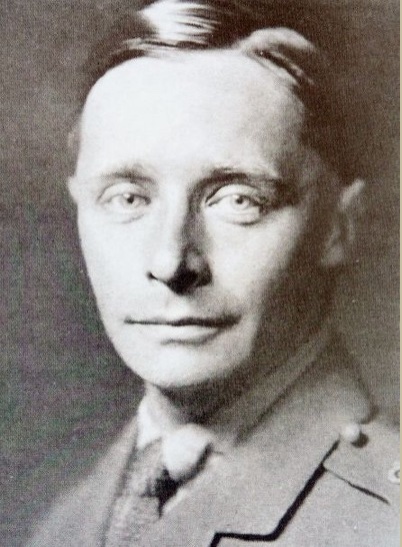
The inspiring role that he had played earned Brown a much-deserved Distinguished Service Order. The citation read:
Lieutenant Colonel BROWN’s battalion occupied positions at the villages of JESSAMI and KHARASON, some sixty miles East of KOHIMA, in order to prevent the enemy’s advance from that direction. On 28 March, the enemy attacked in force; these attacks continued daily and though unsupported, Lt-Col BROWN continued to fight his battalion with no thought of withdrawal, thereby imposing many valuable days of delay on Japanese forces advancing against KOHIMA. Many attempts by air and runner to order Lt-Col BROWN’s battalion to withdraw failed; eventually an officer of the Assam Regt succeeded in getting through the Japanese lines with orders to withdraw. Lt-Col BROWN by his resourcefulness, succeeded in extricating his battalion and in leading a large portion of it through successive Japanese ambushes to concentrate at KOHIMA and continue to fight. Throughout the whole of these operations this officer’s leadership, initiative, courage and unfailing cheerfulness in adversity instilled in all ranks under his command a high spirit and devotion to duty for which no praise can be too great.

In September 1944, 1st Assams were called forward again & placed in the vanguard of the 14th Army’s advance into Burma. There they fought with distinction until the Japanese surrendered a year later. But Brown did not survive to see this.
On 4th January 1945, after a night march near Shwebo, mopping up Japanese stragglers, 1st Assams came under unexpected fire from a village that was thought to have been secured. Brown went to the front of the column to see what was happening. As he approached, Major Marsden called out “For God’s sake get down” whilst pointing to a nearby victim of a Japanese sniper. But the warning came too late & Brown was shot dead a moment later, with a bullet through his chest. He had been hours away from handing over his command & taking leave in England to see his family. He is buried in Taukkyan War Cemetery in Myanmar.

Rest in Peace.
Ursula Graham Bower, Queen of the Nagas
Ursula Graham Bower was born in London in 1914. Her father commanded a submarine during the 1st World War, winning a DSO for his conduct.
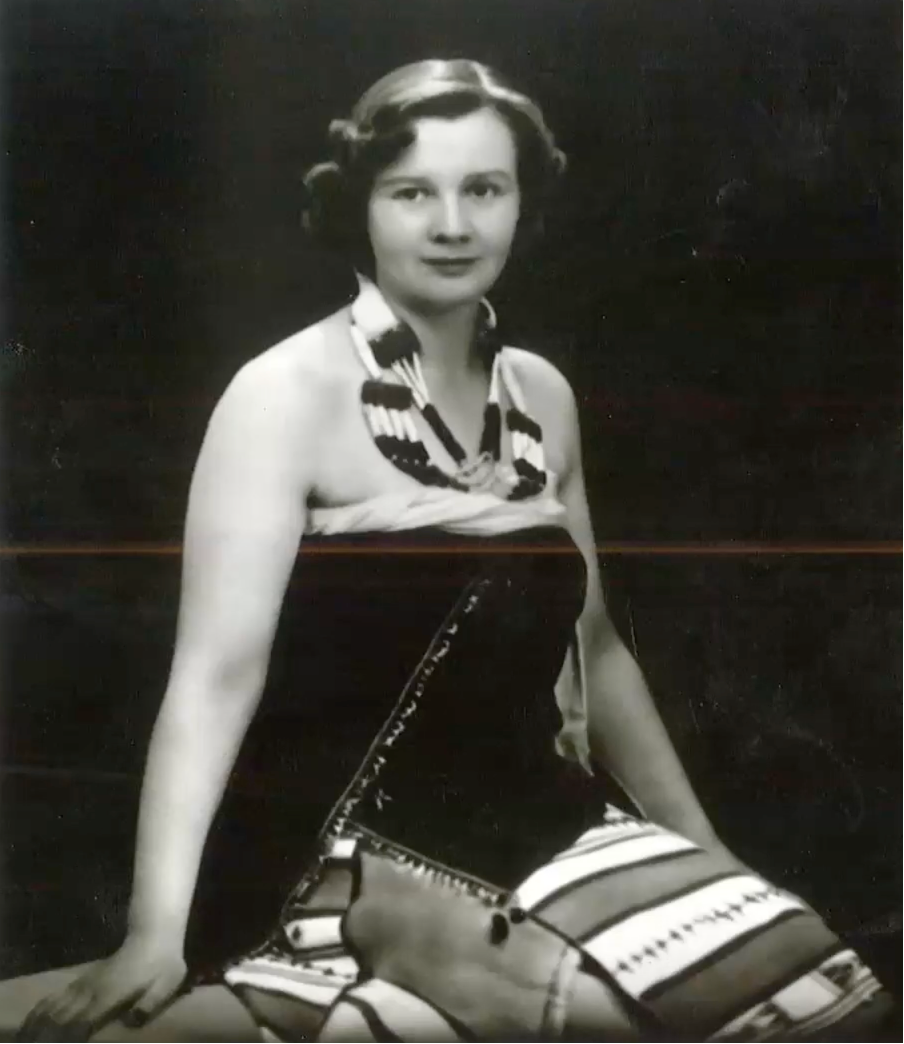
At the age of 23, Ursula Graham Bower seized an opportunity for adventure & travelled to Nagaland, where she became fascinated by the indigenous people.

Supported by her dress allowance, she worked as an amateur anthropologist, living amongst the Naga & studying their ways. Many of them believed that she was a local religious figure reincarnated.

When the Japanese captured Burma, the British established a Watch & Ward network of frontier scouts along the border with India. Graham Bower was invited to join the network with a group of Nagas & given the rank of acting captain. To avoid capture, they lived in the jungle. The Japanese knew about her & put a price on her head. She described her arrangement to prevent reprisals against Naga suspected of concealing her.
“My parents could not afford to send me to Oxford, so instead I went to live among the Naga tribes and carried out ethnographic work. When war broke out I … helped start a Watch and Ward scheme in Nagaland. My job was to collect information on the Japanese and send it back by runner. But it had problems. There was no hope I could conceal myself in the Naga village. I am too tall and light skinned. In Burma when British officers were occasionally hidden, the Japs tortured the villagers until the officer gave himself up. I fixed up with Namkia, the headman, that I wasn’t going to be taken alive. So I would shoot myself, and he would take my head in, if the pressure on the villagers became unendurable”. (2)
The Watch & Ward network was stood down in November 1944, when the Japanese threat was considered to have ended. Namkia was awarded the British Empire Medal for his role in the war effort.

Graham Bower’s exploits grabbed attention from the press, who dubbed her ‘Queen of the Nagas’. A comic strip appeared in Time magazine that was loosely based upon her story.

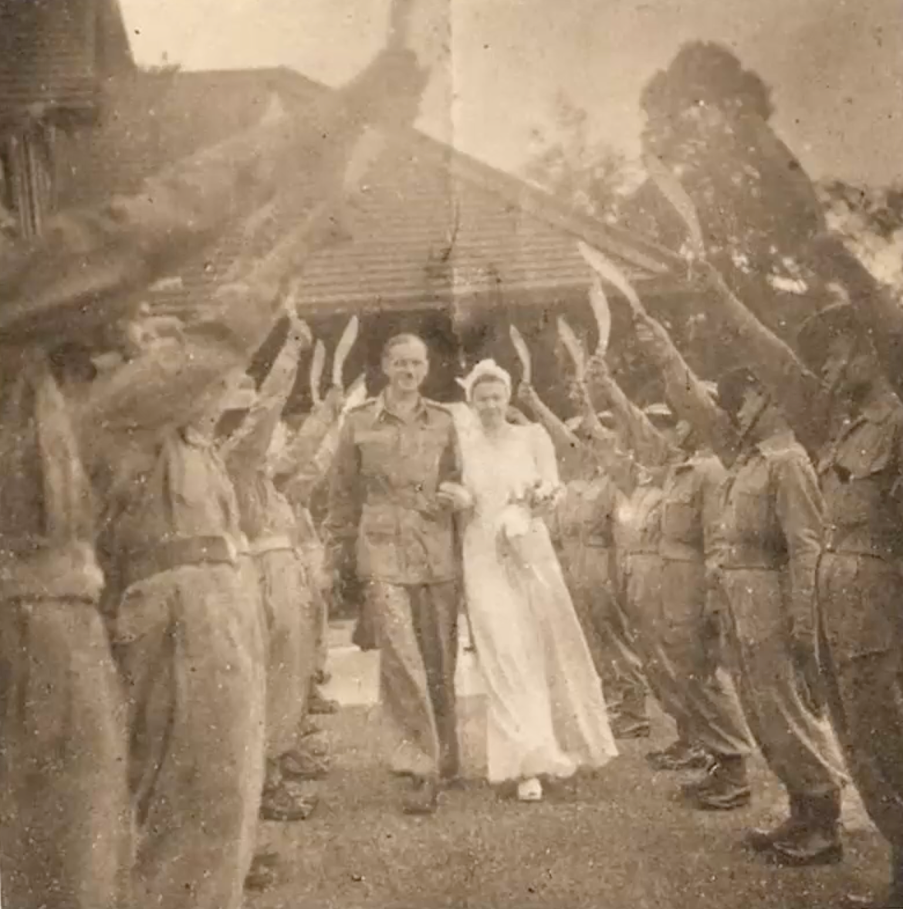
Immediately after the war ended, Graham Bower married Lieutenant Colonel Betts, a British officer from the V Force intelligence-gathering organisation. They had only known each other for three weeks.

When Ursula Graham Bower died in 1988, three Nagas were pall bearers at her funeral in Hampshire, England.

An extensive two-part interview of Ursula Graham Bower, filmed in 1985, can be watched here (part 1) and here (part 2).
Masao Hirakubo
Masao Hirakubo joined the Imperial Japanese Army in 1942.

“At the beginning of the war I was a very right-wing nationalist. Everybody was at that time. Everybody intended to give their lives for the nation.
The official purpose of the war was to chase the colonial powers out of the Far East.
We were told that the British & Americans were animals, with hairy bodies. We used to call them monkeys because they had hairy chests, unlike most Japanese men.” (18)

Hirakubo became a Supply Officer in the 3rd Battalion of 58th Infantry Regiment, part of 31st Infantry Division that attacked Kohima in April 1944.
“I was told there was no plan to supply food from the rear. It was left to me to concoct enough food for 1,000 men. Where was I to get it? From the sky? From the villagers? From the enemy? From that point on, my belief in the government & the Army was completely destroyed.
After Kohima we were saved by our commander, General Sato, who decided to retreat even though his superior General Mutaguchi said we should keep fighting to the last man.” (18)

The retreat was gruelling & by the time Hirakubo had crossed the Chindwin, he was too sick to travel further & was left behind. His orderly & local Burmese cared for him.
“My Battalion reached the Chindwin River. We were not allowed to cross it, but ordered to travel south alongside it before going west to support other units trying to escape. I was at the rear of the Battalion & still responsible for finding them food, so went across the river towards a food depot. That night I had a temperature of 40 degrees. I found the depot that morning, but had no men to transport any food to the Battalion somewhere on the other side of the river. I was then so ill I had to lie down. I could not move. By a miracle, my orderly found me seven days later & looked after me for another thirty days. Meanwhile we managed to contact the battalion, who then arranged to collect some supplies from the depot. I then was fit enough to walk east with my orderly until we reached a railway line. This took a month, sleeping in Burmese village huts, looked after by the Burmese who gave us food & sometimes primitive medicine, usually refusing payment, possibly because they were Buddhist. We finally managed to rejoin the battalion at Shwebo.” (11)
Repatriated from Burma in 1946, Masao Hirakubo returned to his family home in Yokohama, but found it had been destroyed by Allied bombing.

Eventually, he tracked down his father to Tokyo.
“We met at Shinbashi station, but he couldn’t recognise me. I was muddy & my face was thin & he just didn’t realise it was me.
I told him he had been right about the war. He had always said Japan was a trading nation. He said we had no natural resources, but by trading we could buy anything, even iron ore & coal. He said trading nations must not use military power & we could not win a war with the British & Americans.” (18)
His former employer, Marubeni, re-employed him & he worked in their Tokyo branch, before eventually moving to Britain as a company representative. It was then that he began a mission of reconciliation with his former enemies, the British.

British veterans visited Japan with Hirakubo & were shown great kindness by members of the All Burma Veterans Association of Japan, who in turn sent parties to Britain that were escorted by members of the Burma Campaign Fellowship Group. Acts of reconciliation took
place at Kohima & Imphal, Westminster Abbey, Canterbury & Coventry Cathedrals, & also in Japan & Burma.
Hirakubo went back to Kohima many times. In 1984, he brought a group of Japanese 31st Division veterans to the British 2nd Division annual reunion in York, where they laid a wreath at the Kohima Memorial.

They also visited the Kohima Museum.

In May 2004, to mark the 60th anniversary of the Battle of Kohima, wreaths were laid on the Indian Divisions’ Memorial in the Royal Military Academy, Sandhurst, jointly by the Japanese Ambassador, the Commandant, Masao Hirakubo, representing Japanese veterans, & Patric Emerson, representing British & Indian veterans.
Masao Hirakubo was honored by his Emperor & also at Buckingham Palace, where he received an honorary OBE.
