In 1942, the British colony of Burma was conquered by the Imperial Japanese Army. Decisively beaten, the battered defenders withdrew across the border into India. It was the longest retreat in British military history.
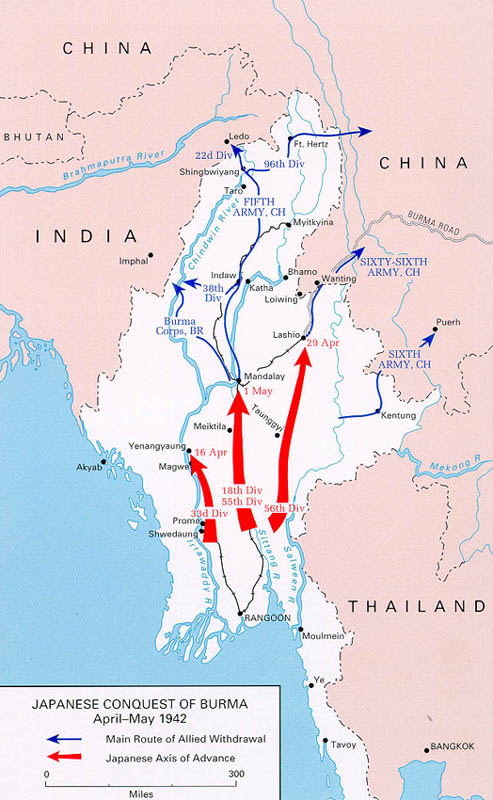
Burma was of great strategic significance, because it provided access to China for US supplies. China had been at war with Japan since 1937 & this tied down 1 million Japanese troops. The USA sent huge quantities of supplies to support China in this war. By conquering Burma, Japan cut this crucial line of communication. Supplies could only be sent by air from India, which was hazardous & inefficient.
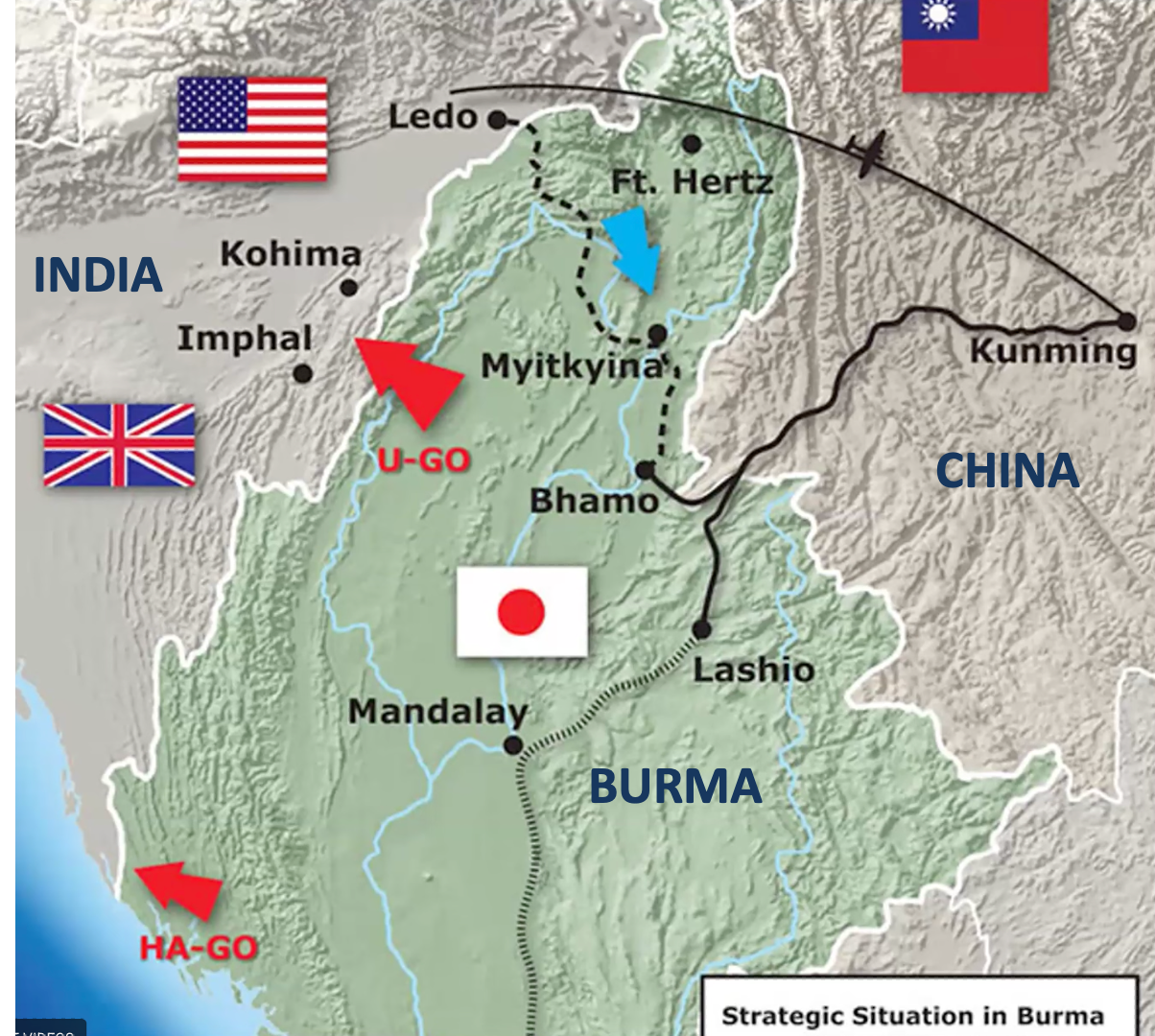
In 1944, Indian 4th Corps was assembled around the town of Imphal, close to the border, with the intention of invading Burma. However, the Japanese launched pre-emptive strikes to destroy this invasion force. They called this offensive U-Go, & preceded it with a diversionary attack near the coast (Ha-Go).
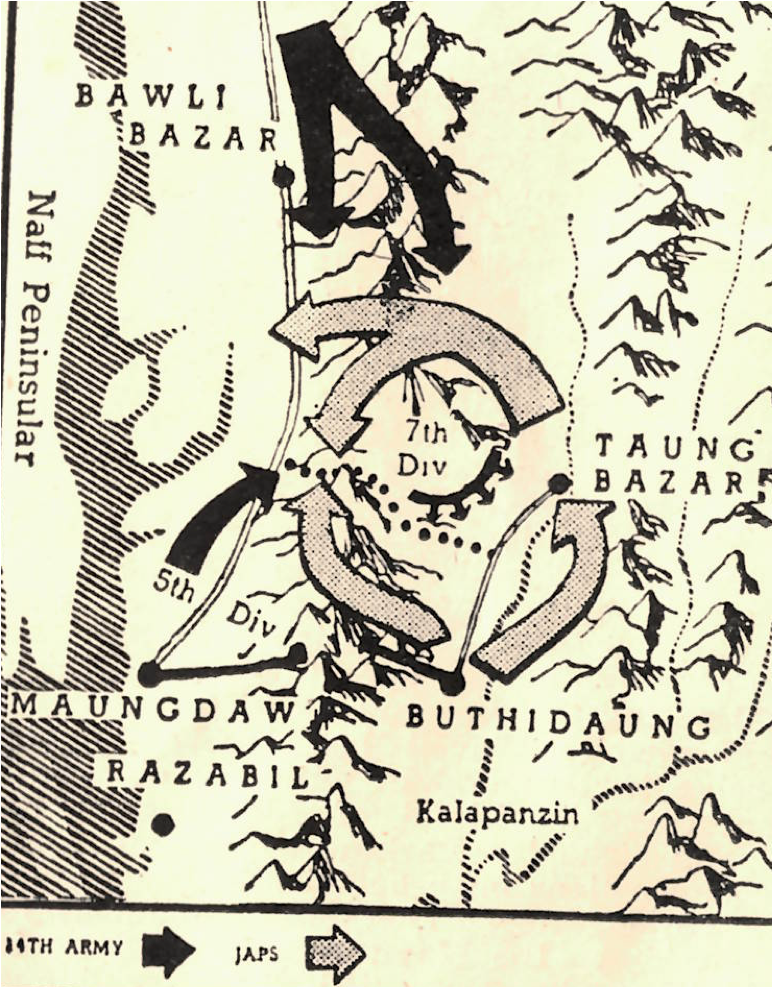
On February 4 1944, a stealthy nightime attack took the isolated 7th Indian Division completely by surprise. Its HQ was overrun & survivors fell back to a store depot known as the Admin Box, which was quickly surrounded. For 18 days, the Japanese hurled themselves against the Box from all sides, desperate to capture the supplies it contained. Beaten off each day with staggering losses, they were forced to retreat when 5th Indian Division broke through to relieve the Admin Box. The Japanese left 5,000 dead behind them.
Army Commander Lt General Slim enthused that this battle was “one of the historic successes of British arms. It was the turning point in the Burma Campaign.” At last, British & Indian troops believed that they could beat the Japanese. (24)
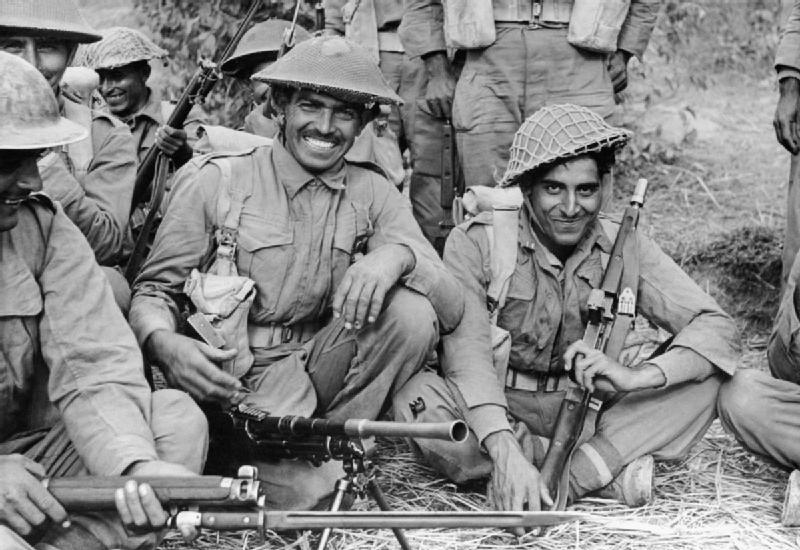
Despite their defeat at the Admin Box, the Japanese went ahead with their U-Go offensive. In early March, two divisions were launched against 4th Corps at Imphal & a third division was sent to Kohima.
The Allies were slow to respond & 4 Corps reserve was sent south to avert a crisis. This left Imphal exposed to attack from the north by the Japanese 15th division. Fortuitously, 50th Indian Parachute Brigade had been training to the north east of Imphal, near the village of Sanshak.
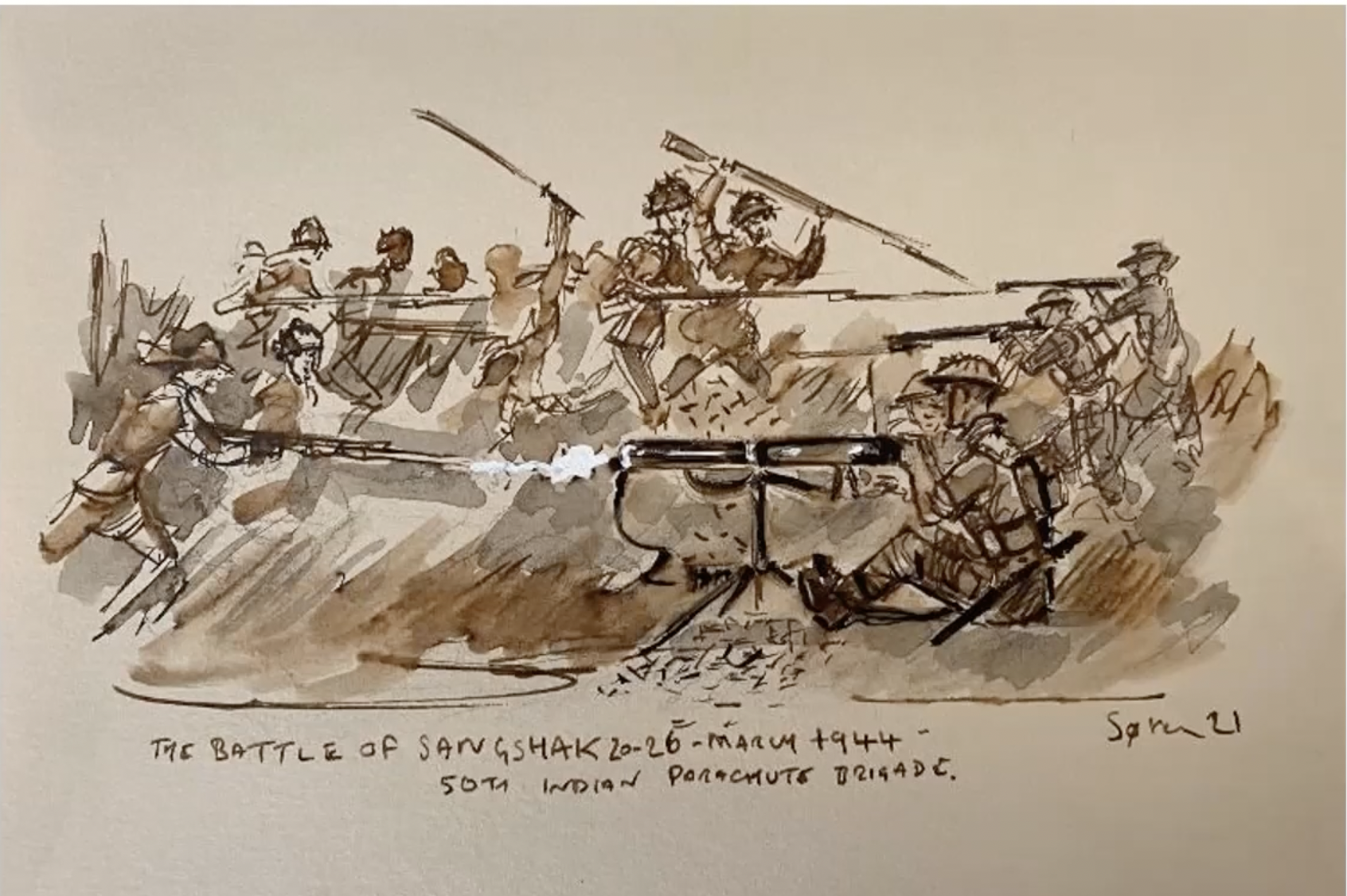
Completely isolated, 50th Brigade held back the Japanese advance from March 22 to 26. This heroic hilltop stand at Sangshak bought just enough time for reinforcements to be airlifted into Imphal & Kohima. It came at a terrible price, with 152 Indian Parachute Battalion sustaining 80% casualties.
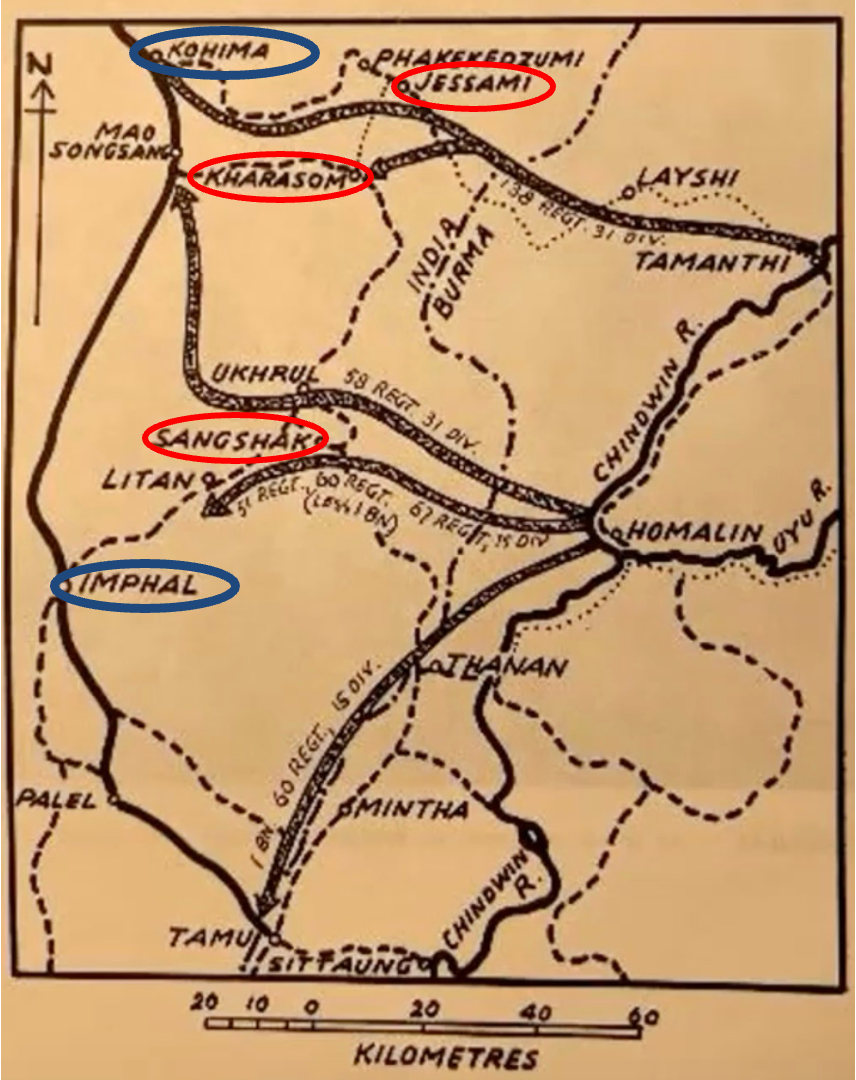
Further north, novice troops of India’s youngest regiment, 1st Assam, lay in the path of the Japanese 31st Division as it raced towards Kohima. They were dug in at the villages of Jessami & Kharasom. A British officer recorded with pride that “Young & inexperienced sepoys were fighting like veterans … with all the calmness in the world.” (10)
They resisted the Japanese onslaught from March 27 to March 31, inflicting heavy losses. Lt General Sato was furious that his Division had been delayed for so long by such a small force.
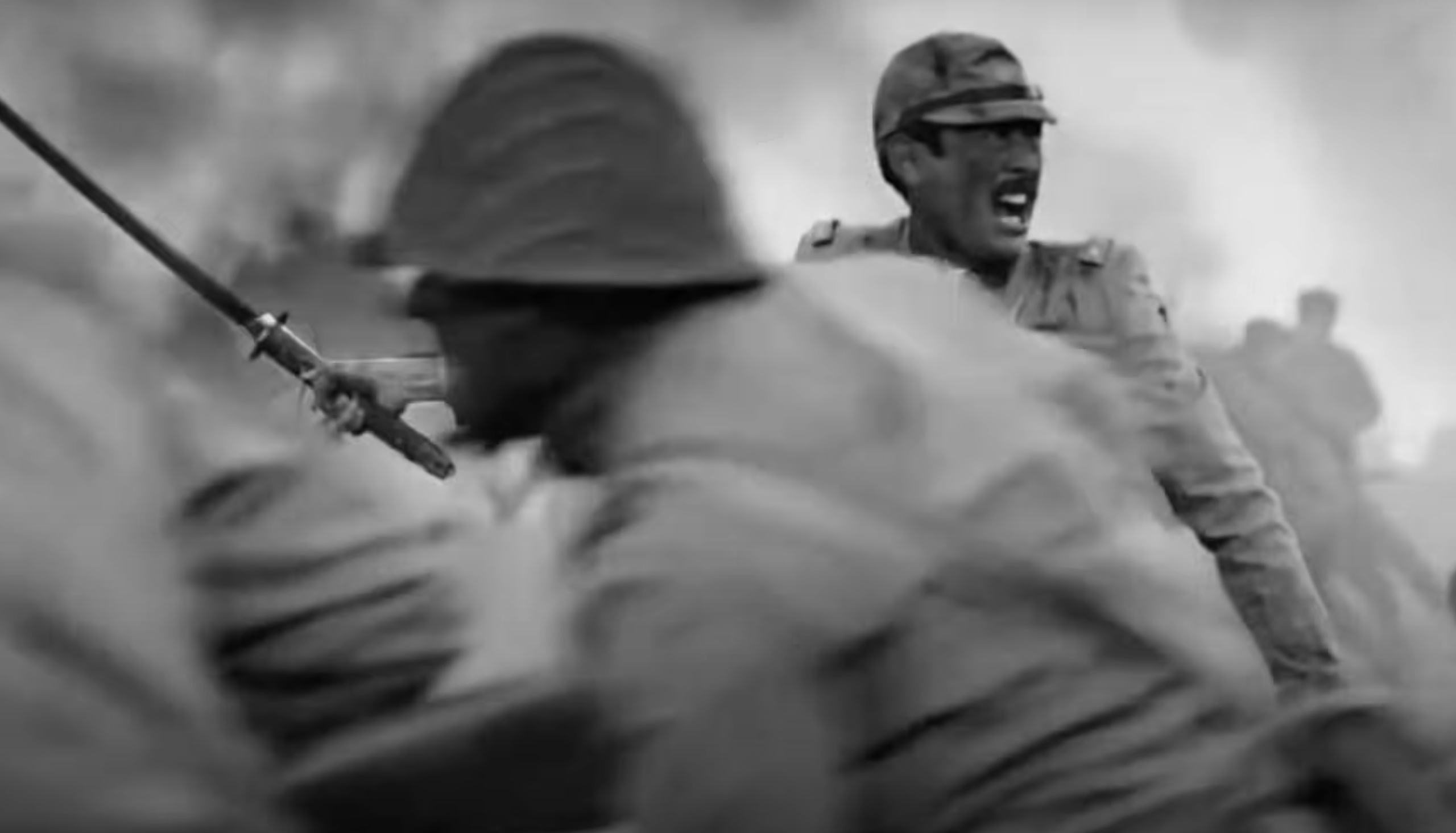
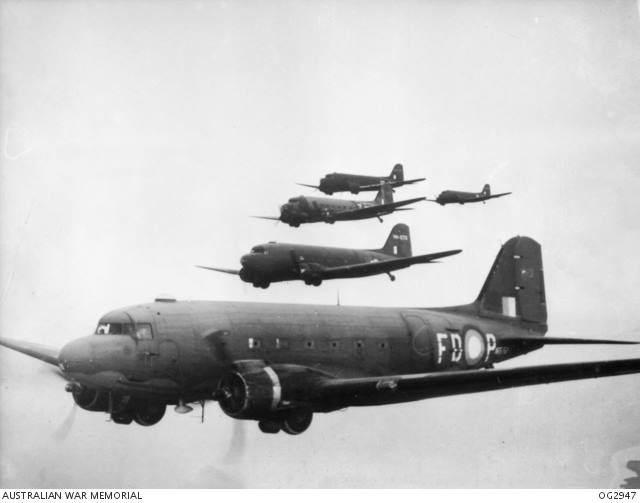
Supplies to Imphal were brought by road via Kohima. This road was cut by the Japanese 31st Division, so that 4 Corps could only be supplied by air. British & US aircraft delivered 19,000 tons of food, fuel & munitions during the Battle of Imphal & evacuated 13,000 casualties. They also flew in two additional Indian Divisions, shifting the balance of numbers strongly in favour of the Allies. The stunned Japanese had no answer to this unprecedented ability to move strategic quantities of troops & supplies by plane.
Desperate attempts to capture the airfields were beaten off with heavy casualties.
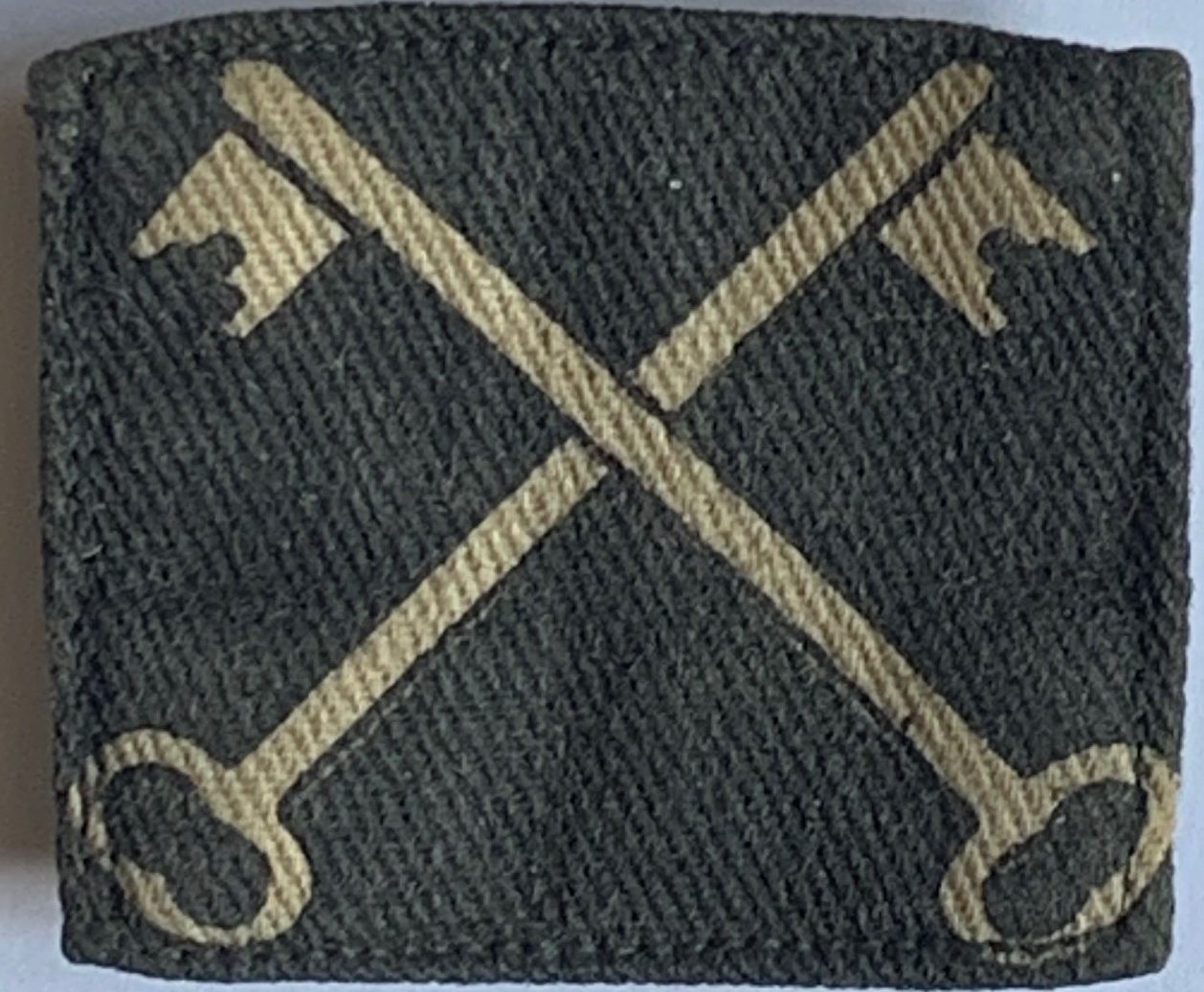
Meanwhile at Kohima, 86 miles to the north, a scratch garrison of Indians, British & Gurkhas were surrounded by the invaders. Dug in on a ridge above the road to Imphal, the defenders were forced back by relentless assaults until, on April 18, all the survivors were crammed onto a single small hill. Just as their plight seemed hopeless, a relief column arrived containing the British 2nd Division.
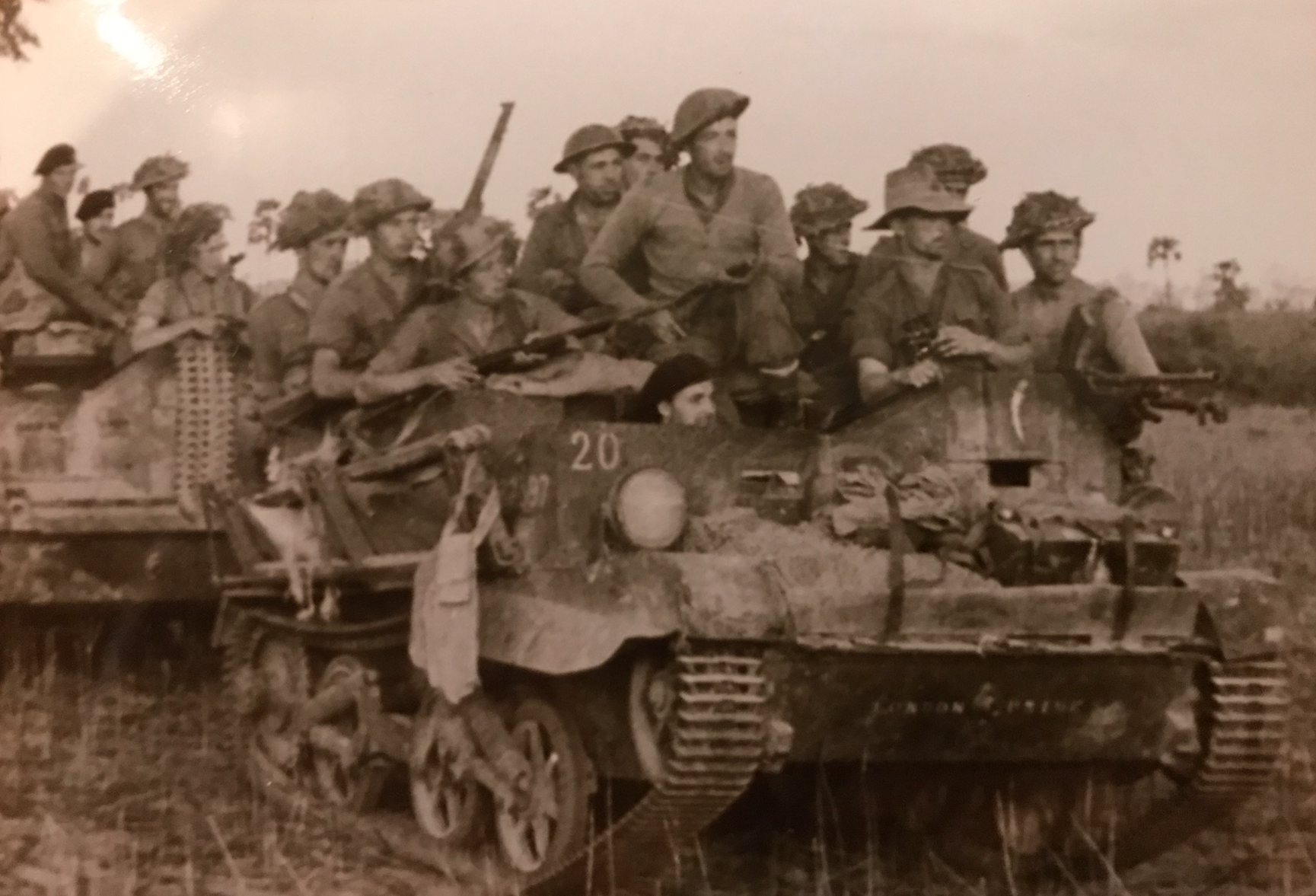
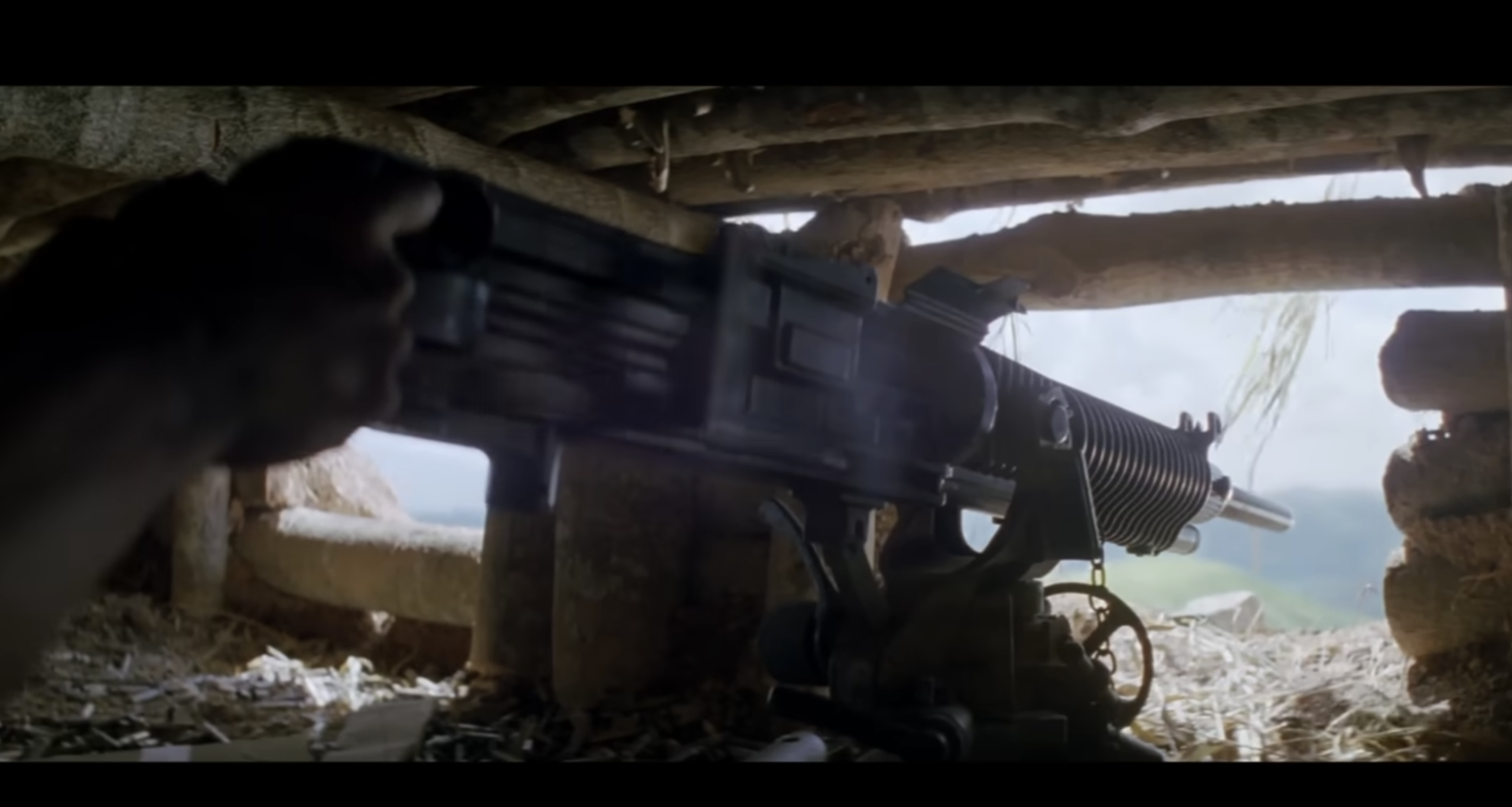
As soon as the Garrison was rescued, attention turned to opening the road to Imphal. This was urgent, as the imminent monsoon would severely restict supply by air. But the Japanese had built defensive bunker systems that seemed impervious to attacks by infantry.
For six weeks, 2nd Division fought to displace the invaders, but progress was slow & casualties high. At last, deprived of all supplies, the starving Japanese withdrew on May 31. A stubborn rearguard kept the Imphal Road closed for another three weeks, with roadblocks, ambushes & blown bridges, but it was opened at last on June 22. The Battle of Kohima was over.
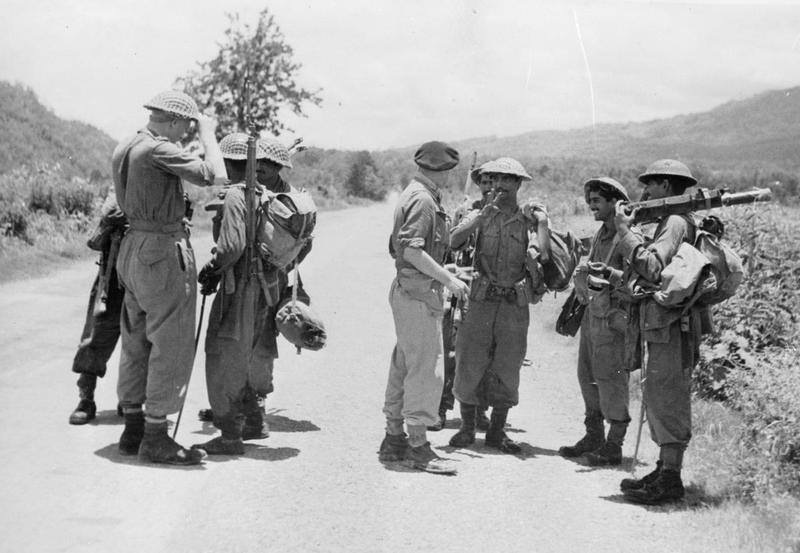
At Imphal, Japanese attacks ground to a halt in May, due to crippling casualties & inadequate supply. The divisional commanders were replaced, as they no longer believed they could win. Determined new leaders demanded fresh attacks, but could not overcome the defenders. The offensive was called off on July 3. The invasion of India had failed.
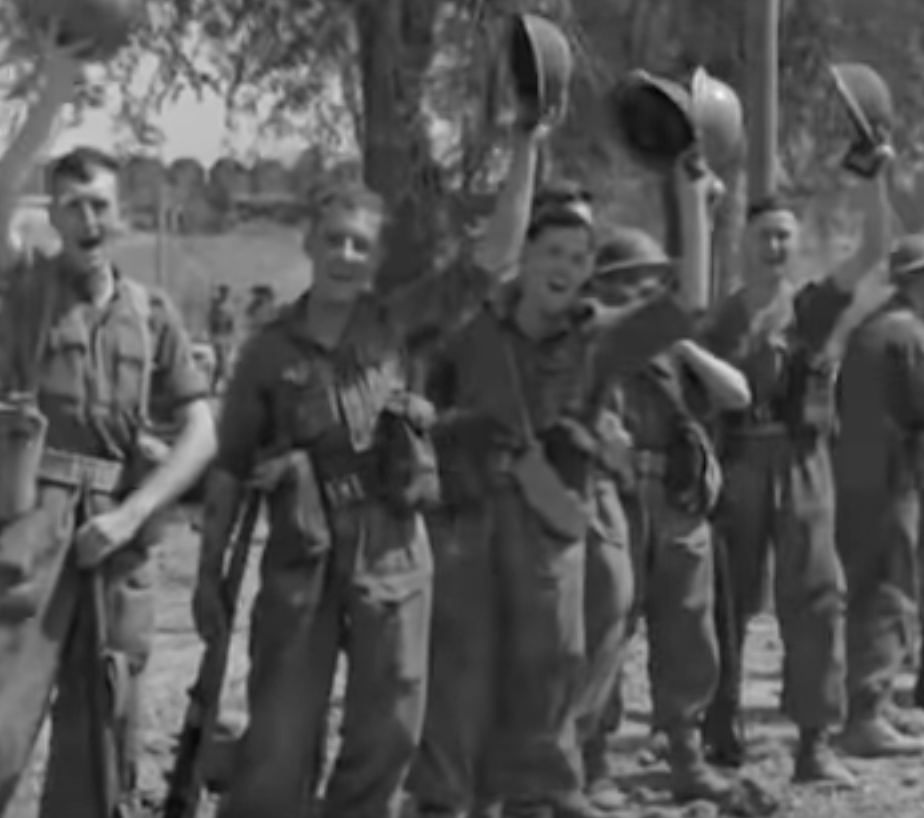
The Battle of Imphal had cost 12,600 Allied casualties & 54,900 Japanese.
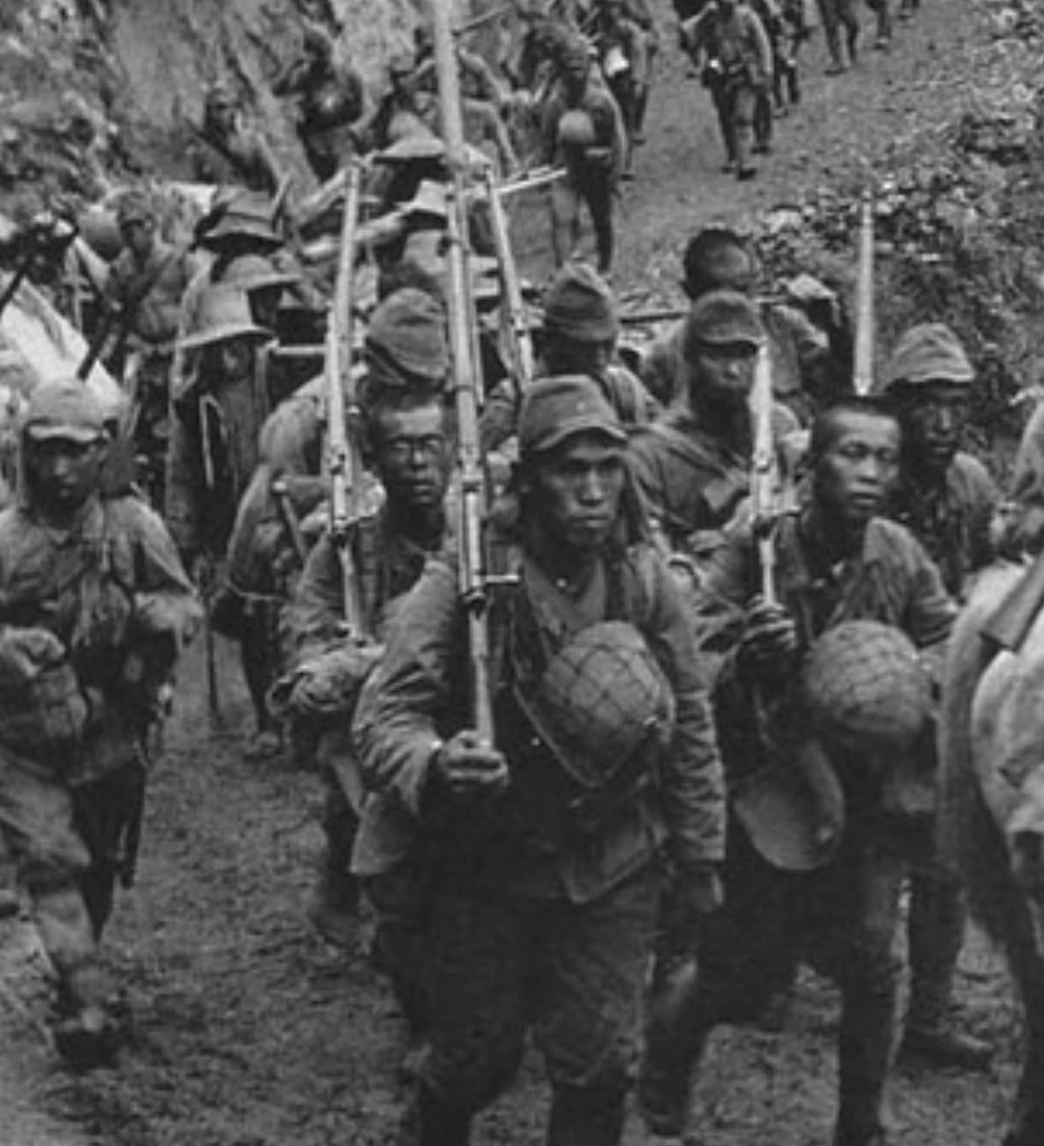
The exhausted Japanese survivors trudged back to the frontier, along mud tracks made glutinous by the monsoon. Beside the gnawing hunger, many were wounded & almost all were racked with fever & diarrhoea caused by dysentry. Corpses accumulated by the roadsides.
Initially they were pursued, but this petered out as the energy of the British & Indians was also drained by the months of bitter fighting.
Senior Private Manabu Wada of 31st Division recalled
“Without shelter from the rains, with boots that had rotted & had to be bound with grass, we began to trudge along the deep mud paths carrying rifles without ammunition. Icy rain fell mercilessly on us & we lived day & night drenched to the skin & pierced with cold.” (5)

War correspondent Shizuo Maruyama recorded bitterly
“Their eyes blazed in their lean bodies … all they had to keep them going was grass & water. At Kohima we were starved & then crushed.” (3)
As the exhausted, emaciated Japanese dragged themselves towards the frontier, they passed countless corpses in various stages of decay. Some had been wrapped in flags, as a gesture of respect. But many simply lay in their putrefying uniforms, flys swarming over them. Such were their numbers, that it was unbearable for men to enter the bushes to relieve themselves.

The Japanese named this terrible retreat ‘the bleached bones road’.