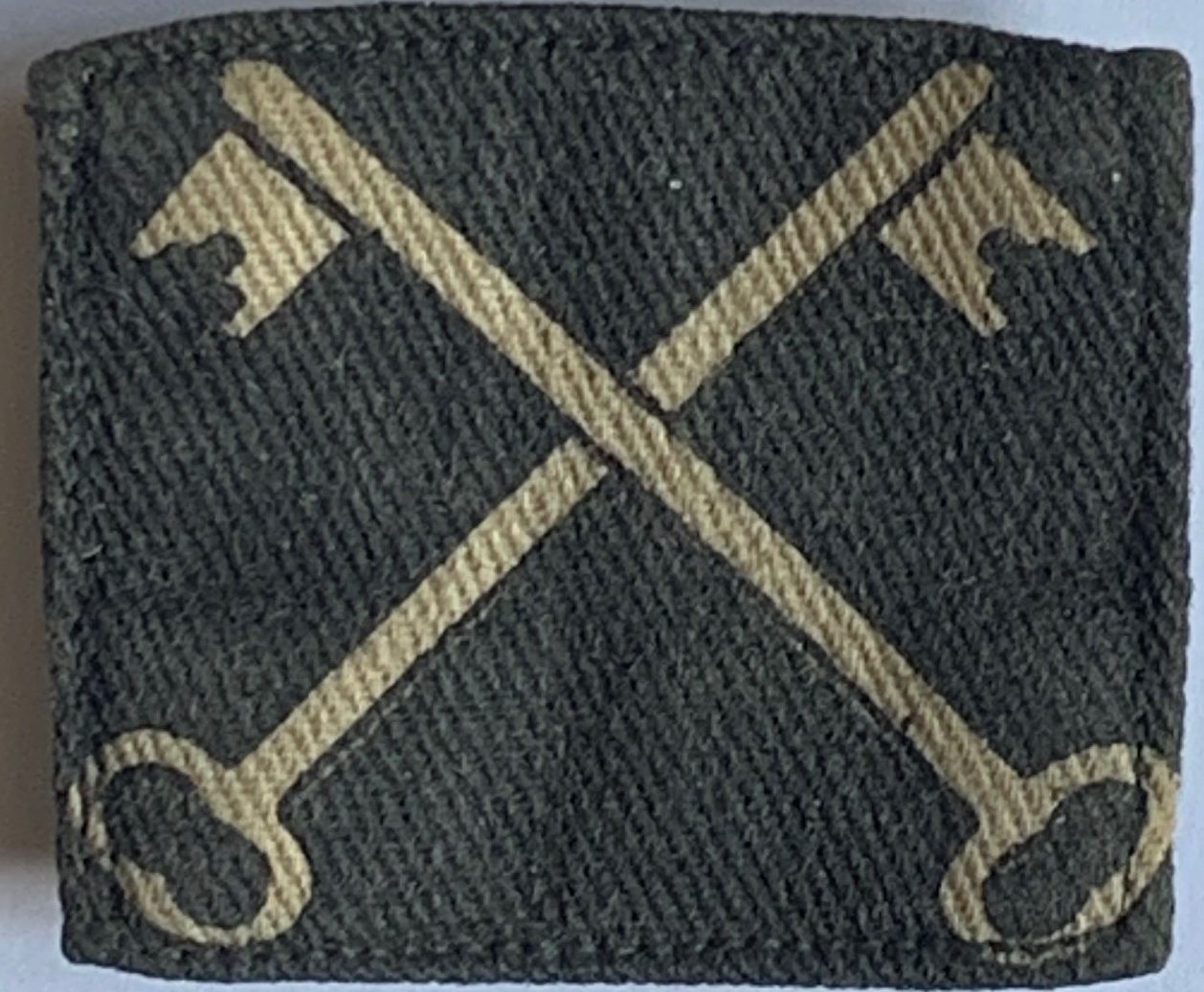


Kohima War Cemetery

Kohima War Cemetry lies on the site of the Deputy Commisioner’s bungalow & the terraced gardens rising behind it, between Garrison Hill & the northern tip of Kohima Ridge. It contains 1420 graves of Commonwealth troops who died in the Second World War. Of these, 330 were Indian, 5 Canadian, 3 Australian & 1082 British.

The original wooden crosses were eventually replaced with stone slabs.


At the top of the Cemetery stands the Kohima Cremation Memorial, which commemorates 917 Sikh & Hindu soldiers of the Indian Army, whose remains were cremated in accordance with their customs.

A Cross of Sacrifice was erected on the terrace where the tennis court lay, site of some of the bitterest fighting. The ground alongside the Cross was marked out as a tennis court, in remembrance of the men who fought there.


Inside the Cross of Sacrifice is a plaque bearing the inscription:
“Here, around the tennis court of the deputy commissioner, lie men who fought in the battle of Kohima in which they and their comrades finally halted the invasion of India by the forces of Japan in April 1944.”


2 Division Memorial
At the lower, northern end of the cemetery is a stone monument, 15 feet tall, to the fallen of the British 2nd Division, bearing the famous epitaph:
“When you go home tell them of us and say for your tomorrow we gave our today.”
This epitaph is credited to British classicist John Maxwell Edmunds & is based on a Greek epitaph by Simonides of Ceos for the 300 Spartans, led by Leonidas, who defended the mountain pass at Thermopylae against invasion by the enormous army of Persian King Xerxes.

The stone was one of several Naga obelisks that had been erected near Maram, thirty miles from Kohima. The Nagas gave permission for it to be used to commemorate 2 Division at Kohima. It was transferred with the aid of a crane & a tank-transporter, before Nagas manhandled it into position at the foot of the cemetery.
Behind the obelisk are thirteen stone Tablets listing the names, ranks & regiments of the members of 2 Division who were killed in the Battle of Kohima. Some of these tablets are now in poor condition, although the names can still be read.

The first Tablet lists the fatalities from Divisional & Brigade Headquarters (eight in total), Chaplains’ Department (one), Royal Army Service Corps (two), Royal Army Medical Corps (two), Field Hygiene Section (one) & Royal Electrical & Mechanical Engineers (one).
At the bottom of the first Tablet are the names of eight men of 149 Regiment, Royal Armoured Corps. Fourteen more are listed at the top of the second Tablet. 149 Regiment was 489 men strong initially & therefore suffered a fatality rate of 4.5%.

Below 149 RAC, the second Tablet lists the fallen of 2nd Reconnaissance Regiment & 2nd Battalion The Manchester Regiment. According to 33 Corps records, the 2nd Reconnaissance Regiment was 719 men strong on 29 April 1944. Of these, 31 were killed during the Battle of Kohima, a fatality rate of 4.3%. The 2nd Manchesters were 444 men strong on April 22 1944, of whom 18 were killed in the Battle, a fatality rate of 4.1%. At the bottom of Tablet 2 & the top of Tablet 3 are the names of 18 men of 143 Special Service Company; the unit was 157 men strong on April 22 1944, giving a fatality rate of 11.5%.

Below some of the casualties of 143 SS Company, Tablet 3 lists men from the Royal Regiment of Artillery (RA) who were killed in the Battle of Kohima (continued on Tablet 4). Five RA regiments are included: 10th Field Regiment lost 14 from 637 (2.2%); 16th Field Regiment lost 6 from 652 (0.9%); 99th Field Regiment lost 9 from 662 (1.4%); 100 Anti-Tank Regiment lost 22 from 475 (4.6%) & one man was killed from the 118th Light Anti-Aircraft Regiment.

After the remainder of the Royal Artillery, Tablet 4 lists the killed from the Royal Engineers (RE): 3 from 250 in 5 Field Company RE (1.2%); 8 from 242 in 208 Field Company RE (3.3%); 6 from 210 in 506 Field Company RE (2.9%) & one from 21 Field Park Company. It continues with the six killed from the Royal Corps of Signals & then begins the Roll of Honour for 1 Royal Scots, which continues on Tablet 5.

161 Brigade Memorial
There is also a memorial to 161 Brigade of 5 Indian Division, containing 1/1 Punjab, 4/7 Rajputs & 4 Royal West Kents, which played a critical role during the Siege of Kohima. Without them, Kohima would undoubtedly have fallen.

The inscription at the top of the memorial included the following words by Lieutenant John Wright:
“At Kohima in April 1944 the Japanese invasion of India was halted”


Garrison Memorial
On the road to Imphal, near Detail Hill, is a memorial to all the troops that made up the garrison during the Siege of Kohima. It lists each of the many units that contributed men, often in small numbers.


Kohima Peace Memorial
Several new monuments have recently appeared on Detail (DIS) Hill.

On the left in the picture above is the Kohima Peace Memorial, which bears the message:
This Monument Honors the Friendship
Between
Japan and Nagaland.
May this Memorial Bring Lasting
Peace and Friendship
Between Our People

Alongside is a second memorial bearing the simple message
May the Souls Rest in Peace

The monolith on the right in the picture above commemorates the inauguration in 2024 of an ‘Eco-Park’.

Opposite these three structures is another, also in Japanese style, that was still under construction on Detail Hill in March 2025.

Regimental Memorials
Several of the British & Indian regiments that fought at Kohima erected their own monuments. Not all of these have survived the eighty years since the battle.
1 Assam Regiment
In 1944, 1 Assam Regiment was the youngest unit in the Indian Army, raised just 3 years previously from local hill-men, including many Nagas. Nevertheless, it performed heroically in its baptism of fire, delaying the advance of the Japanese at the Battles of Jessami & Kharasom (March 27-31). A Memorial to this can be seen at Jessami.

The Memorial lists the gallantry awards won by members of the regiment during the Burma Campaign.

The first name on the list of awards above is Lt. Colonel W.F. ‘Bruno’ Brown, Commander of 1 Assam during the Battles of Jessami & Kohima. Eighty years later, his grandaughter Charlotte Carty laid a wreath at the Assam Regiment’s Memorial at Jessami.

The other three sides of the Jessami War Memorial list the members of the Regiment who were killed during the Burma Campaign.
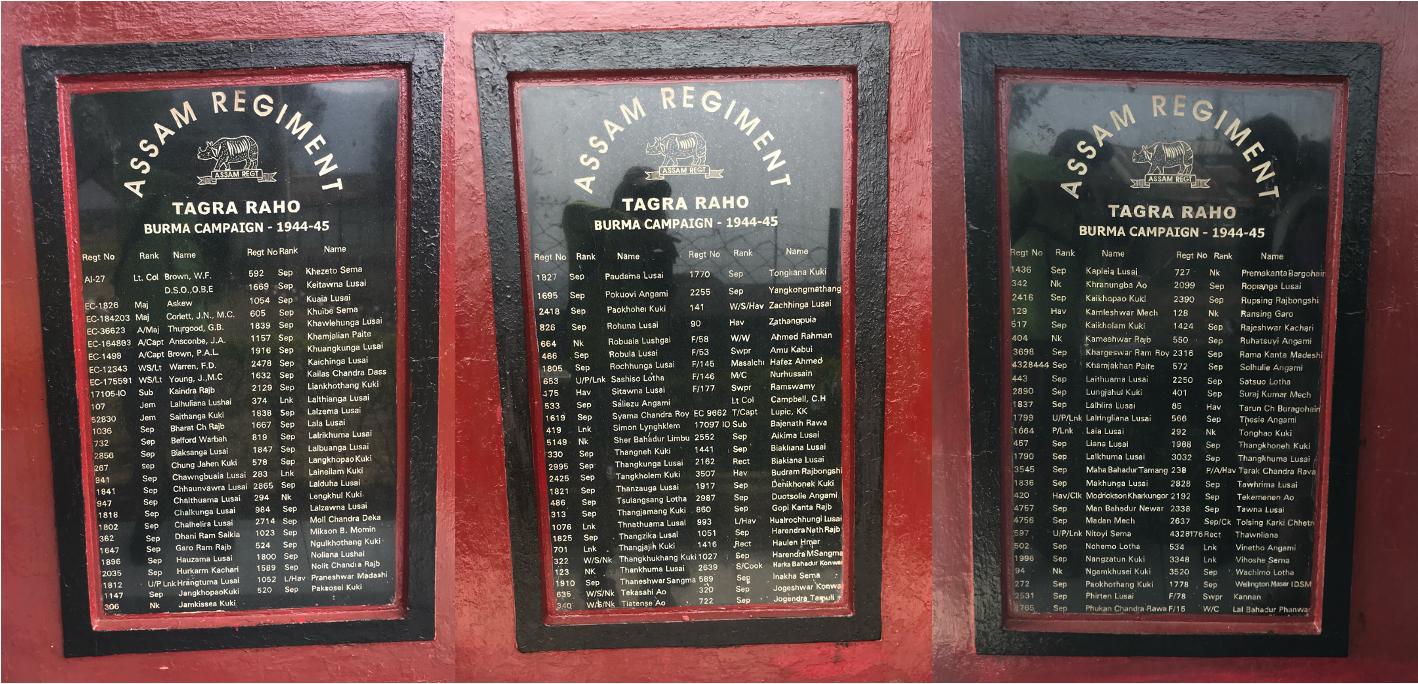
Amongst the casualties recorded here is Lt. Colonel Brown, who was killed by a sniper in 1945. Also listed is Lieutenant John Young, who commanded the Assams at the Battle of Kharasom & gave his life there. In addition, Lieutenant Young is commemorated where he lived in Glasgow.

After the Battles of Jessami & Kharasom, the surviving Assams marched 78 miles back to Kohima in 39 hours, through Japanese ambushes & friendly fire from the RAF. The Regimental history states that 37 men were killed in action before the Battle of Kohima & a further 25 were killed fighting at Kohima.
A Memorial to the Assam Regiment is preserved at Kohima, in recognition of their officers & men “who gave their lives in the cause of freedom during the world war 1939-1945”.


General Bill Slim later told Assam Regiment
“You may be the youngest unit under my command, but you’re pretty precocious”.
3 Assam Rifles
On the same site in Kohima as the Assam Regiment Memorial (above) is a memorial to 3 (Naga Hills) Battalion of the Assam Rifles, who formed part of the garrison during the Siege of Kohima, defending the Indian General Hospital (IGH) spur.

The plaque reads ‘To the Memory of Those Men of the 3rd Assam Rifles Who Gave Their Lives in the Cause of Freedom During the Second World War From 4th to 21st April 1944’. Sixteen names are listed.

5 Division, 161 Brigade
Queen’s Own Royal West Kent Regiment
The men of 4 Royal West Kents erected a wooden cross at Kohima in memory of the 78 of their comrades who were killed during the Siege.

The text reads:


This wooden cross is now preserved in the regimental gallery of Maidstone Museum in England.

The fallen of 4 Royal West Kents are now commemorated on a stone plaque in Kohima War Cemetery.

1 Punjab and 7 Rajput Regiments
Brigaded with 4 West Kents were 1/1 Punjab & 4/7 Rajputs. They are commemorated on Kohima Cremation Memorial. According to the casualty records of 33 Corps, 1/1 Punjab had 47 killed, 25 missing & 188 wounded during the Battle of Kohima, including two officers killed & six wounded. The 4/7 Rajputs suffered 15 killed, 23 missing & 157 wounded. Some of the Regiments’ fallen are named on the Kohima Cremation Memorial.

2 Division, 4 Brigade
The Royal Scots
The 1st Battalion Royal Scots was 627 strong on April 29 1944, of whom 74 were killed during the Battle of Kohima, a fatality rate of 11.8%.

A committee from the Battalion designed a monument, that was constructed from local stone by the Pioneer Platoon. It is sited at Kennedy Hill, on the Aradura Spur, & was unveiled on 25 November 1944 by the Battalion’s Commanding Officer, Lieutenant Colonel Masterton Smith, who had fought throughout the Battle of Kohima.


The Monument, overseen by The Commonwealth War Graves Commission, is now surrounded by local housing, but is looked after carefully by the family living beside it.


‘Nemo me impune lacessit’ is Latin for ‘No one provokes me with impunity’ & is the national motto of Scotland.
The Royal Norfolk Regiment
The 2nd Battalion Royal Norfolks was 631 men strong on April 29 1944 and had 104 men killed in the Battle of Kohima, a fatality rate of 16.5%. A competition was held amongst the Norfolks to design a memorial to the fallen. Sergeant Curtis of the Pioneer Platoon submitted the winning design & built it with his men from local materials. It was placed on a small plateau ten feet above the Imphal Road between Transport (GPT) Ridge & the Aradura Spur.

The Memorial was unveiled on 22 October 1944 by Major General Nicholson, Commander of 2 Division.


The Norfolk Cross remains in good condition. It is enclosed in a small fenced garden that is surrounded by buildings & requires a key to enter.


The Lancashire Fusiliers
The 1/8 Lancashire Fusiliers was 612 men strong on April 29 1944, of whom 91 were killed during the Battle of Kohima, a fatality rate of 14.9%. The dead included the battalion’s commander, Lieutenant Colonel West. The names of the fallen are listed on a plaque behind the 2nd Division Memorial at Kohima, but it is rather badly weathered.

A brass board in remembrance of the fallen is at the Royal British Legion in Salford, England. The man listed as missing on this panel was recorded as killed on the Roll of Honour at Kohima.

2 Division, 5 Brigade
The Queen’s Own Cameron Highlanders
1st Battalion Queen’s Own Cameron Highlanders was 674 men strong on April 29 1944 and had 96 men killed in the Battle of Kohima, a fatality rate of 14.2%. Most of these casualties were in the bitter fighting for the Naga Village. For this reason, the Battalion’s memorial was placed in that village, on the highest point of the Knoll.

The Camerons designed and built the Memorial. It bears a brass plaque listing the names of the fallen, beneath a kilted highlander playing bagpipes & the words ‘Lochaber No More’. This is the title of an 18th century lament by poet Allan Ramsay, describing a highland soldier’s leave-taking for active service abroad, doubting that he will ever return.


When the memorial was unveiled, there were present at the ceremony not only the officers & men of the battalion, but also many Naga tribesmen, whose homes were near the Knoll where the memorial stands, scene of bitter fighting.
The service was brief & moving. The adjutant read the names of the members of the battalion who died during the Battle of Kohima. A piper then played ‘Lochaber no more’ & wreaths were placed by the Commanding Officer, second in command, & representatives of each company, as well as a wreath from the Queen’s Own Cameron Highlanders of Canada.
A Naga headman stepped forward from beside the Commanding officer & the Deputy Commissioner. He stood before the memorial with head bowed, then promised in his own language that his people would look after the memorial always, in honour of the men killed there. It was a moving gesture from those Highlanders of Asia.

In 2011, another plaque was added promising that the Nagas who live there will care for the monument until the sun stops shining or the wind stops blowing. This was probably intended to mean forever, rather than a reference to climate change.

Serjeant ‘Nivi’ Nivison was amongst the Camerons in 1944. In 2022, his son Ian Nivison & great grandson Kai Chacksfield visited the Cameron’s memorial & attended the KET Scholarship awards ceremony, where they met the Naga student they generously sponsored with a five-year scholarship.

The Dorsetshire Regiment
2nd Battalion Dorsetshire Regiment was 681 men strong on April 22 1944 and lost 80 men killed in the Battle of Kohima, a fatality rate of 11.7%.
The Battalion built a simple stone monument, close to the tennis court.

It remains there, within Kohima War Cemetery.


‘Primus in Indis’ is Latin for ‘first in India’ & refers to the fact that the 39th (Dorsetshire) Regiment of Foot became, in 1754, the first British Army unit to be deployed to India. “Marabout” is a battle honour earned by the 54th (West Norfolk) Regiment of Foot for capturing Fort Marabout in Egypt, hence the Sphinx, during the French Revolutionary Wars (1798-1801). The Dorsetshire Regiment was formed in 1881 by merging the 39th & 54th Regiments of Foot, incorporating both the “Marabout” battle honour & the “Primus in Indis” motto.

“Who’s afear’d?” is the motto of Dorset. Afear’d is a corruption of afraid.

The Worcestershire Regiment
33 Corps casualty figures for 7 Battalion Worcestershire Regiment in the Battle of Kohima are 4 officers & 28 men killed, 3 officers & 125 men wounded. However, a plaque in Worcester Cathedral gives the names of 4 officers & 40 men of 7 Battalion killed in the battle.

2 Division, 6 Brigade
The Royal Berkshire Regiment
According to 33 Corps records, 1 Battalion Royal Berkshire Regiment lost one officer & 51 men killed, 15 men missing & 290 men wounded, including 17 officers. They unveiled a memorial in 1944, beside the graves of some of the battalion’s dead on Garrison Hill.

The Imperial War Museum has film of the memorial & of a parade with a band playing a slow march. The opening material seems rather random, but what follows is striking, although of poor quality. Two stills are shown below.


The original memorial has not survived. Instead, there is now a simple tablet in the Kohima War Cemetery.

A plaque bearing the names of the killed & missing of 1 Battalion Royal Berkshire Regiment was displayed at the 2 Division Memorial in Kohima. It is now kept at The Rifles Berkshire & Wiltshire Museum in Salisbury, England.

The Royal Welch Fusiliers
According to 33 Corps records, 1st Battalion Royal Welch Fusiliers was 698 men strong on April 15 1944. Of these, 77 were killed in the Battle of Kohima, giving a fatality rate of 11.0%.
The Pioneer Platoon erected a memorial on Kuki Piquet. It was a cross on top of a tablet of white concrete, eight foot tall, bearing the inscription:
Erected by Officers & Men of a Battalion of The Royal Welch Fusiliers. April-June 1944. In proud & loving memory of our comrades who fell in the battle of Kohima-Manipur Road. “Ond Nid yn Ofer”
“On nid yn ofer” is Welsh & can be translated as “But not in vain”. At the foot of the memorial was a Roll of Honour scroll, listing the men of the Battalion who died in the Battle. Seven of the fallen were called Jones, a very common surname in Wales.


By the late 1960s, this memorial had deteriorated beyond repair & so it was replaced by a new Memorial Panel in Kohima War Cemetery.

The Durham Light Infantry
The 2nd Battalion Durham Light Infantry was 601 men strong on April 22 1944, according to the records of 33 Corps. Of these, 130 were killed in the Battle of Kohima, a fatality rate of 21.6%. This was a higher proportion of deaths than in any other unit in 2nd Division.

A Roll of Honour listing the fallen was placed on Garrison Hill. This has now gone, but a stone Memorial remains.

A brass plaque listing the men of 2 DLI killed at Kohima can be found at Durham Cathedral, where there is also a DLI Memorial Chapel with a Book of Remembrance recording the names of the regiment’s fallen in WW2.


Divisional Troops
Reconnaissance Regiment
According to 33 Corps records, the 2nd Reconnaissance Regiment was 719 men strong on 29 April 1944. Of these, 31 were killed during the Battle of Kohima, a fatality rate of 4.3%.
A memorial was built to remember these casualties & is shown in the pictures below, which were taken on the day it was unveiled. It is not known if this memorial is still in existence.


The fallen of 2nd Reconnaissance Regiment are now remembered on an engraved stone plaque, located behind the obelisk of the 2nd Division Memorial at Kohima (see above).
Manchester Regiment
The 2nd Battalion Manchester Regiment was the Divisional machine gun battalion. According to 33 Corps records, it was 444 men strong on April 22 1944. Of these, 18 were killed in the Battle of Kohima, giving a fatality rate of 4.1%. In July 1944, the men of 2 Manchester Regiment created a memorial to their fallen comrades at milestone 80 of the Imphal Road. It is no longer there.

The fallen of 2nd Manchester Regiment are now remembered on an engraved stone plaque, located behind the 2nd Division Memorial at Kohima (see above).
7 Division, 33 Brigade
The Queen’s Royal Regiment
33 Corps casualty records for 1st Battalion Queen’s Royal Regiment in the Battle of Kohima give 47 killed, 23 missing & 140 wounded, including 3 officers killed & 11 wounded. Their memorial at Kohima lists 63 as killed in action.
The battalion’s Pioneer Platoon built a fine stone Memorial on Jail Hill, where they suffered their heaviest losses. It was unveiled on 31 August 1944. The Imperial War Museum has a brief film of the unveiling ceremony. Some stills are shown below. The Pioneer Platoon fired into the air & men marched forward individually to salute the Memorial. Many waiting in the background were wearing monsoon capes, but these were removed to approach the Memorial.


The Memorial on Jail Hill has not survived. However, a large plaque listing those killed from 1 Queen’s Royal Regiment can now be found in Kohima War Cemetery.

1st King George V’s Own Gurkha Rifles
In addition, to the fallen Queensmen, the memorial above lists thirteen fallen of 4/1 King George V’s Own Gurkha Rifles, who were also part of 33 Brigade. This is considerably fewer than the 35 men of 4/1 Gurkha Rifles who were listed as killed in 33 Corp’s casualty records. One of the 4/1 Gurkha Riflemen is named on the Memorial to the Cremated in Kohima War Cemetery.
15th Punjab Regiment
The third battalion of 33 Brigade was 4/15 Punjab, who had 57 killed, 7 missing & 250 wounded, according to 33 Corps casualty records. The battalion erected a Memorial detailing the names of 68 of their fallen, who were killed on Detail (DIS) Hill on May 11-13 & on Church Knoll of Naga Village on May 24-29. This is close to the Kohima War Cemetery, beside a busy road. Six of the 4/1 Gurkha Rifles are also named here, from a company that was under command of 4/15 Punjab.

The Memorial to the Cremated in Kohima War Cemetery lists 35 fallen from 15 Punjab Regiment, at least some of whom are also commemorated on the Memorial above.

Dean’s Park, York Minster
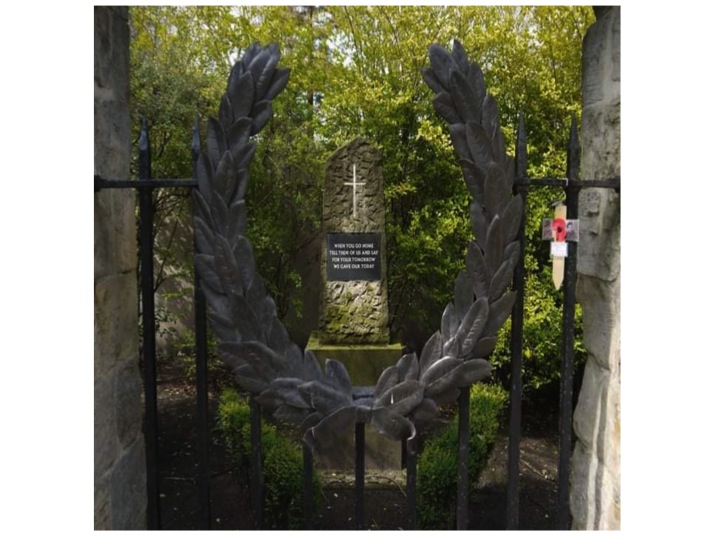
The monument to 2nd Division is reproduced in smaller size in the Dean’s Park beside York Minster. Here, a Memorial Service is held each July, organised by the Kohima Educational Trust. After the laying of wreaths, many of the congregation go to Imphal Barracks for lunch & to visit the Kohima Museum.


India Peace Memorial
In 1994, the 50th anniversary of the Battles of Imphal & Kohima, the Japanese government funded the India Peace Memorial. It was built at Red Hill on the Tiddim Road, the site of bitter fighting on May 20-29 1944. This was the closest the Japanese attack from the south got to Imphal.
