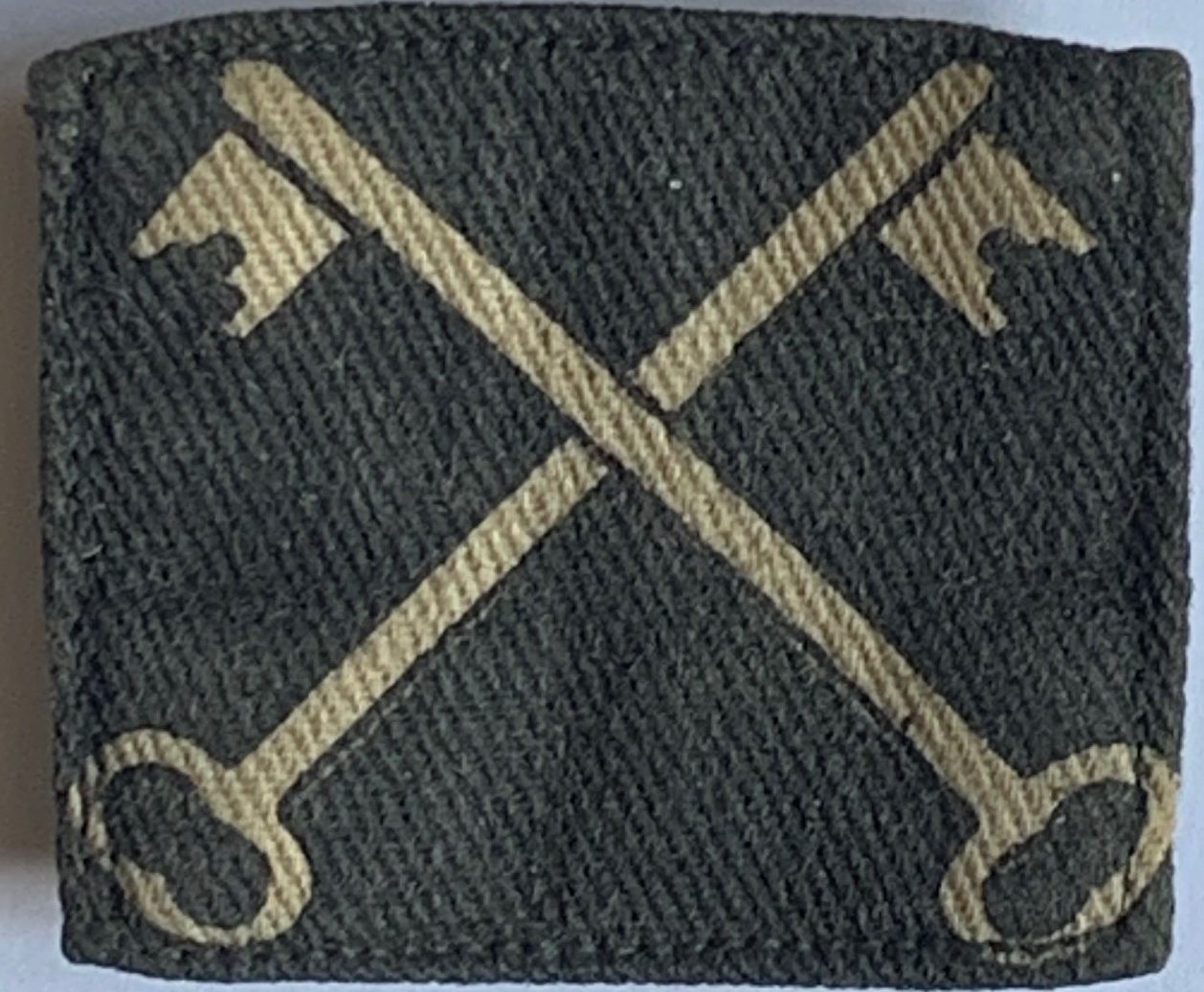

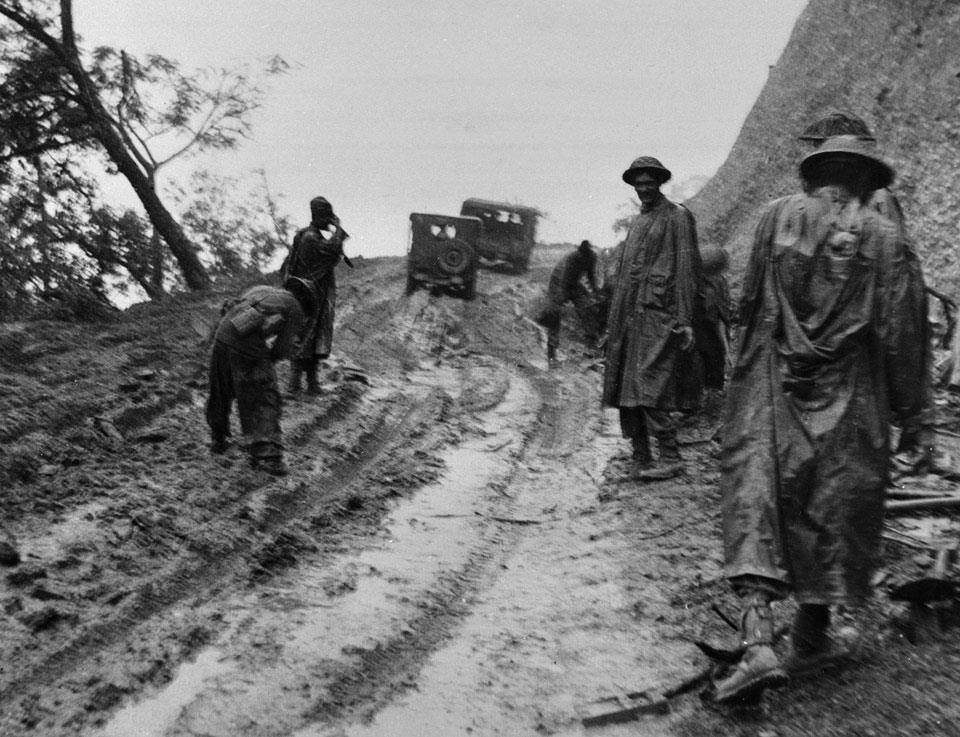
Air power was crucial to the outcome of the Burma Campaign. In 1942 & 1943, the Allies depended on traditional lines of communication by road. These were vulnerable to being cut by the Japanese & were always precarious in Burma, where the roads were rare, poorly maintained & quickly turned into glutinous quagmires during the long monsoon season.
These crippling limitations were overcome by using air power to keep troops supplied with food, water, ammunition & fuel, even when cut off.
The potential of this strategy was established with Chindit columns in 1943. The Battle of Admin Box then demonstrated, for the first time, that adequate supplies for an entire division could be delivered by air. To achieve this remarkable feat, it was necessary to clear the Japanese from the sky over the drop zone, as the transport planes had no armament. Key to establishing air superiority was the arrival of Spitfires, which could outperform the Japanese fighters. Once the Allies had control of the air, they could use their huge fleet of transport aircraft to relocate units rapidly and keep them supplied. This capacity was decisive in the Battles of Imphal & Kohima in 1944, & in retaking Burma in 1945.
Air Transport
A huge fleet of British & American transport aircraft was gathered in India to carry supplies to China. This was a priority to sustain China in her war with Japan, a war that tied down a million Japanese troops. Before the fall of Burma, supplies had been conveyed via the port of Rangoon and then overland along the Burma Road. When this route was closed, they were flown from India over the Himalayas, a hazardous journey known as the “Hump”.

Although the Douglas C47 Skytrain/Dakota was the mainstay of the transport fleet, the U.S. Army Air Corps rushed the Curtis-Wright C46 Commando into production in April 1943 to cope with the demands of the Hump. The C46 had much greater range (3,150 miles) than the C47 Dakota (1,600 miles) & more powerful engines (2,000 vs 1,200 horsepower, respectively). However, the engines of the C46 had a tendency to ice up. Neither the C46 nor the C47 was armed.
Air Transport Command eventually grew to 700 aircraft supported by 84,000 military personnel, flying 1,000 mile round trips, with a plane crossing the Hump every two minutes. By the end of WW2, 650,000 tons of supplies had been transported.

The strategic decision to supply Allied troops by air was possible because of the huge transport capability available in India. The Battle of Admin Box established that the strategy was viable at divisional scale, as it had fully sustained 7th Indian Division whilst entirely cut off for 18 days. This emergency needed American aircraft to be diverted from the Hump, to the displeasure of President Roosevelt.

The workhorse of the transport fleet was the Douglas C47 Dakota, which could carry almost 4 tons. It was a military version of the pre-war DC3 airliner. Ten thousand Dakotas were built in the USA during WW2 and the first of over 1900 received by the RAF arrived in India in 1942.
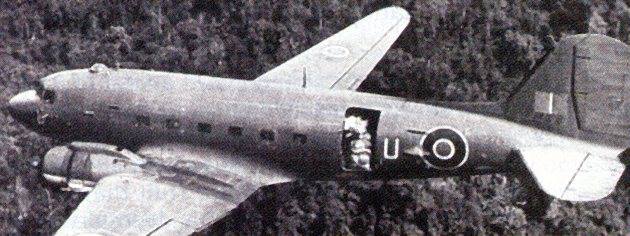
Dropping cargo from a pitching plane was difficult & dangerous, as it involved thrusting heavy packages from an open side door. In the image below of crew pushing their supplies out of a C47 over Burma, a ‘kicker’ can be seen lying on his back & pushing with both legs.

Airdropping Supplies over Burma
During the siege of Kohima, when the garrison was isolated & surrounded by Japanese, supplies were delivered by parachute. Squadron Leader Peter Bray of 31 Squadron RAF, flying C47 Dakotas from Assam to deliver supplies, described the routine:
“Take off would be around dawn at 6 a.m. Flying eastwards one would see the paddy fields soon replaced by the inhospitable … Chin Hills running in ridges north to south, rising gradually to 6,000 feet, each ridge with a correspondingly deep valley covered by jungle.
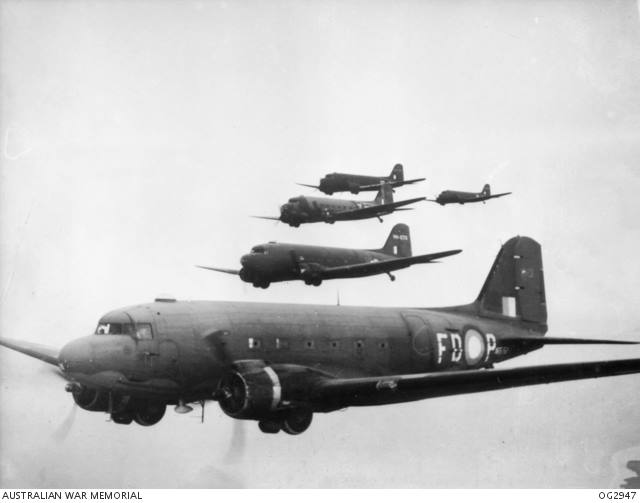
Briefing before take-off was provided by an Army Liaison Officer who defined the DZ with great care so that we would be able to find it from some prominent feature on our large-scale map. DZ code letters were given to prevent supplies going to false DZs created by the Japs. The pilot would make a straight approach on the DZ giving the ‘stand by’ light to the dropping crew in the back of the aircraft, followed by the ‘drop’ light when he judged the aircraft position to be right. When the load was clear, the pilot made a steep turn to the left to observe the accuracy of the drop so as to know the correction to make for the subsequent drops.” (3)
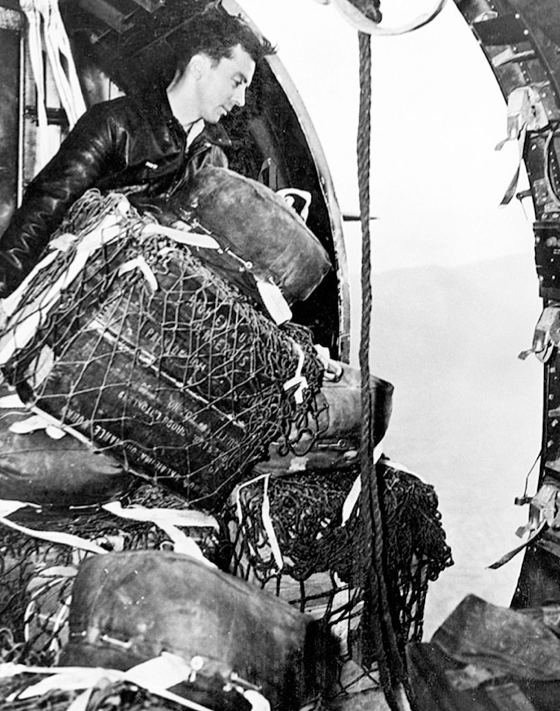
Once the Japanese had cut the road from Kohima on March 29, air transport was the only option for supplying 4 Corps at Imphal until the road was finally reopened on June 22. During that time, Operation Stamina flew in 540 tons of supplies each day.
There were 6 airfields around Imphal, but only 3 of these were all-weather. The primary one was Imphal Main, a few miles north of Imphal town.

In addition to delivering supplies, the transport fleet was also able to rapidly airlift troops across long distances. This introduced an unprecedented strategic flexibility to the Allies.
It was soon exploited to meet the crisis of the Japanese invasion of India in March 1944, when 5th Indian Division was flown into Imphal & Dimapur.

Detailed plans for this gigantic operation had been prepared in advance & it was achieved without a hitch between March 17 & 29. Transferring each of the three brigades required 260 sorties by C46 or C47 aircraft. After 5th Division, 7th Indian Division was transferred in the same way.

For most of the troops, it was the first time they had ever flown. One of them was Private Ray Street, who later recalled:
“It wasn’t a good advert for flying. It wasn’t very comfortable. There weren’t any seats. We had to sit on our packs. The crew were American. They had parachutes. We didn’t. When we asked why, they said it was their plane! The navigator kept poking his head out telling us that if we saw any Japs to put the Bren guns out of the windows and shoot them.” (6)
As well as the men, vehicles, guns & mules were transported.

Return flights carried 43,000 non-combatants & 13,000 casualties out of the war zone.

By the end of the Battles of Imphal & Kohima, the RAF had carried 19,000 tons of supplies, 12,000 troops & 13,000 casualties.
The air & ground crews were exhausted. To keep them going, they were issued with ‘Energy Tablets’ that contained amphetamine drugs to ‘ward off sleep’. The tablets also claimed to ‘stave off depression’.

The examples above are on display at the Kohima museum. Their instructions state that the tablets should not be given to wounded, excitable or hysterical men or those whose minds are wandering, as they would make them worse.
“Burma Memories – Royal Canadian Air Force (RCAF) Voices from the Past” is an excellent YouTube video featuring the recollections of Canadian aircrew who flew C47 Dakotas from Imphal. It can be watched by clicking here.
Establishing Air Superiority
Because the transport fleet was unarmed, realising its strategic potential depended on control of the air. Achieving this required a superior force of fighters.
In 1943, the mainstay of the Allied fighter force was the Mark II Hawker Hurricane, a robust & sturdy gun platform with thick armour plating & self-sealing fuel tanks, carrying twelve machine guns (Mk IIb) or four 20 mm cannon (Mark IIc).
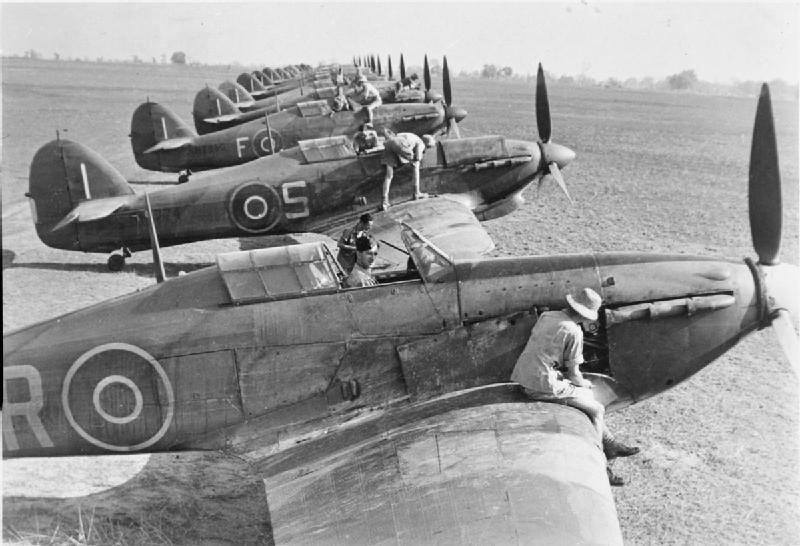
The hardy & dependable Hurricane was pitted against the Oscar (Nakajima Ki-43), the principal fighter of the Japanese army. The Oscar was often mistaken for the famous Mitsubishi Zero, which belonged to the Japanese navy. Indeed, American pilots often referred to it as the ‘Army Zero’.

Design of the Oscar prioritised manoeuvrability & it was cable of breathtaking gymnastics, its pilots dubbing it the ‘dogfighters’ delight’. However, this formidable agility was achieved at the expense of armament & protection: it carried just two machine guns & lacked pilot armour & self-sealing fuel tanks.
With contrasting strengths, clashes between the agile but fragile Oscar & the sturdy Hurricane were often indecisive, with neither side establishing overall dominance.

This situation changed with the arrival in late 1943 of Mark V & Mark VIII Spitfires, which could fly faster & higher than Hurricanes, with greater rates of climb. “Flies like a bird” wrote Flight Sergeant Dudley Barnett of 136 Squadron, after his first flight in October 1943 (1). Armed with four machine guns & two 20 mm cannon, the Spitfires provided a significant boost to morale. They could catch & beat any Japanese aircraft.

In addition to their ability to beat the Japanese fighters, the new Spitfires could also catch & destroy the Dinah (Mitsubishi Ki-46) reconnaissance aircraft, which had flown too high & fast for Hurricanes to intercept.

Ground Attack
As well as its combat role, the versatile Hurricane was also widely used to support ground forces by attacking Japanese troops, vehicles, bridges & railways. For this role, it carried two 250 lb or 500 lb bombs & was referred to as a Hurribomber.

Armed with Mark IIc Hurribombers, 34 Squadron RAF was stationed at the forward airfield at Palel in the Imphal plain, supporting 17th & 20th Indian Divisions in the areas south & east of Imphal. When Kohima was threatened, 34 Squadron relocated to Deragon near Dimapur. In April 1944, it flew 658 sorties in the Kohima area, dropping 300,000 lbs of bombs & firing 120,000 rounds of 20 mm cannon shells.
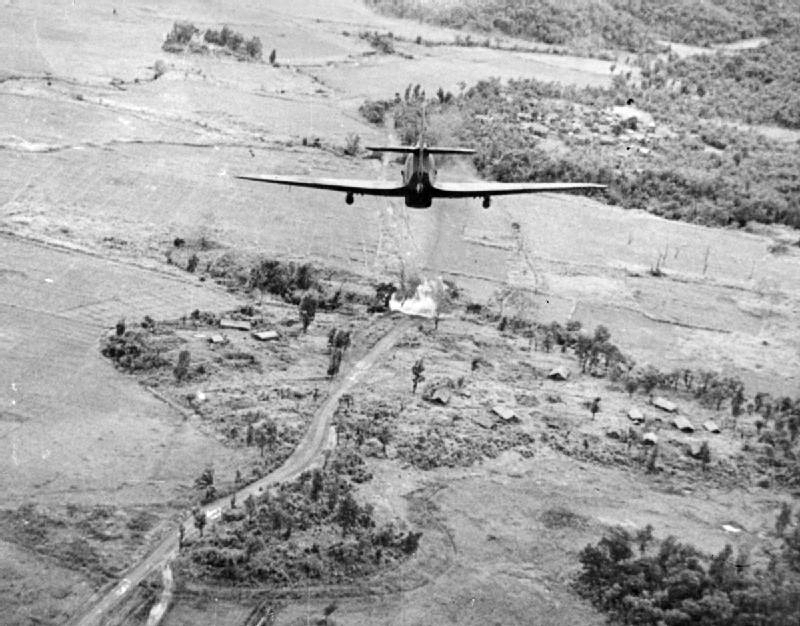
Four squadrons of Vultee Vengeance dive bombers provided further punch to air strikes during the Battles of Imphal & Kohima.

RAF Roundels
The red circle in the centre of the RAF roundel led to friendly fire incidents when it was mistaken for the red sun symbol on Japanese planes. Consequently, it was removed from most RAF aircraft by 1944. This is illustrated by the painting below of Hurribombers in their ground attack role.

Quotations are cited from:
(1) “Burma ’44” by James Holland (2016) Transworld Publishers.
(3) “Japan’s Last Bid for Victory” by Robert Lyman (2011) Praetorian Press.
(6) “The Siege of Kohima” by Robert Street (2003) Barny Books.