Creation of the Chindits
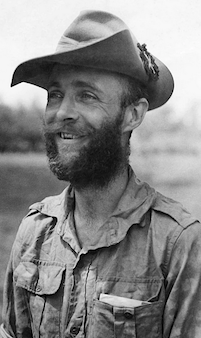
The Chindits were the brainchild of Orde Wingate, perhaps the most controversial general in British history. Winston Churchill considered him “a man of genius”, but Churchill’s personal physician thought him borderline insane; of course, these two characteristics are not mutually exclusive. He was certainly unorthodox, single-minded & famous for his eccentricities.
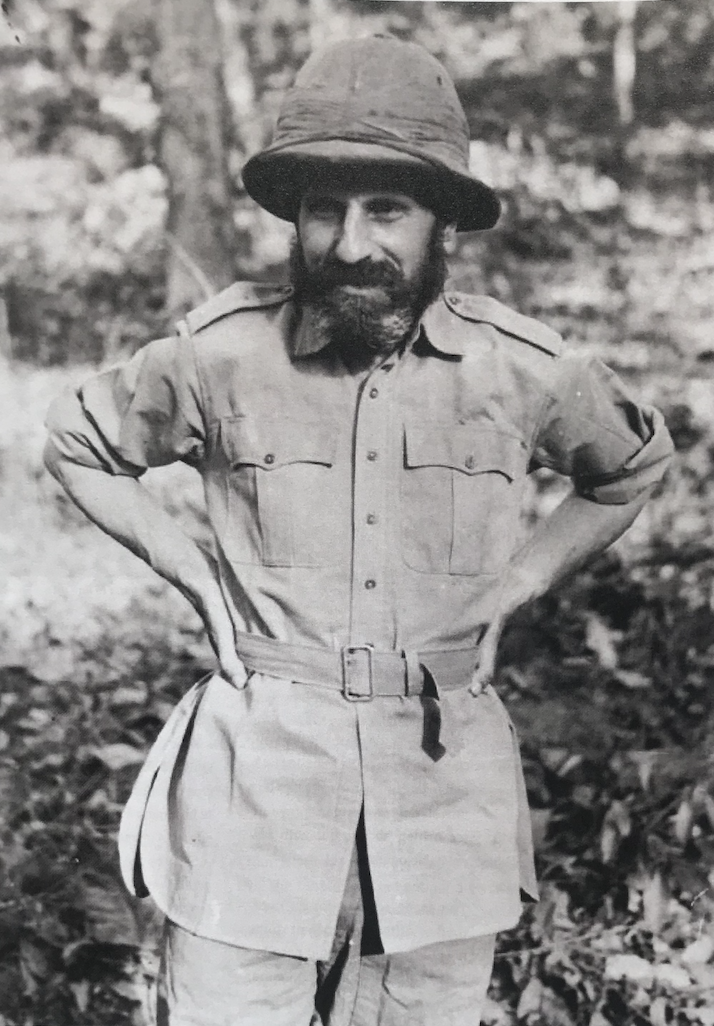
Wingate was born in India in 1903 & educated at Charterhouse School in England. He was trained at the Royal Military Academy at Woolwich & commissioned into the Royal Artillery in 1923.
In 1936-39, Wingate was posted to a staff intelligence role in Palestine, where he created, trained & led ‘Special Night Squads’ of Zionists that operated against Arabs who were resisting Zionist expansion. In 1940-41, Wingate led the ‘Gideon Force’ of guerillas against the Italians in Ethiopia. With about 1,600 Ethiopian & Sudanese troops & up to 15,000 camels, this force attacked enemy strongpoints & harried supply lines in remote & difficult territory. The six week campaign captured over 15,000 Italian & Abyssinian troops.
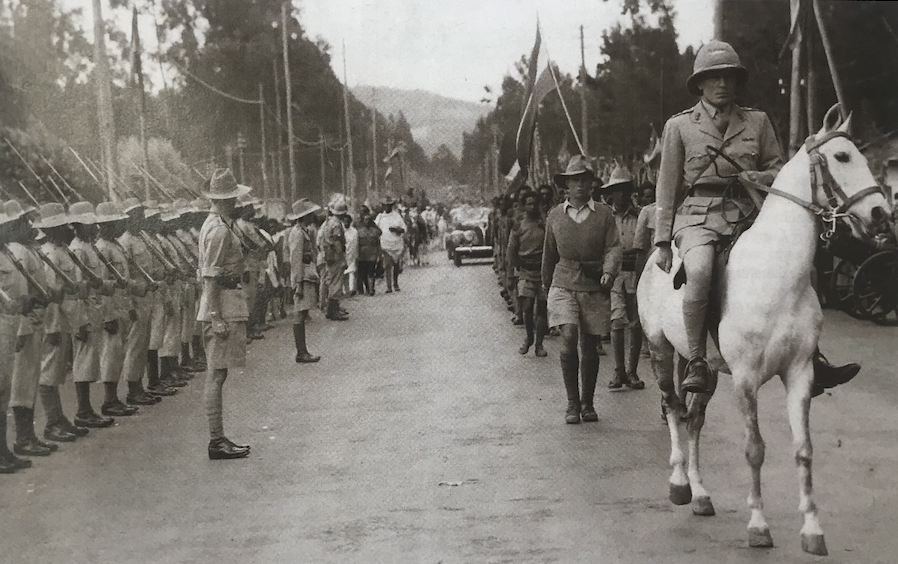
These experiences led him to propose
“…to assemble & employ a force of the highest fighting qualities capable of employment in widely separated columns … allocated an objective behind the enemy’s lines, the gaining of which will decisively affect the campaign.” (32)
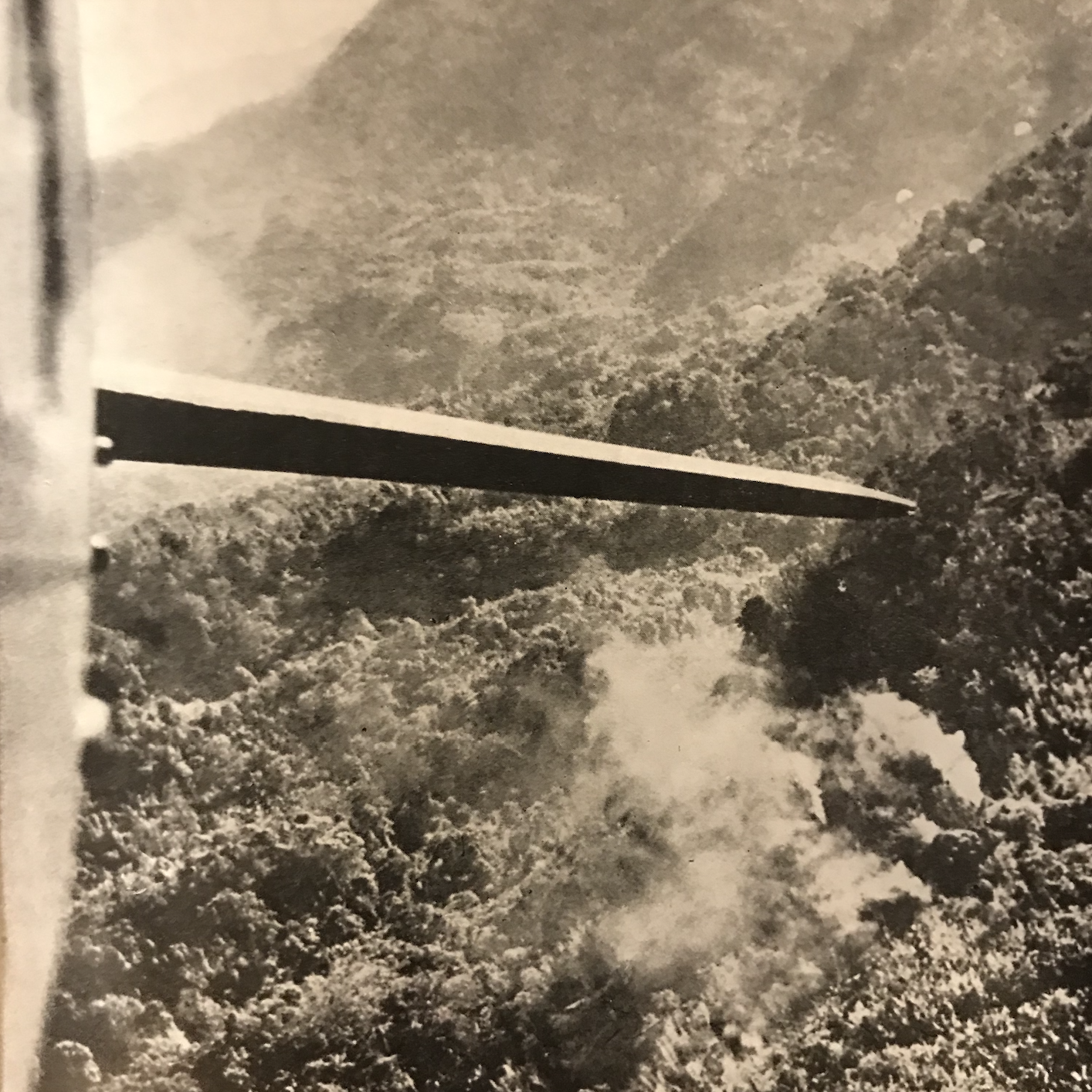
Wingate propsed that supply by air would be preferable to the traditional dependence on roads:
“The vulnerable artery is the Line of Communication winding through the jungle. Have no L of C on the jungle floor. Bring in the goods like Father Christmas, down the chimney.” (33)
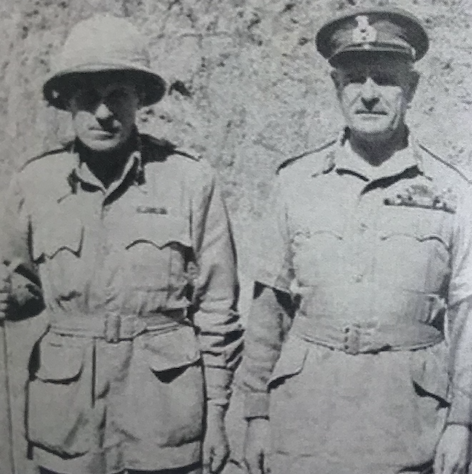
In early 1942, with British resistance crumbling in Burma, the War Office offered the services of Lt Colonel Wingate to General Sir Archibald Wavell, Commander-in-Chief India. Wingate’s operations in Palestine & Ethiopia had been under Wavell’s command, so the latter well appreciated how effective they could be.
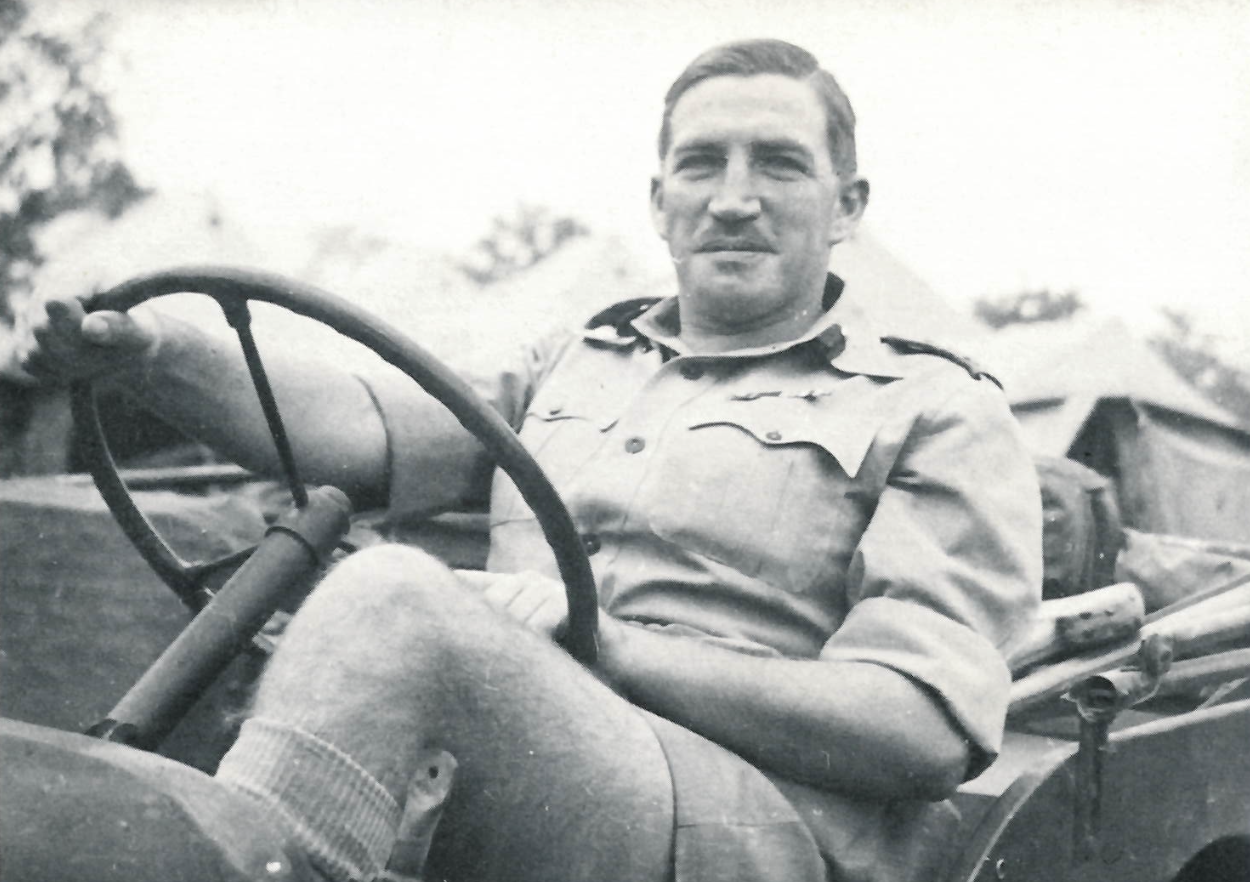
A kindred spirit for Wingate was Major Mike Calvert, who was working at the Bush Warfare School at Maymyo, training officers & non-commissioned officers to lead bands of guerillas against the Japanese in China. Calvert had observed the Japanese invasion of China & had trained commandos for demolition operations in Hong Kong. He himself had used such techniques to delay the German invasion of Norway in 1940.
After intelligence gathering with Calvert, Wingate gained permission from Wavell to form the 77th Indian Infantry Brigade, which was intended to function deep in enemy territory in Long Range Penetration (LRP) missions. The brigade was organized into eight columns that would employ hit-&-run tactics. The columns had about 400 men each, including a Reconnaissance Platoon of 2nd Burma Rifles, two mortars & two Vickers machine guns. There was also a Mule Transport Platoon, with about 100 mules to carry heavy equipment & supplies. An RAF Liaison Officer attached to each column directed air resupply drops by radio.
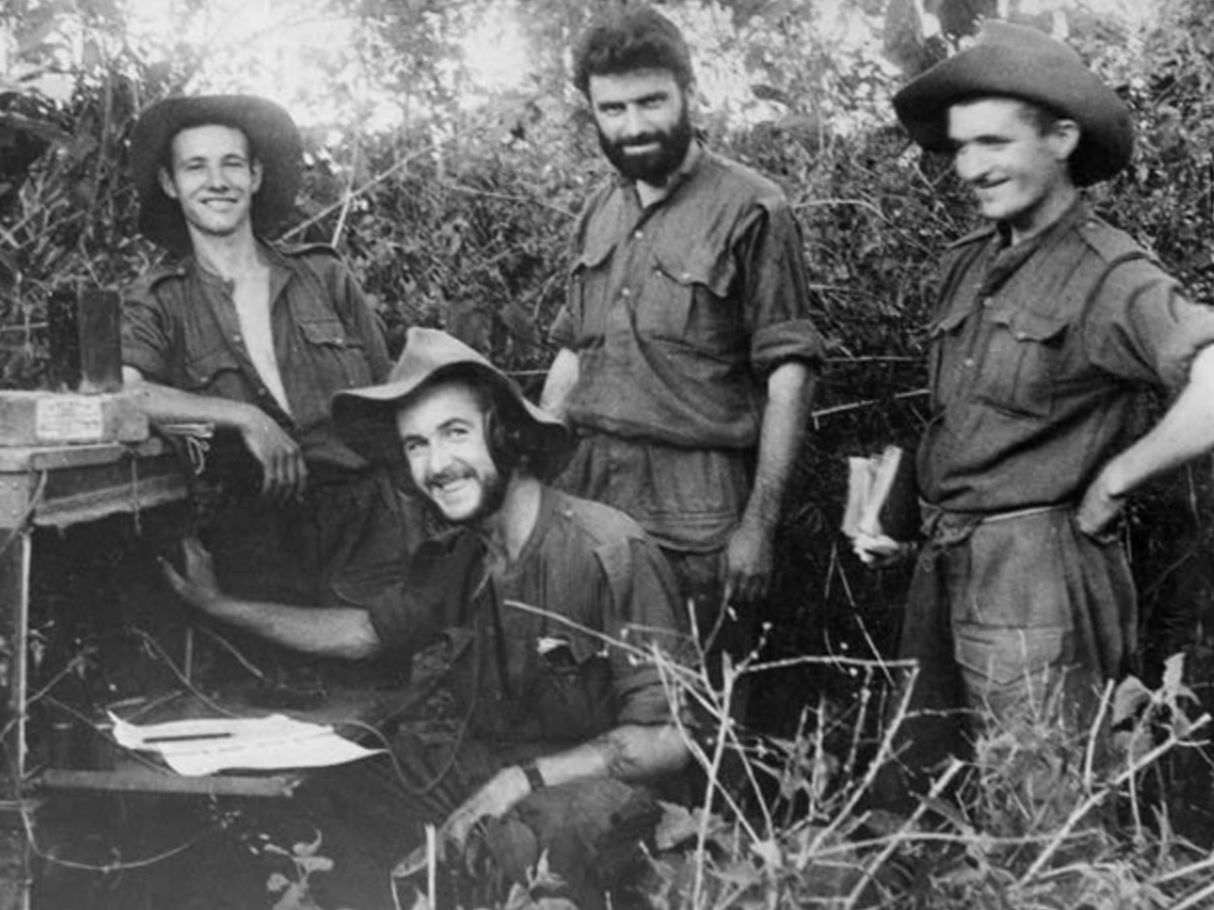
The brigade underwent rigorous training in the central Indian jungle near Jhansi for river crossings & jungle warfare.
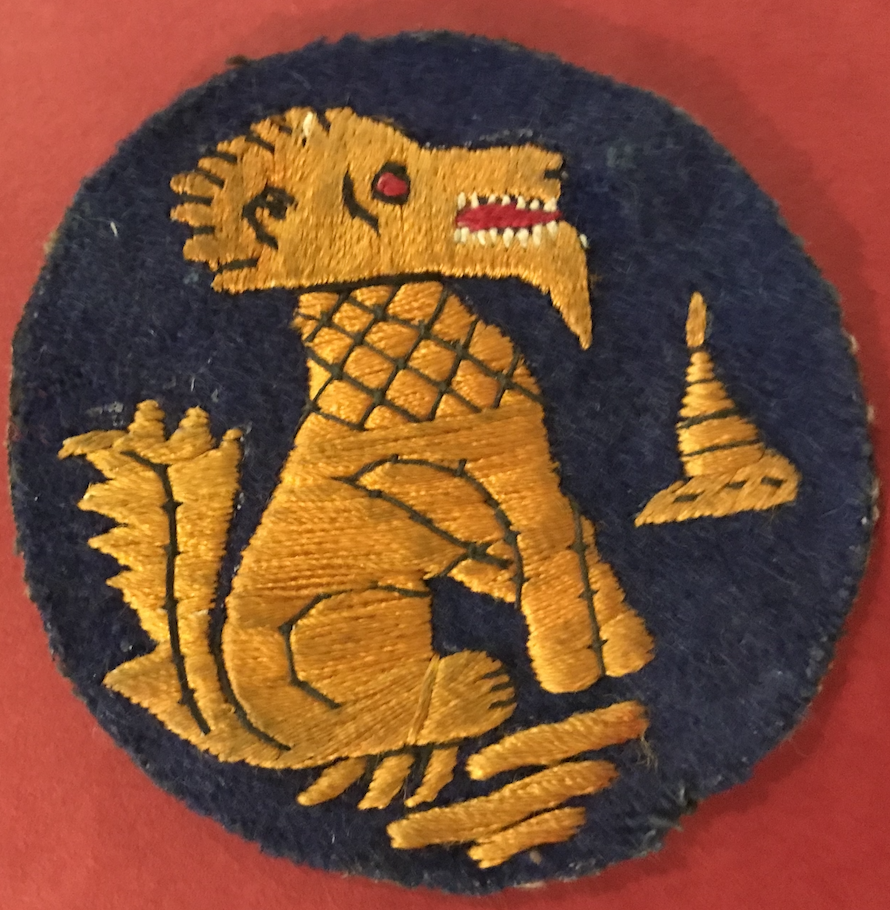
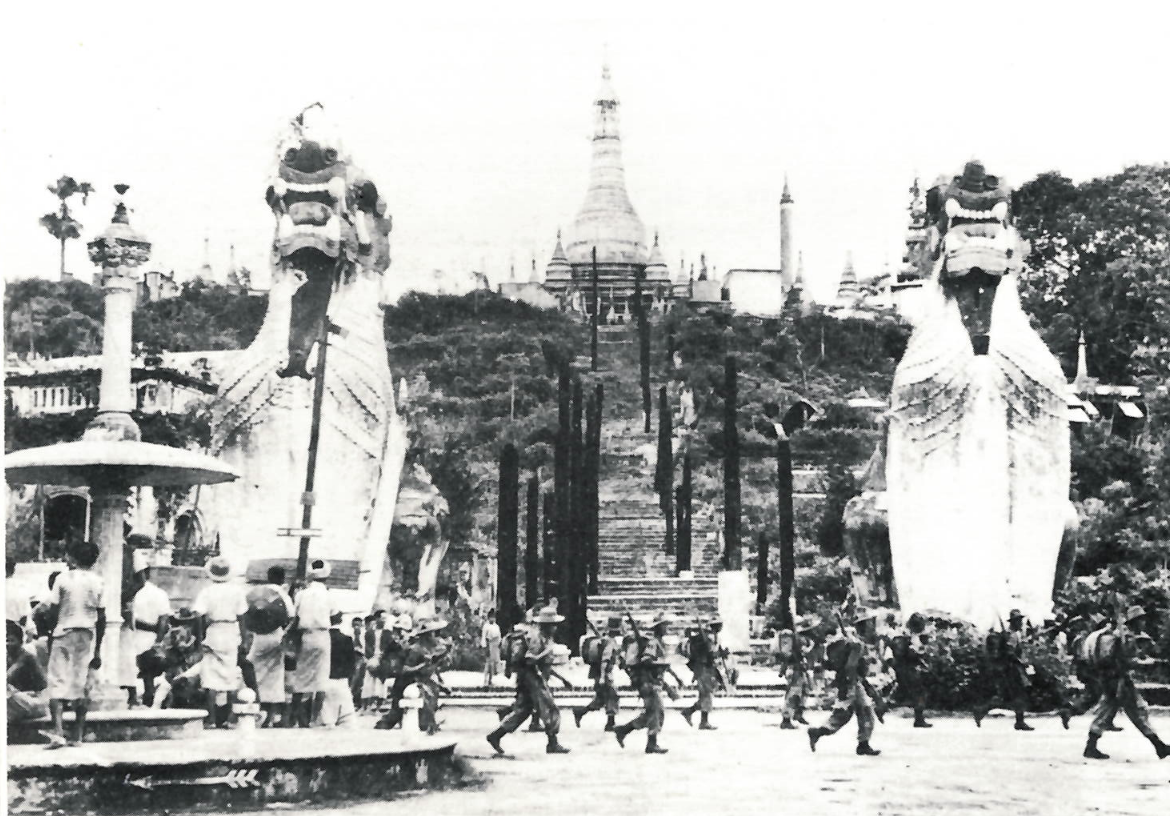
Wingate dubbed the force ‘Chindits’ from the statues of mythical chinthe winged lions that guard Burmese pagodas.
Operation Longcloth
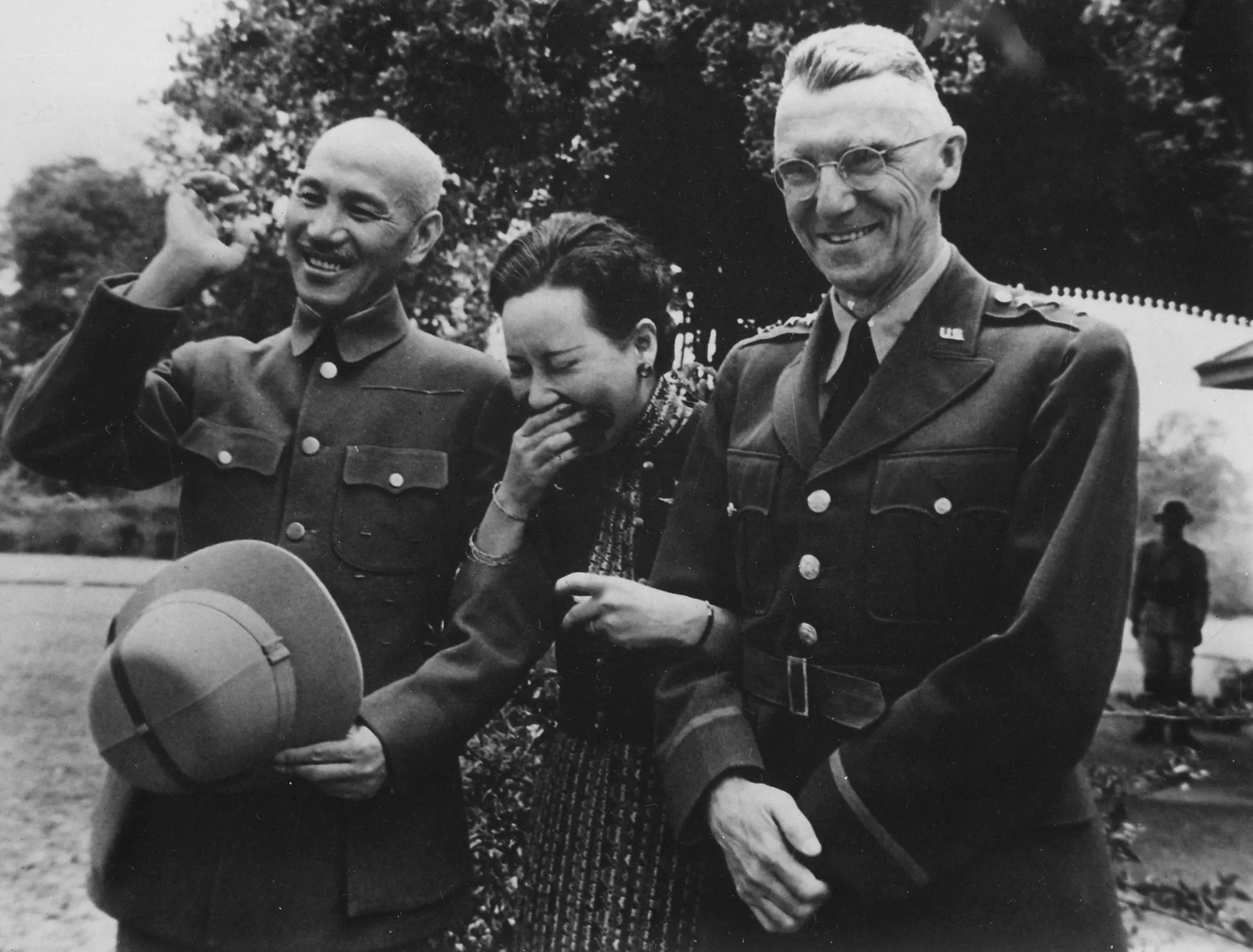
Operation Longcloth was initially planned to coordinate with an effort by the Chinese Nationalists that would divert Japanese forces from responding to the Chindits. In the event, the Nationalist leader Chiang Kai-Shek failed to commit his forces, but Operation Longcloth went ahead anyway, despite the greater risk without the Chinese diversion.
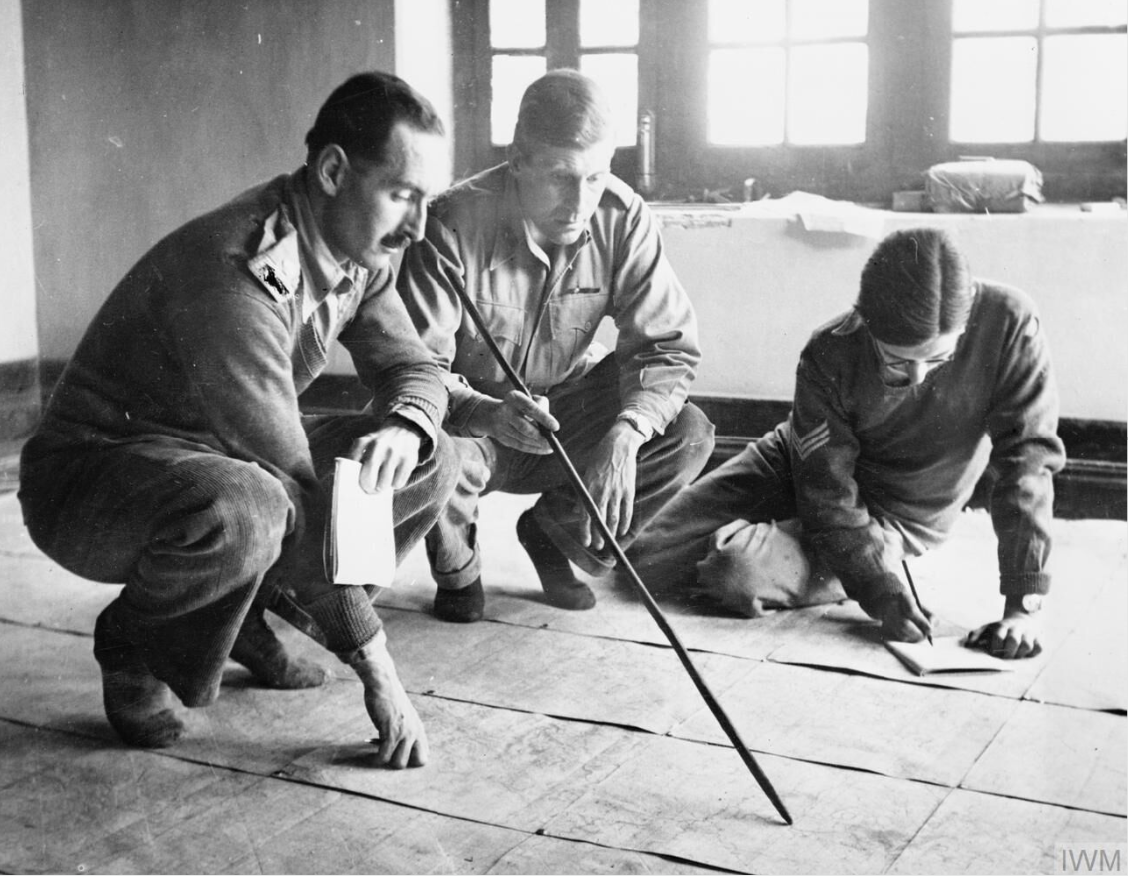
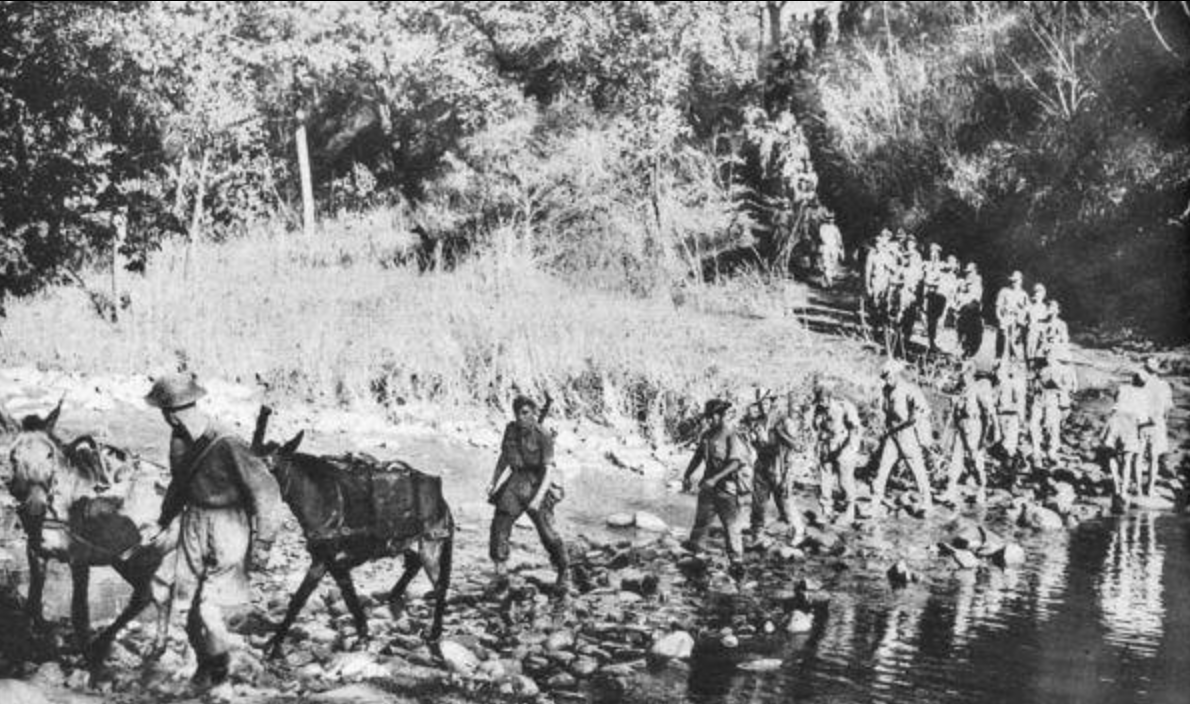
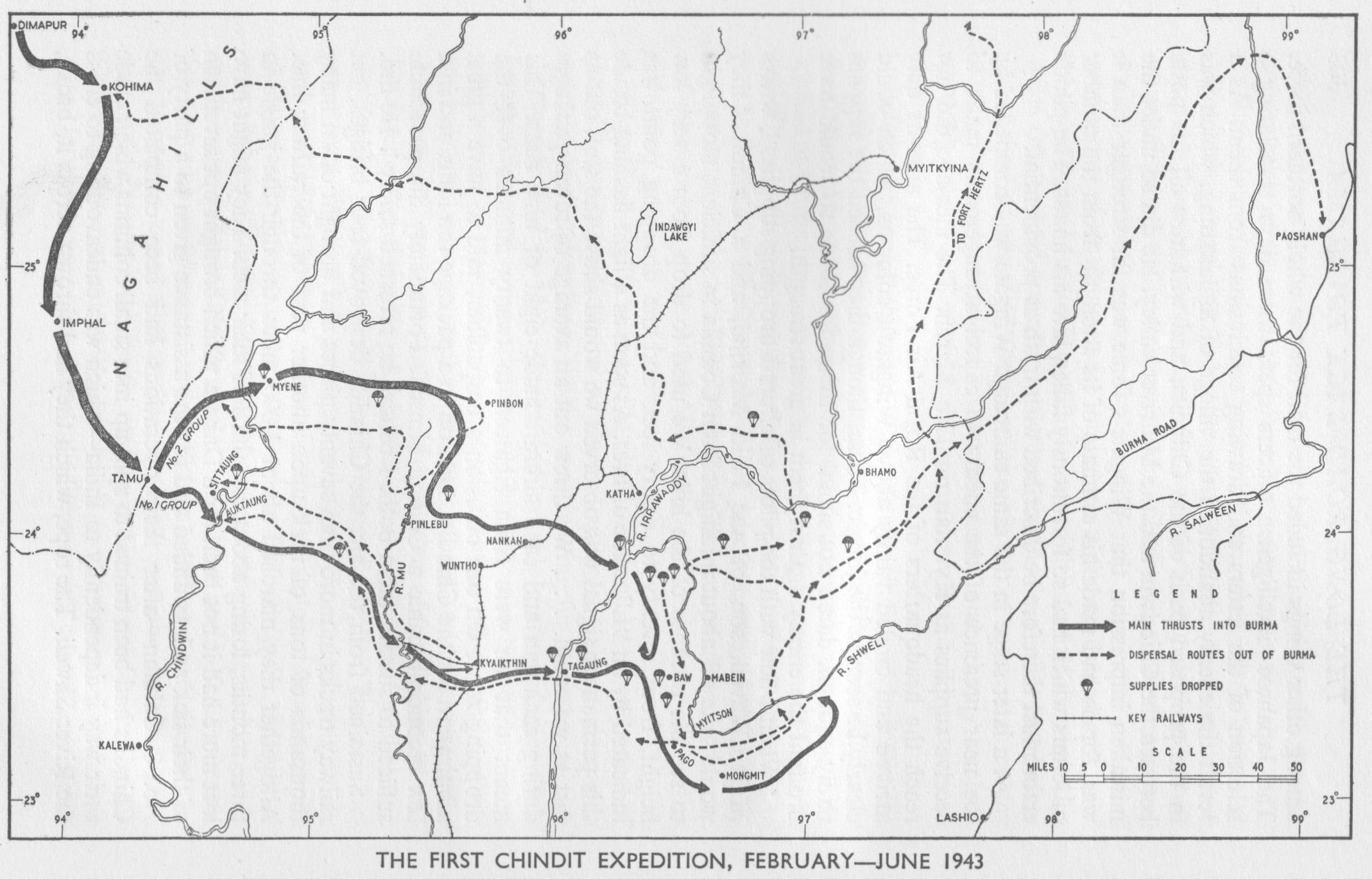
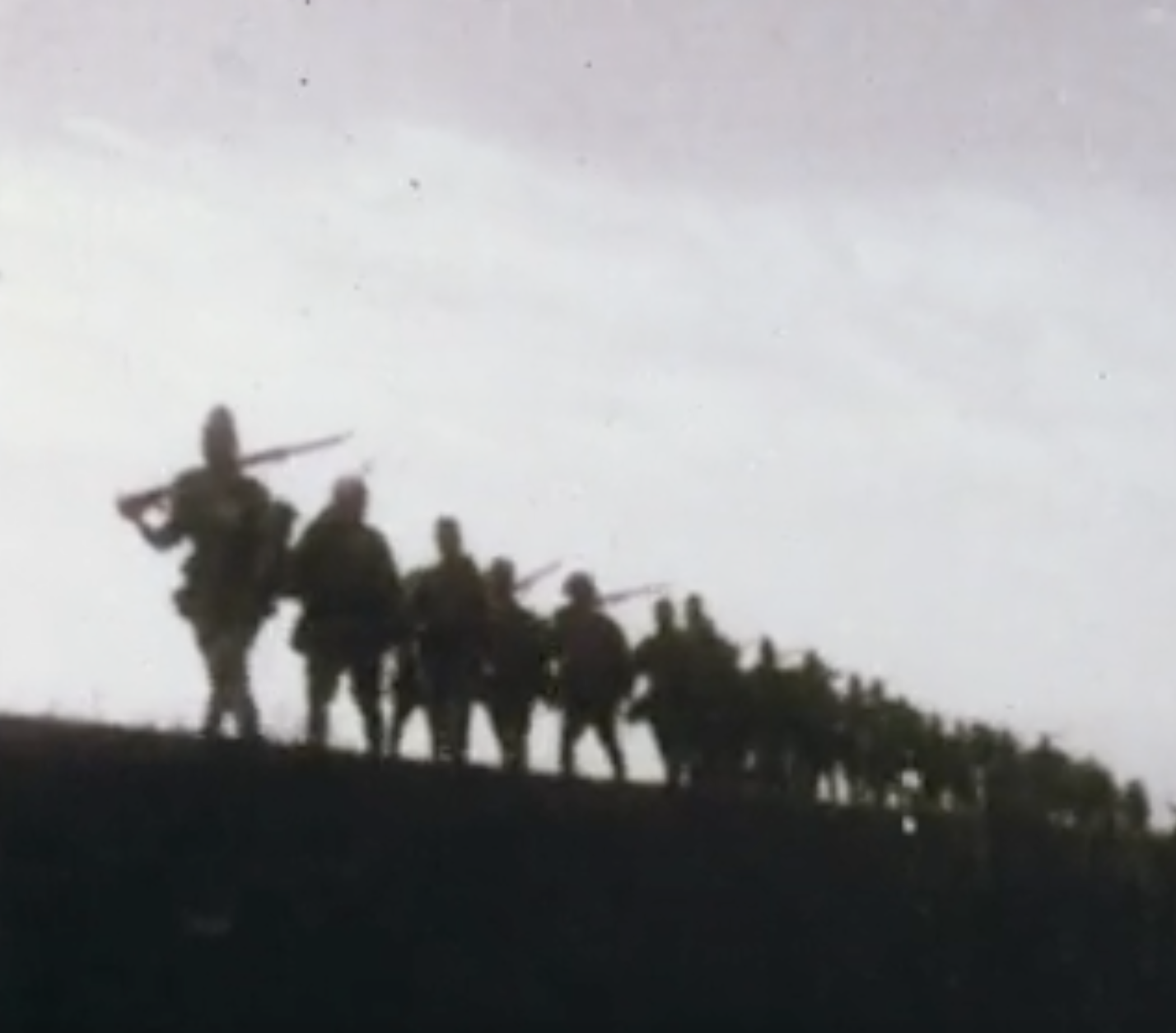
77th Brigade crossed the Chindwin River on February 13th 1943. They headed east in two thrusts, deep into northern Burma. Although over 1,100 mules were used to carry equipment, ammunition & supplies, each Chindit carried on average 72 to 80lb of gear. Man & mule marched in a single file, termed a ‘snake’, that could stretch for half a mile.
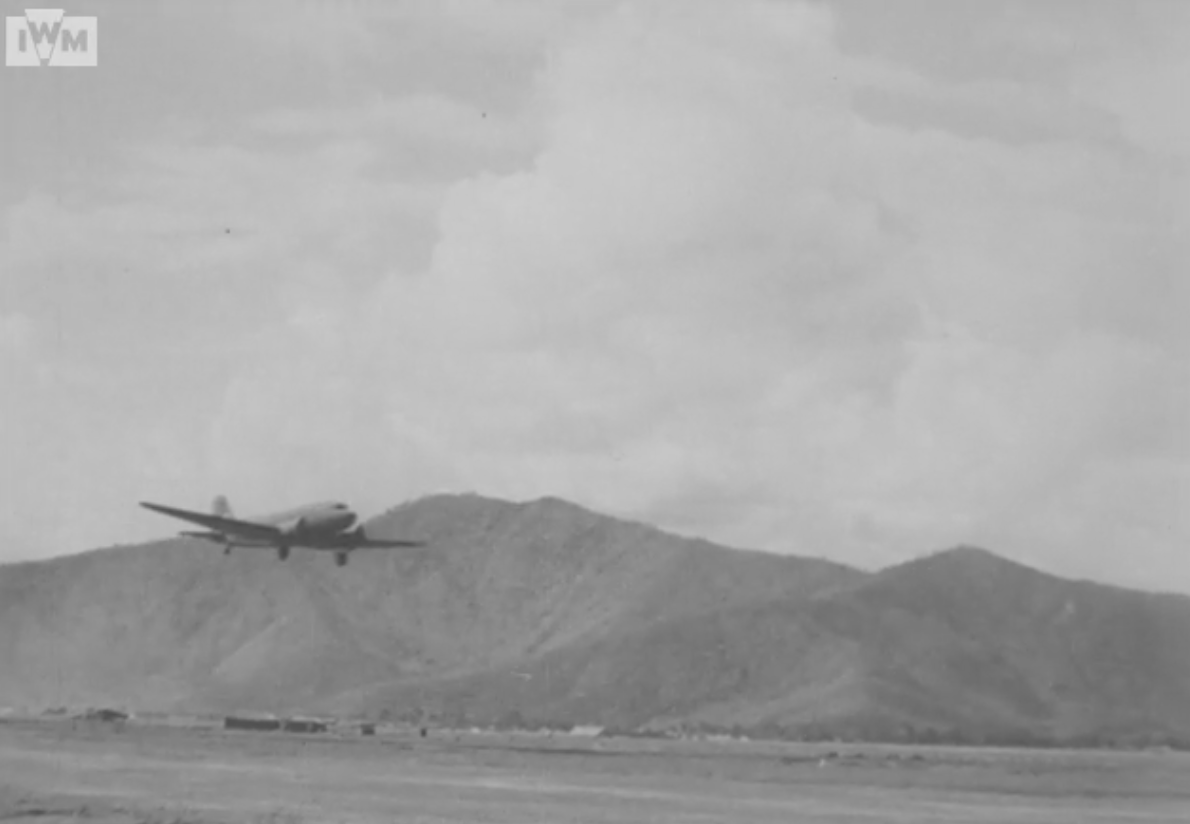
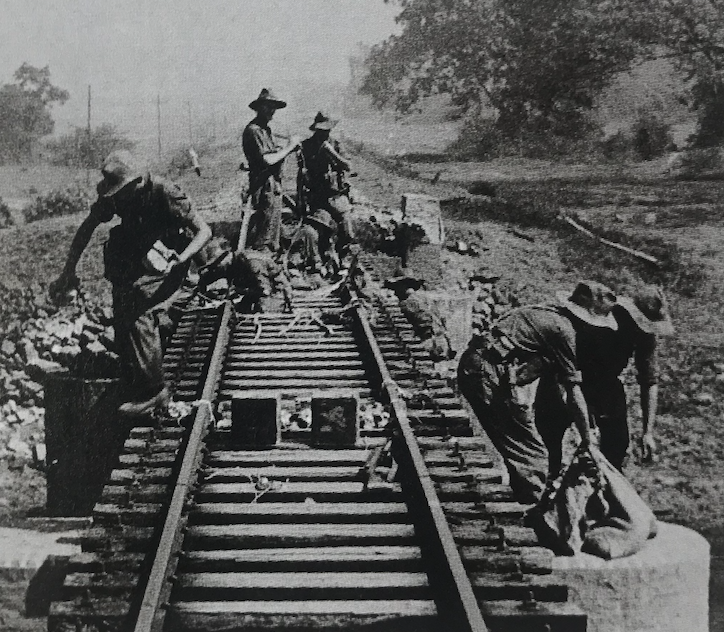
They were resupplied by C47 Dakotas & Hudsons of 31 Squadron RAF, flying from Agartala in India, which delivered 300 tonnes during the operation. Japanese supply dumps were attacked, convoys ambushed & lines of communication disrupted. They blew up the Mandalay-Myitkyina railway in more than seventy places.
Eventually, Wingate was ordered to withdraw on March 24th, as they had reached the limit of range for air resupply, many were sick & the Japanese were closing in. The Chindit Brigade split into columns & dispersed, eventually reaching India having marched between 750 & 1,000 miles, some via China.
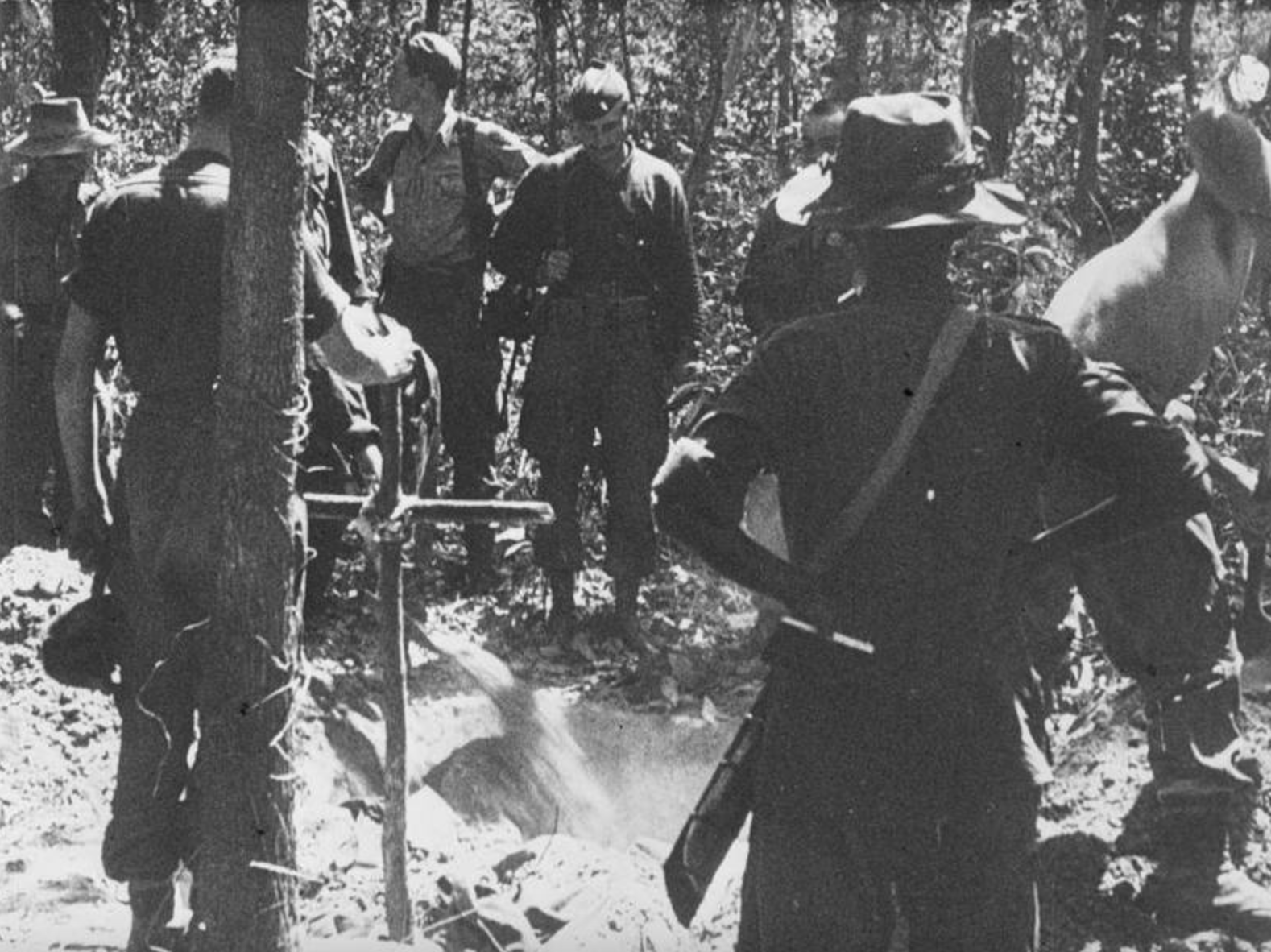
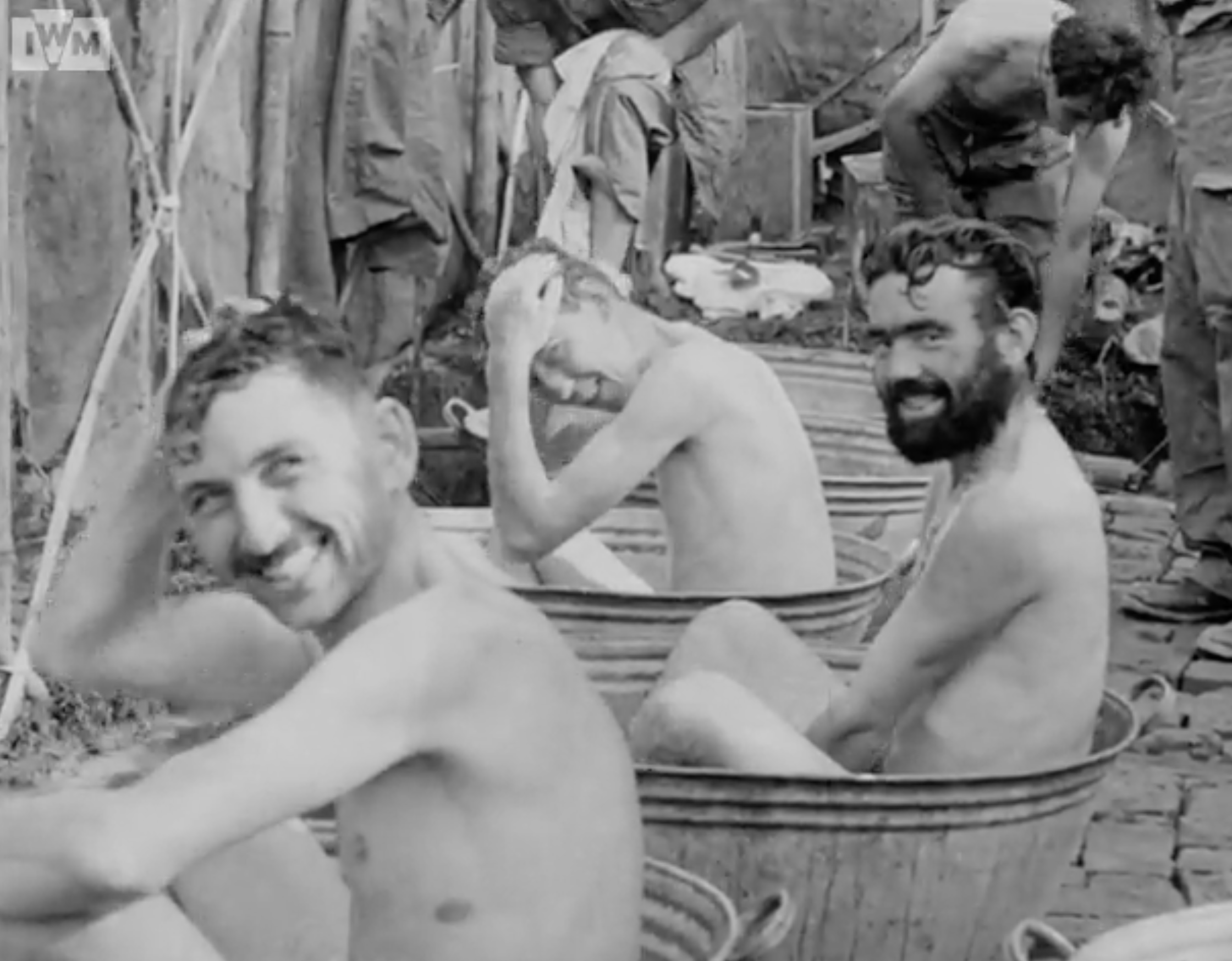
Of the 3,000 who entered Burma in February, only 2,182 returned. Almost all who returned were hospitalised & 600 of these were too unfit to return to service. Many had ‘Chindit Syndrome’, a combination of ailments including malaria, dysentry & infected sores. The scale of the losses forced a decision that future expeditions should attempt to evacuate sick & wounded by air.
After the bitter defeat of the British in Burma in 1942, Operation Longcloth was presented as a great success. It showed that the Japanese were not invincible & boosted morale considerably.
More detail about Operation Longcloth can be found here.
Operation Thursday
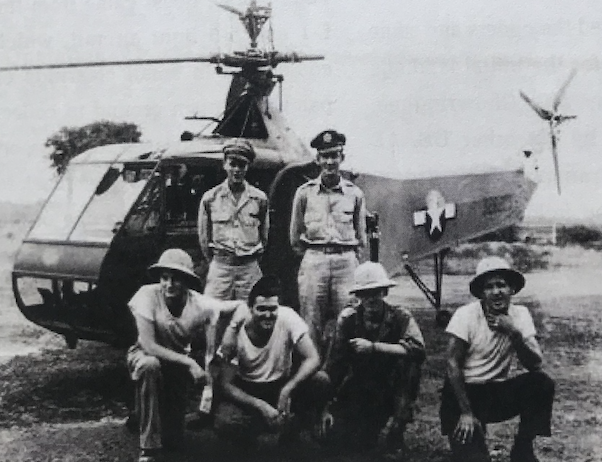
Winston Churchill was delighted with Operation Longcloth & took Wingate with him to meet President Roosevelt at the Quadrant Conference in Quebec in August. Roosevelt was impressed & offered additional US aircraft to support a larger operation in 1944. This was known as the 1st Air Commando & provided transport, glider & light aircraft, as well as fighters & bombers for close support. It even included experimental helicopters.
Under the command of Col Philip Cochran, an experienced USAAF fighter pilot, the 1st Air Commando Group supplied:
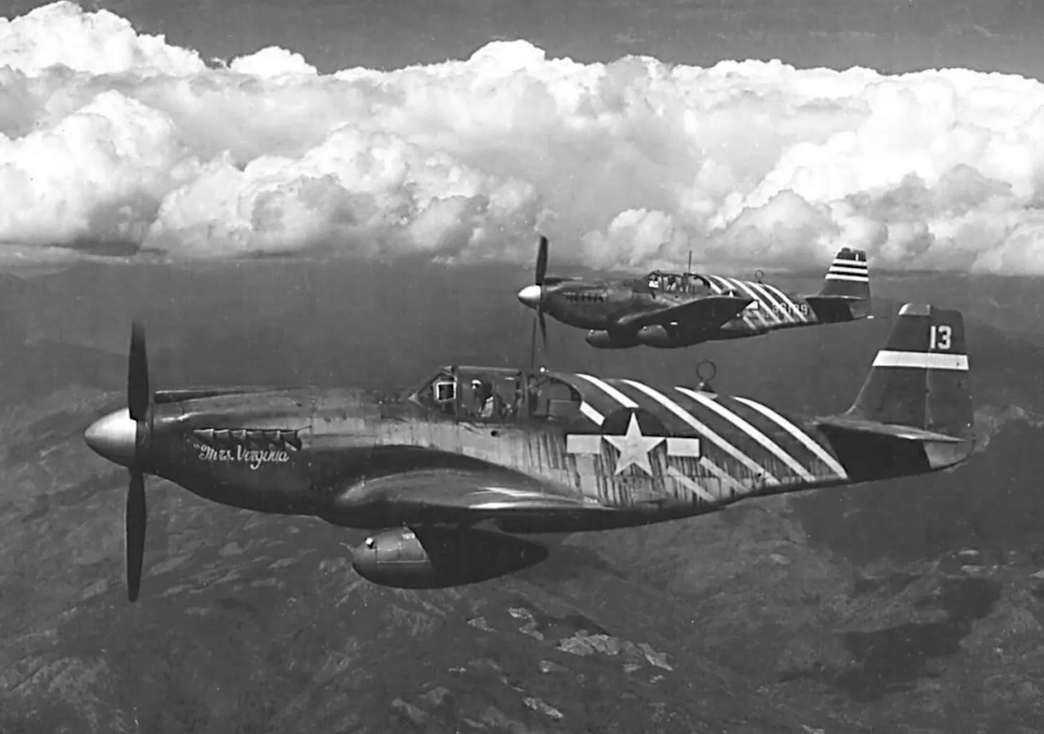
Thirty P-51A Mustang fighters
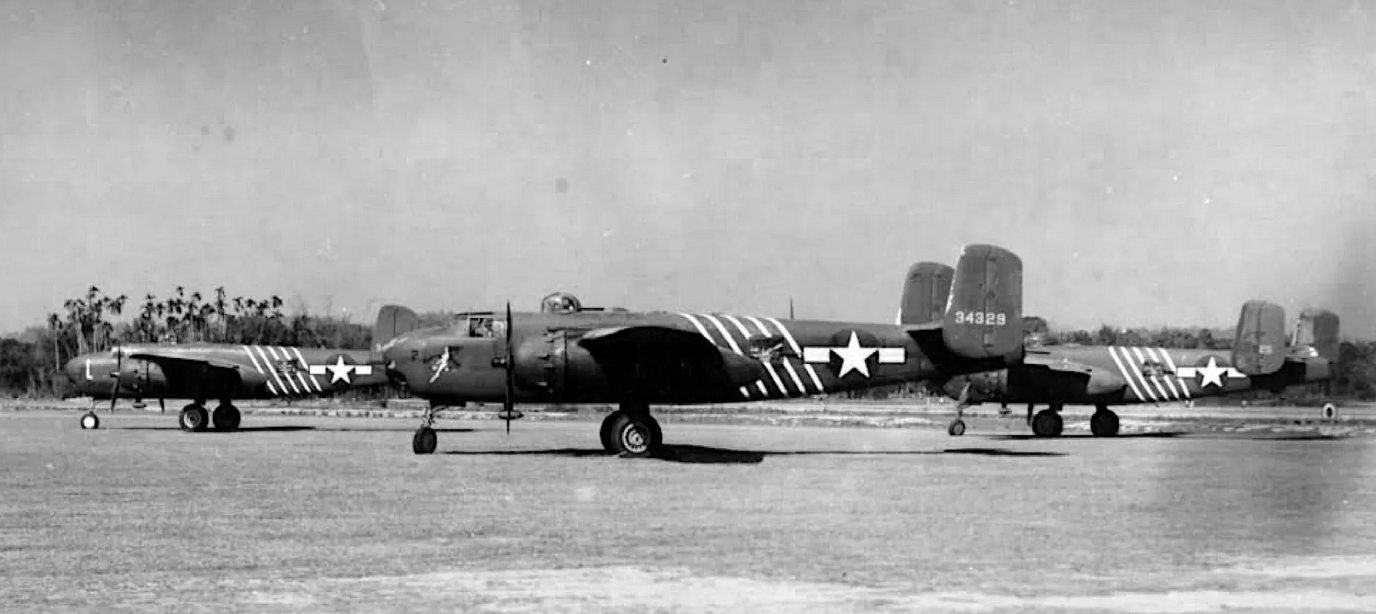
Twelve B-25H Mitchell bombers
Thirteen C47 Dakota transport aircraft
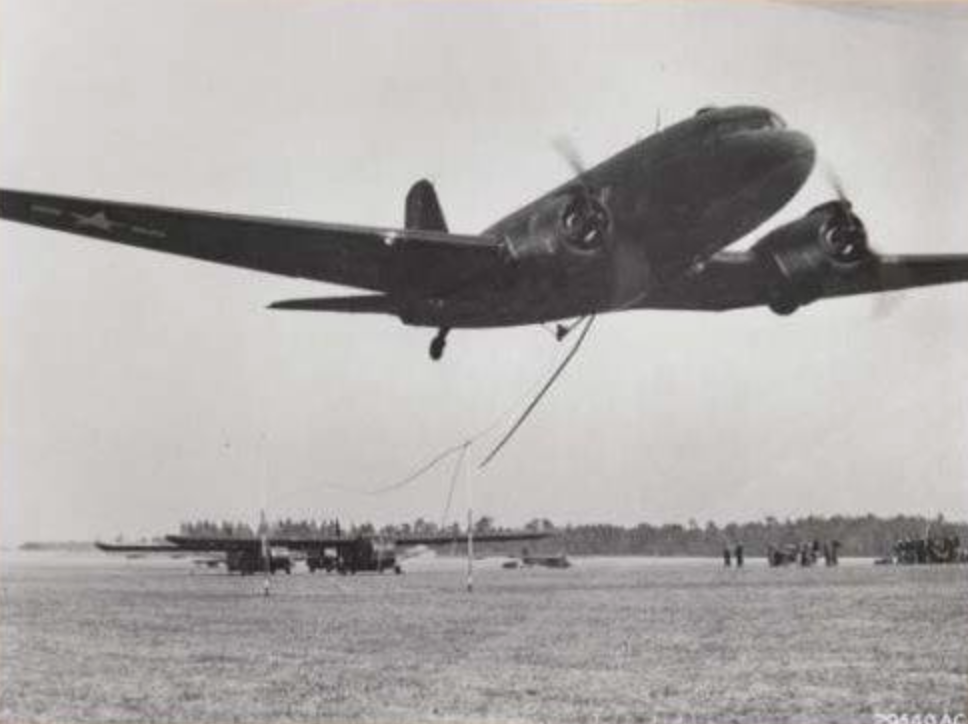
One hundred and fifty Waco CG-4A gliders
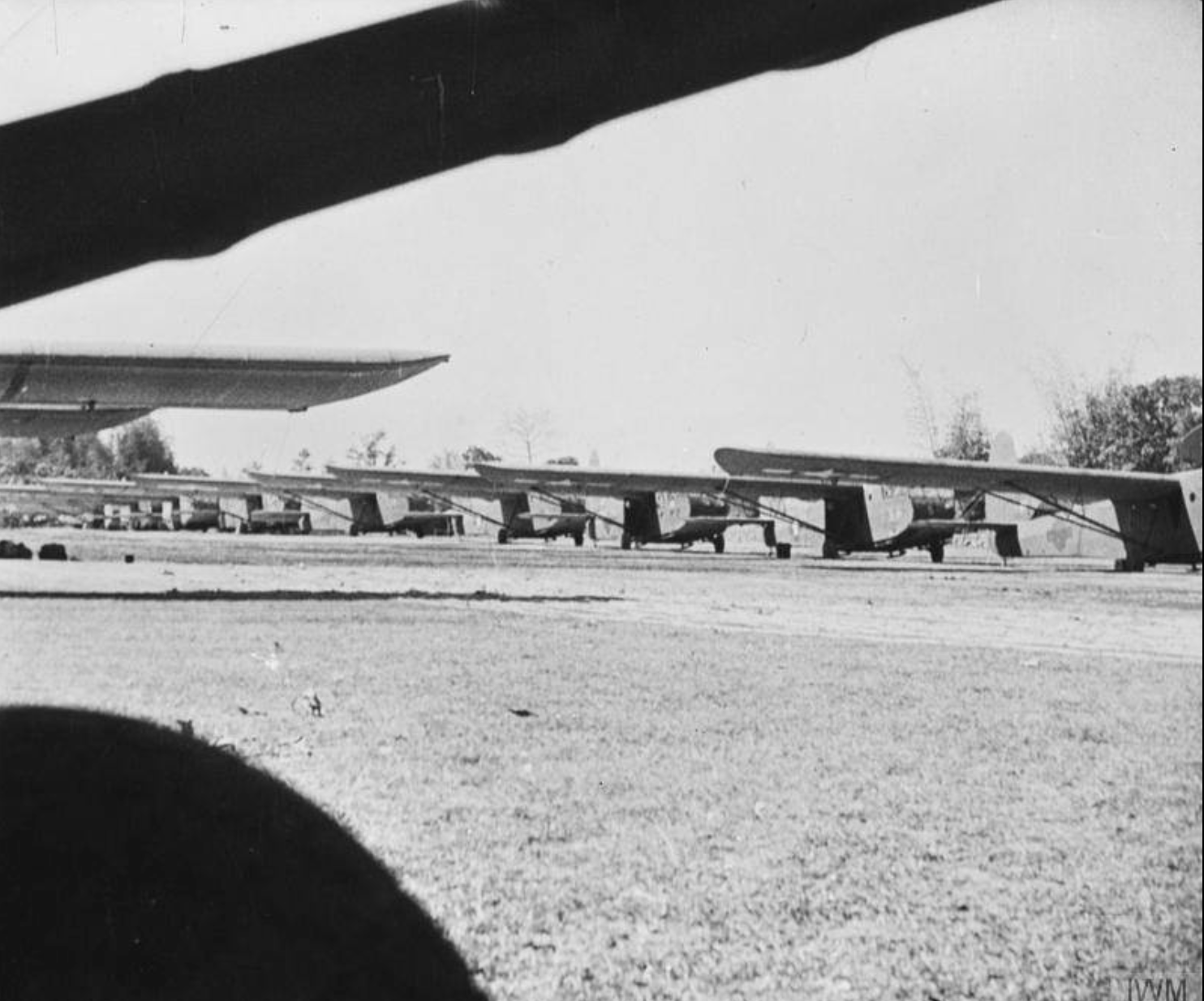
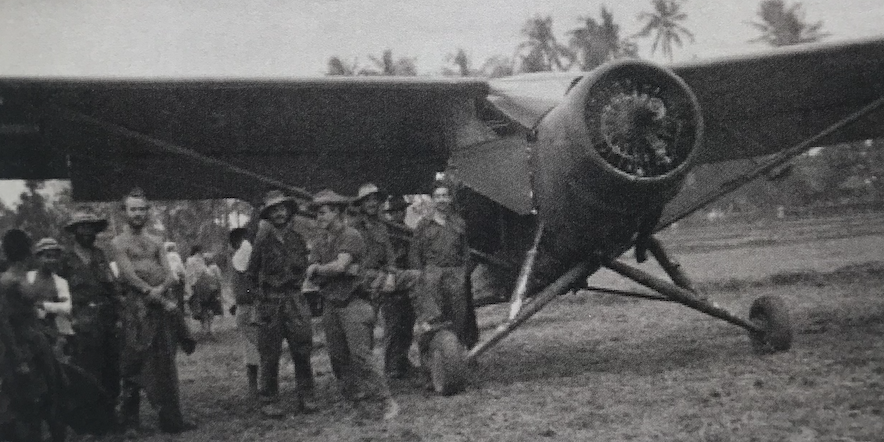
Twelve UC-64 Norseman light transport aircraft
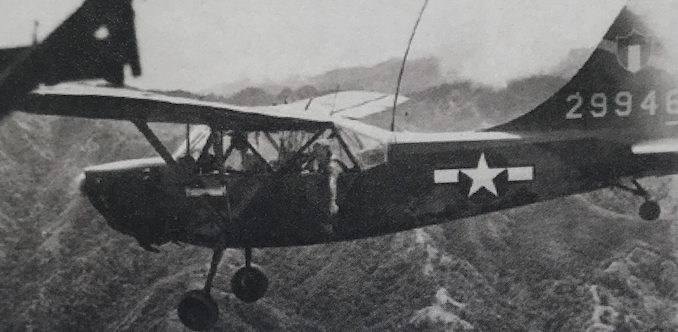
Eighty L-5 Sentinel light aircraft
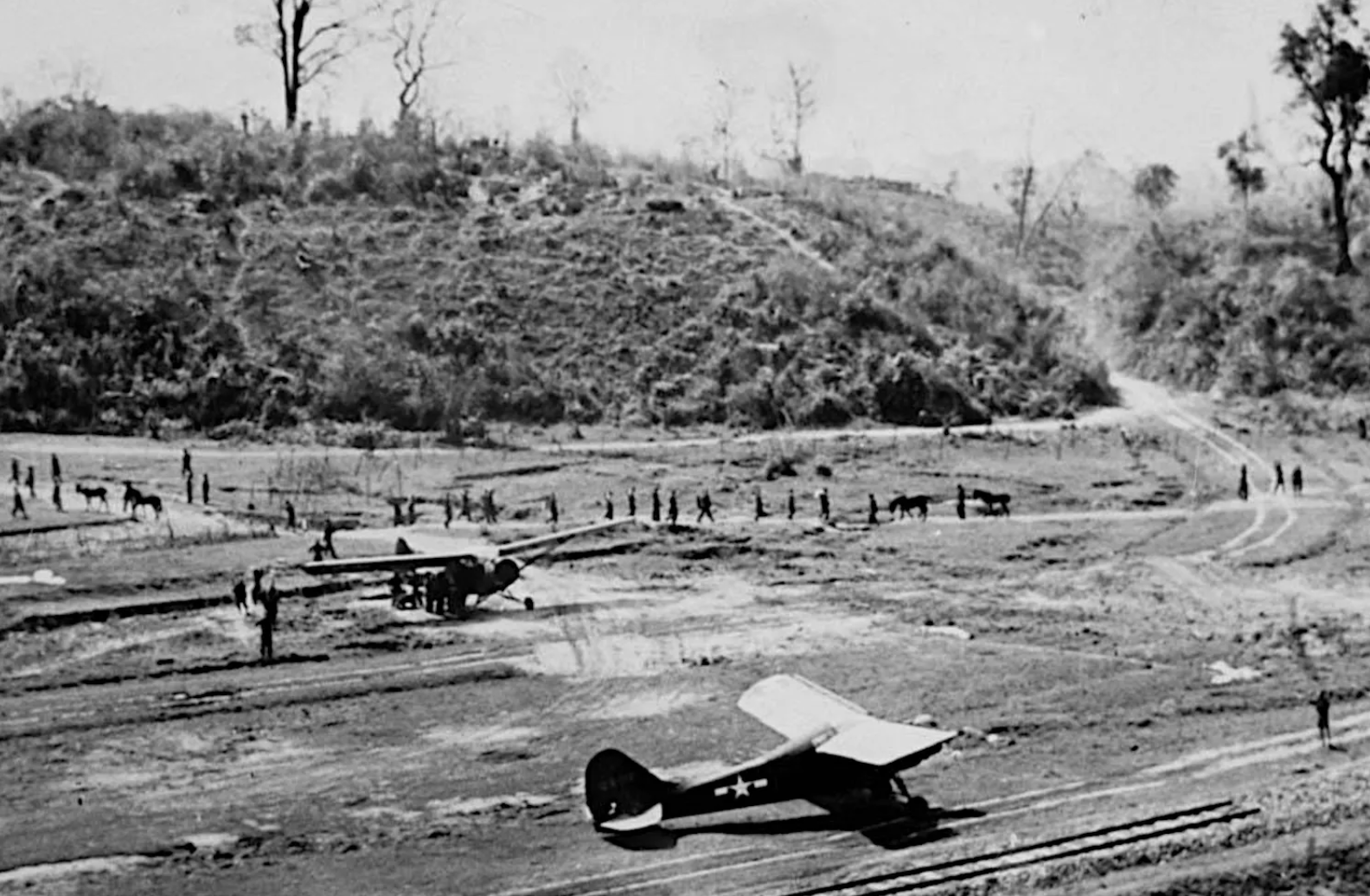
Twenty L-1 Vigilant light aircraft
An experimental flight of four Sikorsky YR-4B helicopters
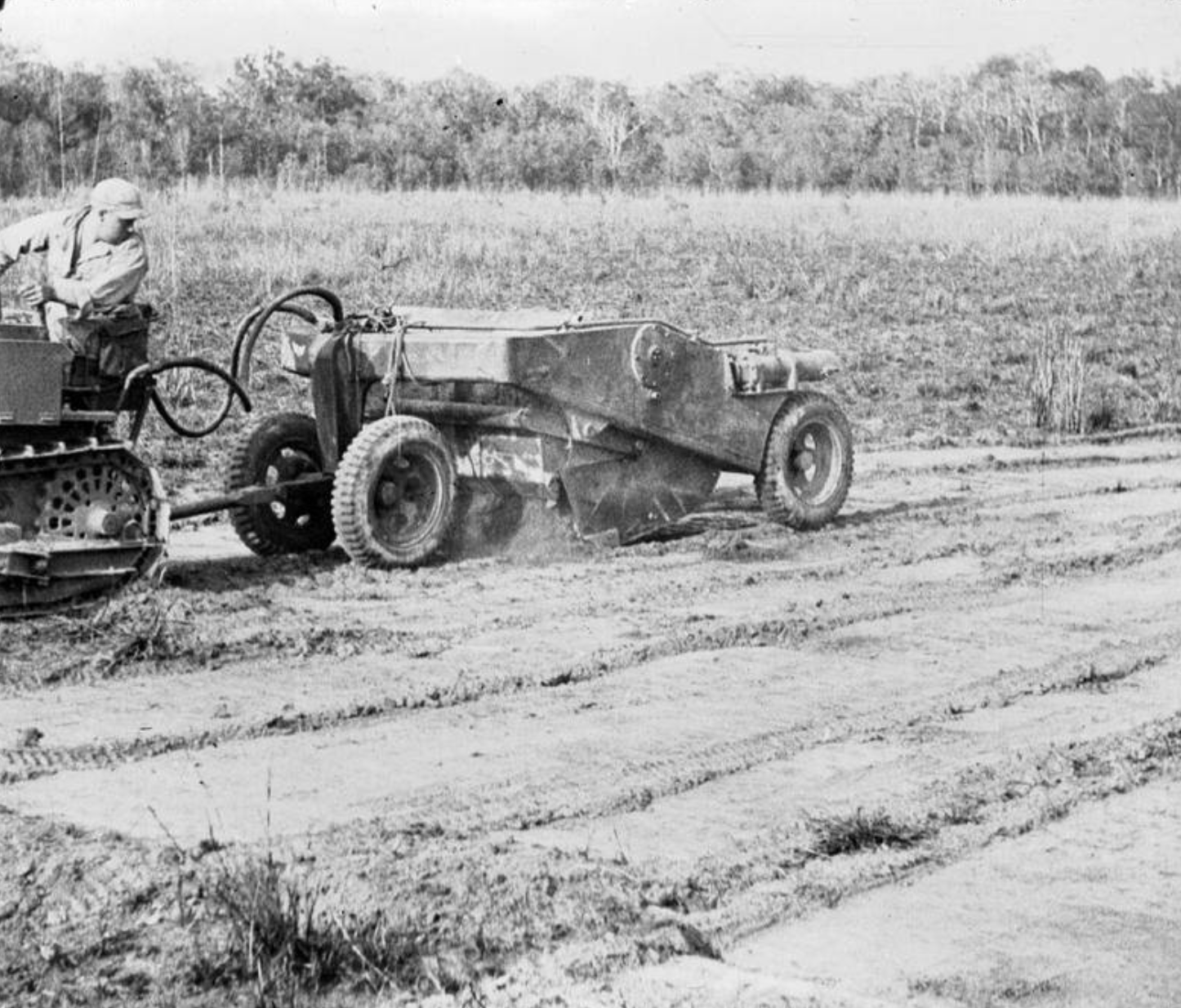
900th Airborne Engineers Company, with air-transportable equipment to build runways, including bulldozers

Wingate was promoted to Major General & the Chindits were expanded to six brigades composed of British, Gurkha & Nigerian battalions, with supporting units, a total of 20,000 men. They were dubbed Special Force, with a cover name of 3rd Indian Division.
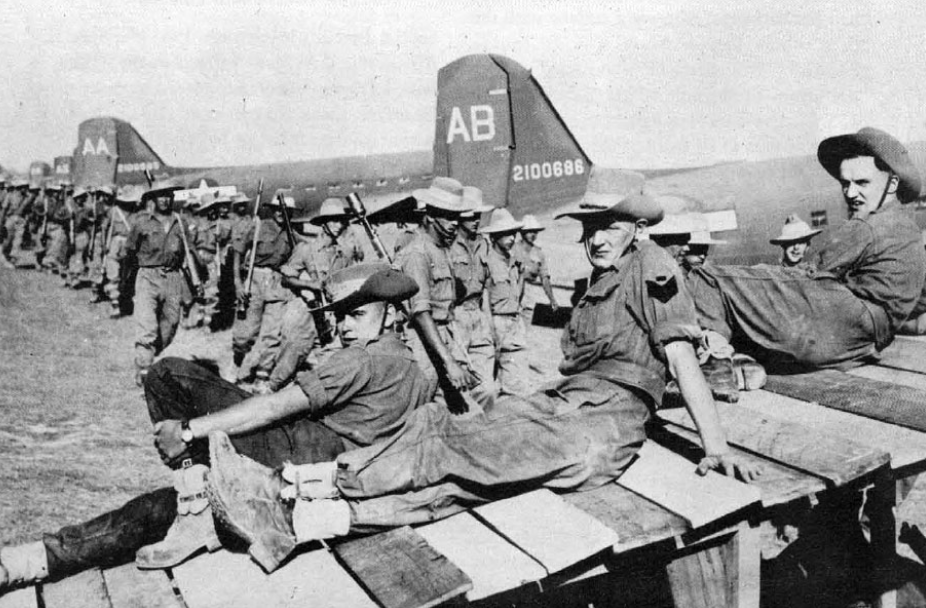
Their task, code-named Operation Thursday, was to deploy into Japanese rear areas to support an offensive into northern Burma by Chinese & US troops under General Joe Stilwell. The strategic aim was to take Myitkyina & provide a land route from India to China for large scale delivery of supplies.
Five of the six Chindit Brigades were committed to Operation Thursday. The sixth, 23 Brigade, was kept in reserve & deployed in the Battle of Kohima.
Only one of the five brigades involved in Operation Thursday travelled entirely by foot. This was 16 Brigade, which set off on 5 February 1944 & marched for six weeks through very rough terrain to reach its operational area near Indaw.
The grueling conditions of 16th Brigade’s march in were described by their CO, Brigadier Fergusson:
“This march was the heaviest imaginable. The rain was torrential & almost continuous. The cold was intense, particularly at bivouacs over 5000 feet. The 70lb the men were carrying increased in weight due to saturation with water. A dry bivouac was practically unknown. Leeches were innumerable, but less unpleasant than the polaung fly, whose vicious bite hardened into a septic lump. Wireless communication was difficult & the supply-dropping on the whole atrocious, up to 40 & 50% of the supplies dropped falling hundreds of thousands of feet down the cliffs & becoming a dead loss. Columns averaged 9 days to cover the 35 miles from road head to Hkalak.” (26)
The other four Chindit brigades were flown into Burma by 1st Air Commando & the RAF.
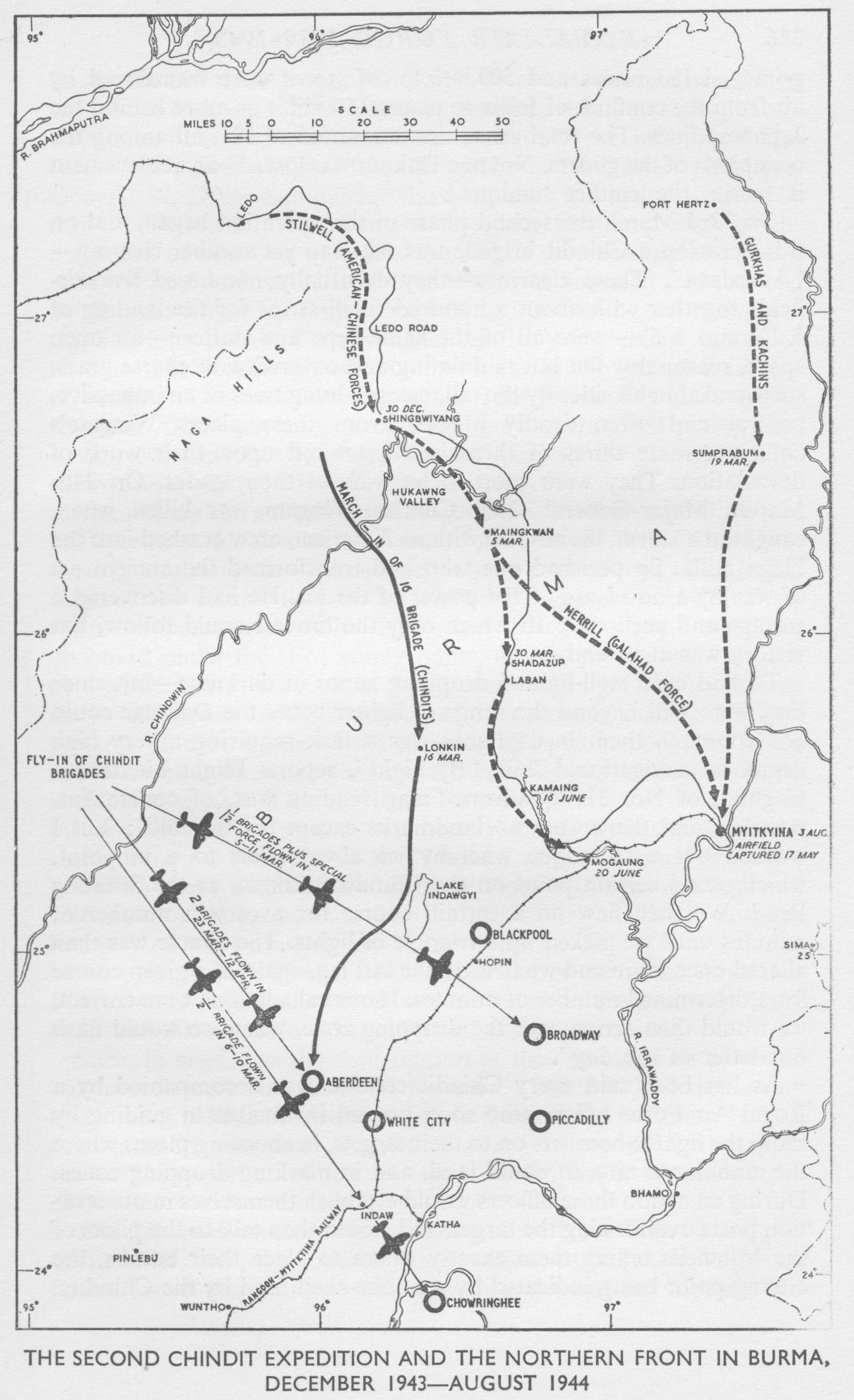
The fly-in began during the night of 5/6 March. Three landing zones had been chosen, code-named Piccadilly, Broadway & Chowringhee.
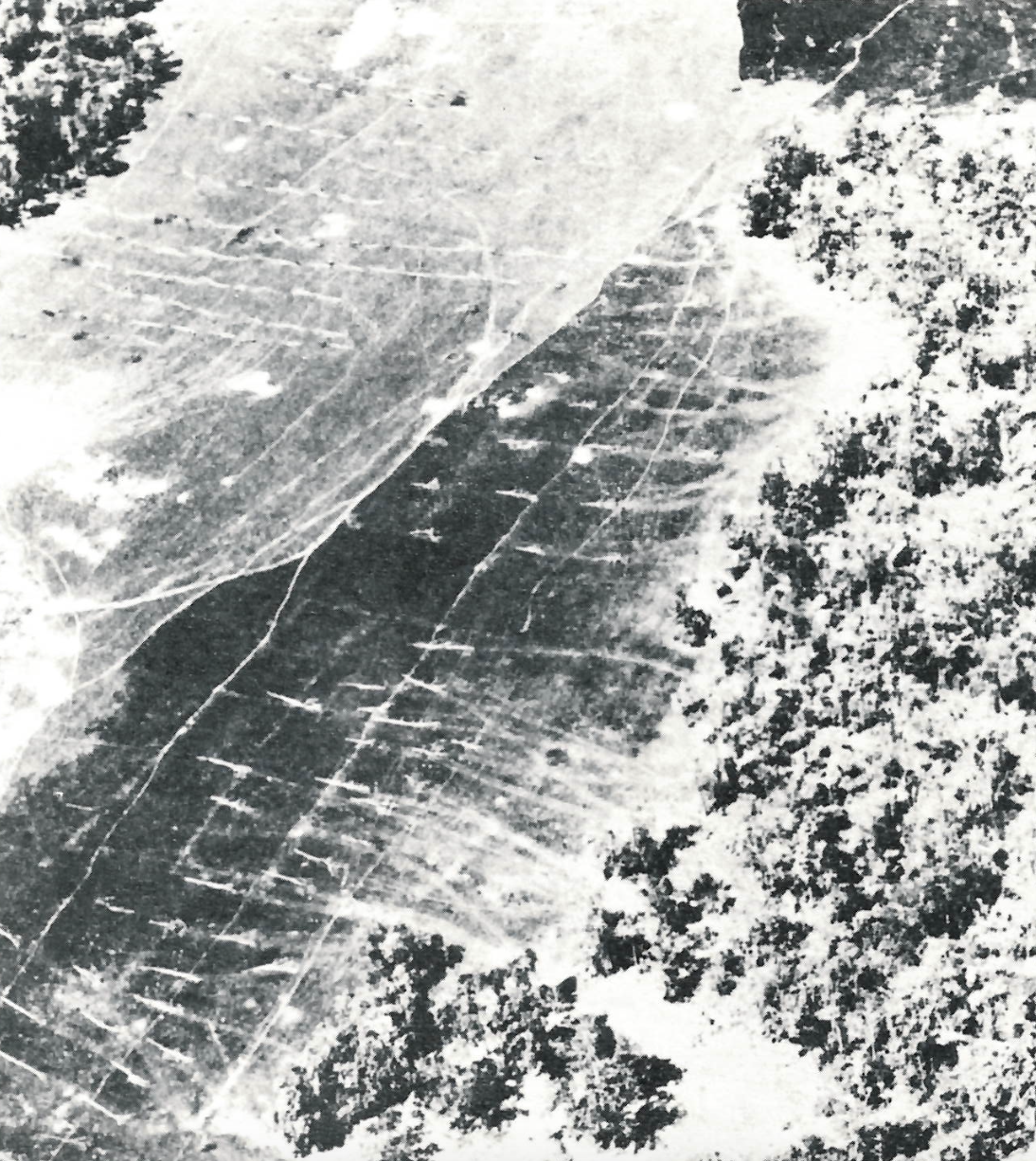
However, a last-minute reconnaissance flight discovered logs blocking the Piccadilly landing zone. Not only did this rule out Piccadilly, but it raised fears that the Japanese were aware of the operation. An anxious conference of senior officers decided to adjust the plan & risk carrying on.
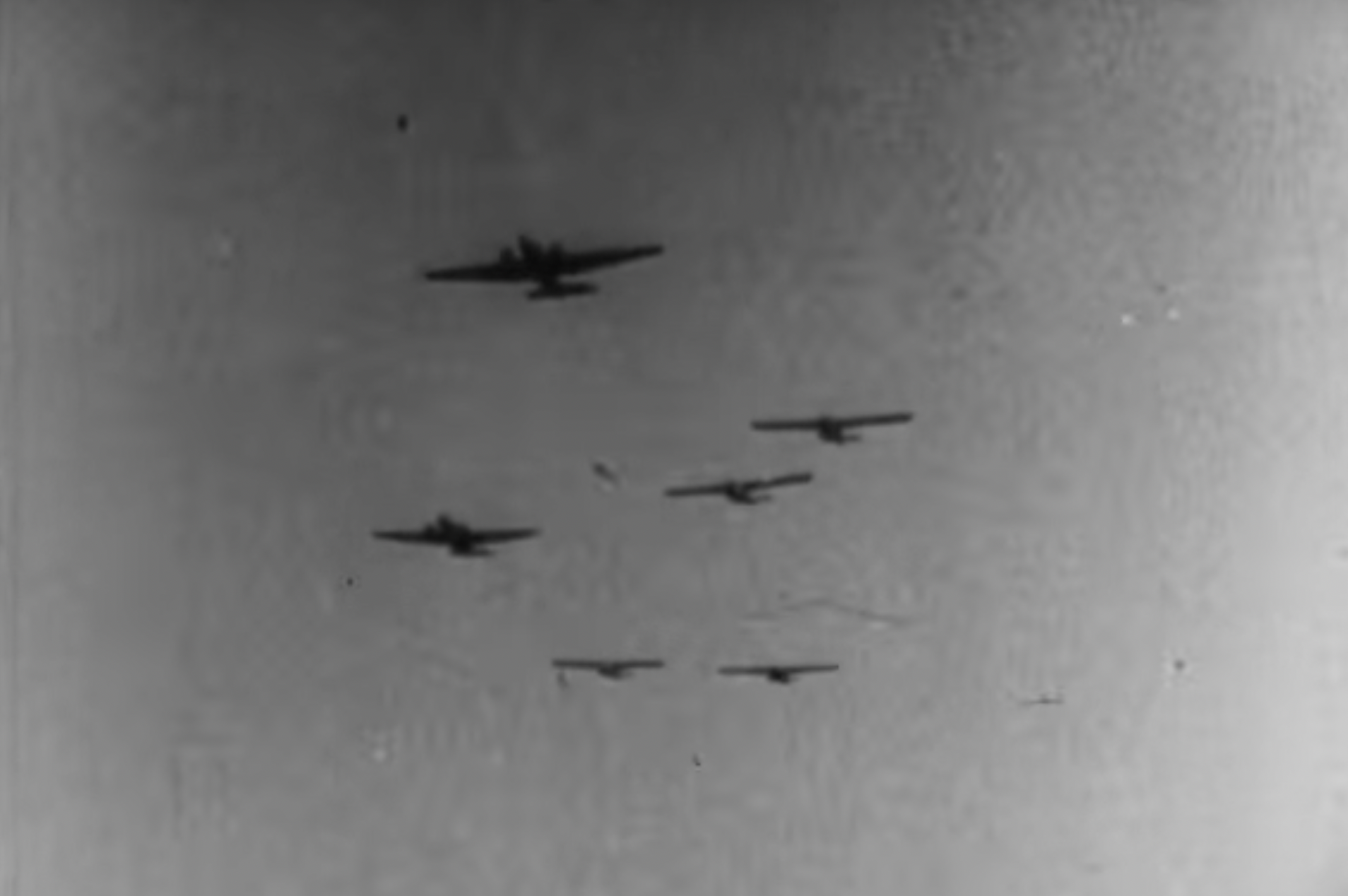
The first wave carried 1st Battalion King’s Regiment (Liverpool) of 77th Brigade to Broadway, along with British & US sappers. They travelled in Waco gliders pulled by C47 Dakota tugs. To get troops on the ground quickly, each tug pulled two gliders.
At the same time as they headed into Burma during the night of 5/6 March, Japanese infantry were marching into India to attack Imphal.
Thirty-seven gliders reached Broadway. The first to land were difficult to push out of the way because ruts in the ground had ripped off their undercarriages; this caused collisions when the next gliders arrived. As the landing strip became blocked with wreckage, Brigadier Mike Calvert signaled to cancel further arrivals.
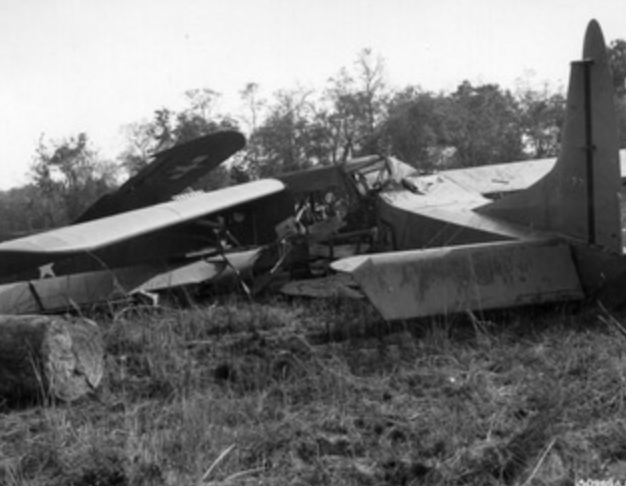
Twenty-three men had been killed & thirty injured in the landings. Another sixty-six men failed to arrive because several gliders were lost en route when tow-lines parted accidentally or were intentionally released due to turbulence. Some who came down in Burma were captured.
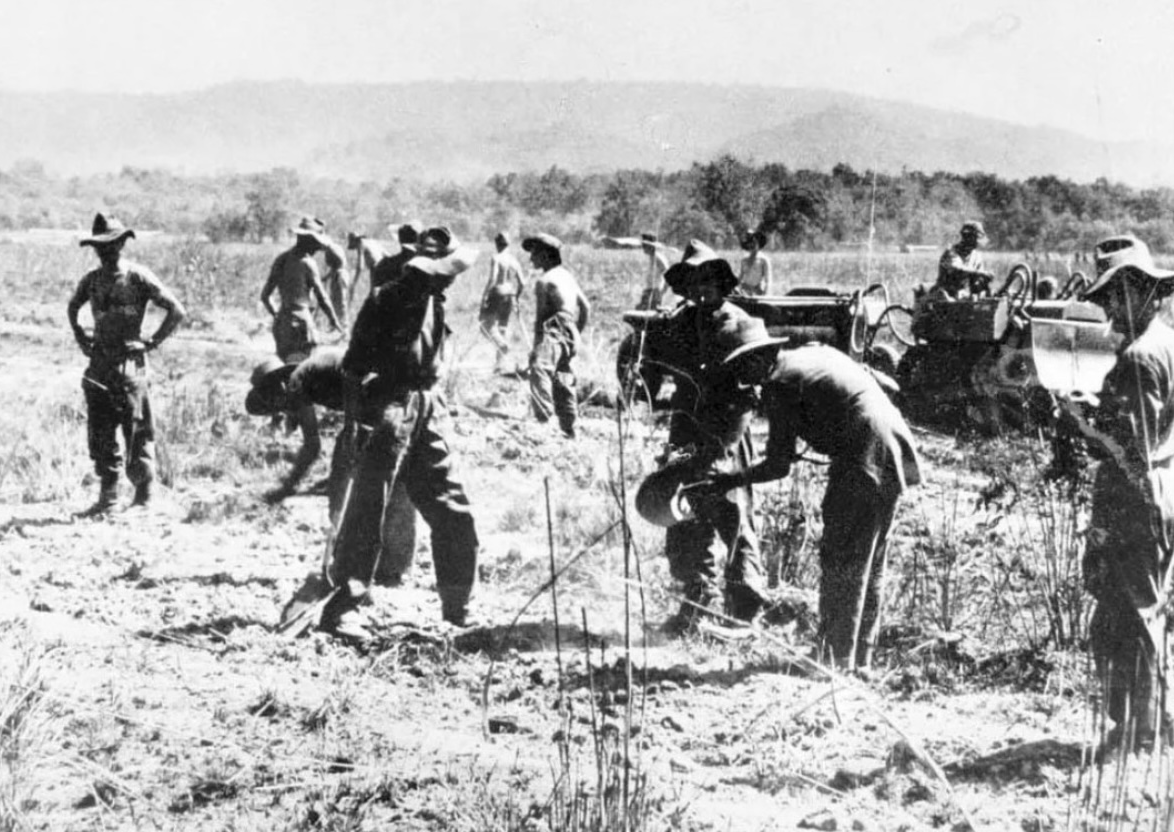
US Engineers & British sappers cleared the area. A light bulldozer delivered in one of the gliders was used to prepare a dirt strip where C47 Dakotas could land. By the evening of 6 March (Calvert’s 31st birthday), the fly ins resumed, guided now by landing lights. They continued over the next five nights, delivering the rest of 77th Brigade & two battalions of 111th Brigade.
For establishing Broadway, immediate DSOs were awarded to Brig Calvert, CO of 77th Brigade, & Lt Col Walter ‘Scotty’ Scott, CO of 1st Battalion King’s Regt. (Liverpool).
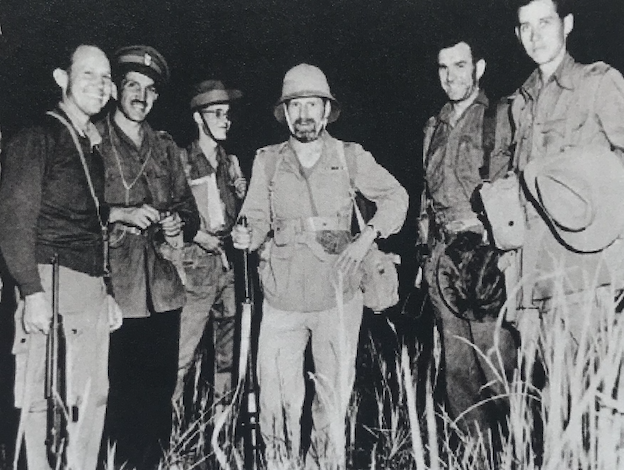
Brigadier ‘Joe’ Lentaigne & the rest of 111th Brigade flew into Chowringhee from 6-10 March. They then abandoned that landing zone & marched to join the other battalions of 111th Brigade near Nankan.
Morris Force, comprising 4/9 Gurkha Rifles & part of 3/4 Gurkha Rifles, headed northeast towards the Chinese border, where they eventually linked up with the Chinese.
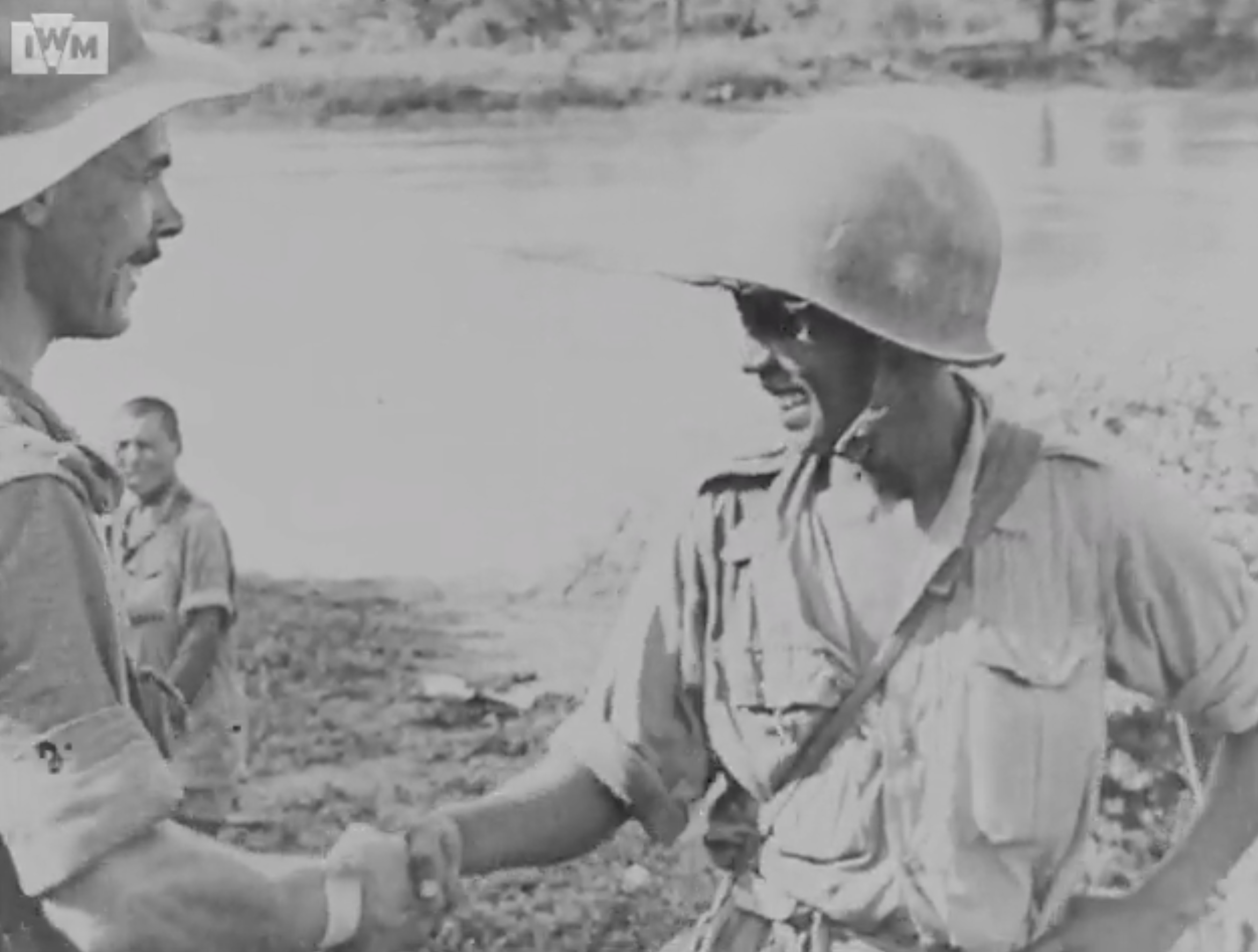
Japanese Oscar fighter aircraft arrived the morning after Chowringhee was abandoned, but all they found to strafe was a few derelict gliders.
Meanwhile, Brig. Calvert left two battalions to defend Broadway & led the other three battalions of 77th Brigade 60 miles southwest to a village called Henu, where they established a stronghold to block the railway & road that ran between Mandalay & Myitkyina. They called it White City.
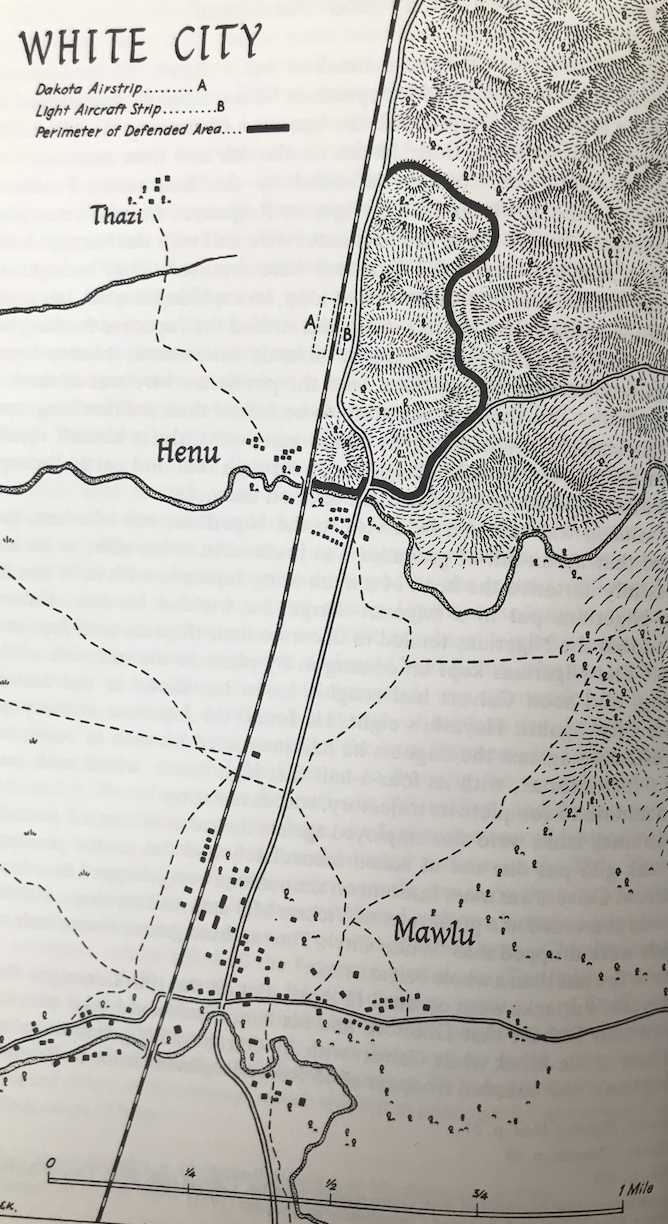
The first to arrive were South Staffords, who established themselves on the railway line. They were attacked during the night, but held the enemy off. Sunrise revealed that they were overlooked by a knoll, with a small pagoda on top, that was occupied by Japanese. The South Staffords were very exposed & taking casualties, so Calvert rushed to support them with the Brigade HQ Company, which was composed of hand-picked Gurkhas.
In his book ‘Prisoners of Hope’ (34), Calvert described what happened next:
“I saw something had to be done pretty quickly. So I shouted out ‘Charge’ in the approved Victorian manner. Half of the South Staffords joined in. Then looking back I found a lot had not. So I told them to bloody well ‘Charge, what the hell do you think you’re doing’. So they charged. Machine-gunners, mortar teams, all officers – everybody who was on that hill.
The Japs, entering into the spirit of the thing, got up & charged us. At the top of the hill an extraordinary melee took place, everyone shooting, bayoneting, kicking at everyone else. In front I saw Lieut Cairns have his arm hacked off by a Jap, whom he shot. He picked up the sword & carried on.
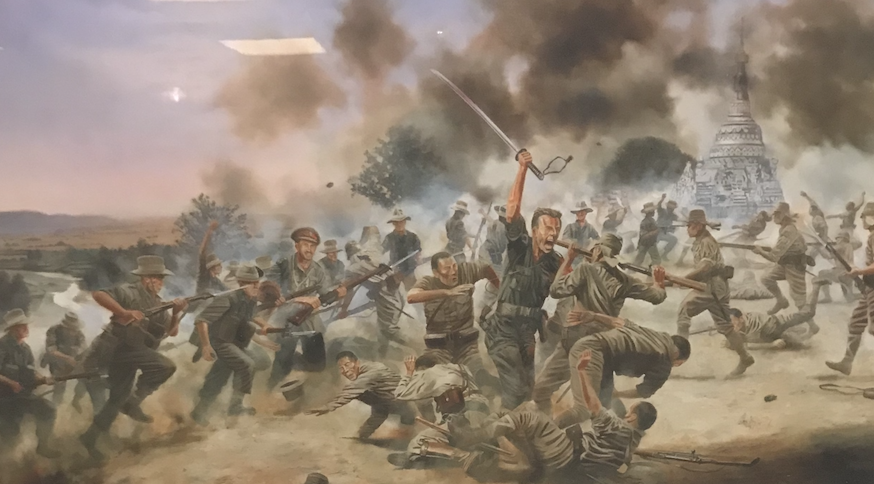
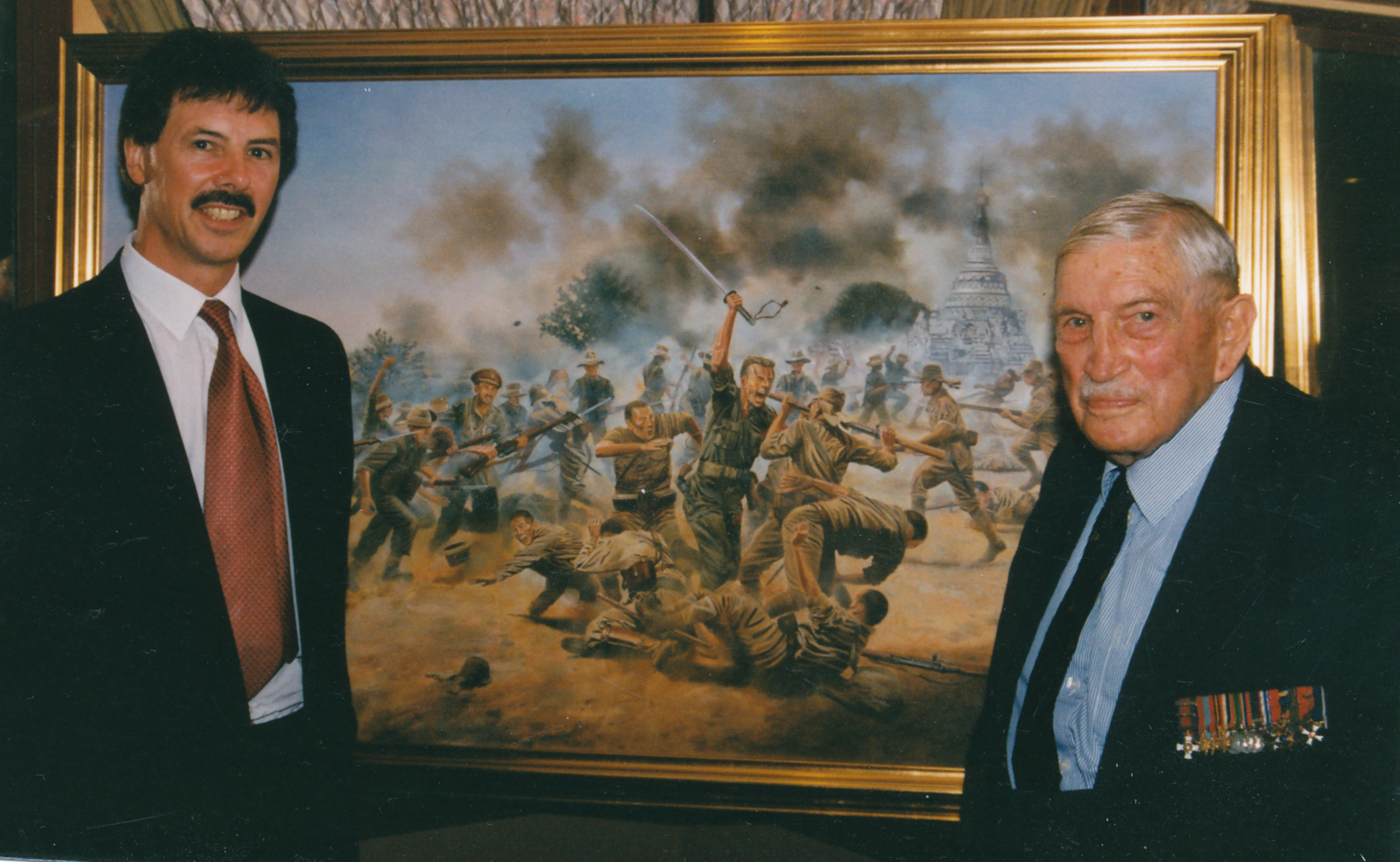
Then there was an intermission while both sides lobbed grenades over & around the pagoda. The Japs were yelling at us in English, ‘You dirty hairy bastards,’ etc., so I shouted, ‘We will retreat as fast as possible in that direction’ – pointing towards the enemy – ‘Staffords right, Gurkhas left. Now’. Up all the unwounded jumped, & tore around the pagoda. By the time I was around, the hill was ours, & we were pursuing them into the village of Henu. There the Gurkhas & South Staffords went into them with their manpack flamethrowers, burning up at least a dozen more Japs in dugouts. The remnants fled across the paddy.
We succoured the wounded, counted the dead. Three British officers, 20 other ranks killed. I spoke to Lieut Cairns before he died. ‘Have we won, sir? Was it all right? Did we do our stuff? Don’t worry about me.’ Five years later, His Majesty graciously awarded Lieut Cairns the Victoria Cross.
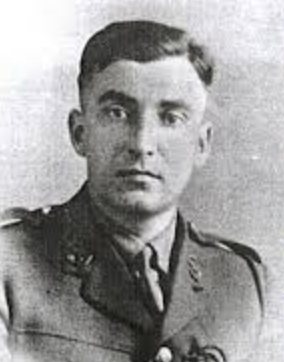
In spite of our casualties, we all had that elation of the winners of a battle, especially of a bayonet charge. We counted 42 Jap dead, including four officers. We had been fortunate to be bloodied against comparatively untrained, although gallant troops from a Railway Engineer Battalion.” (34)
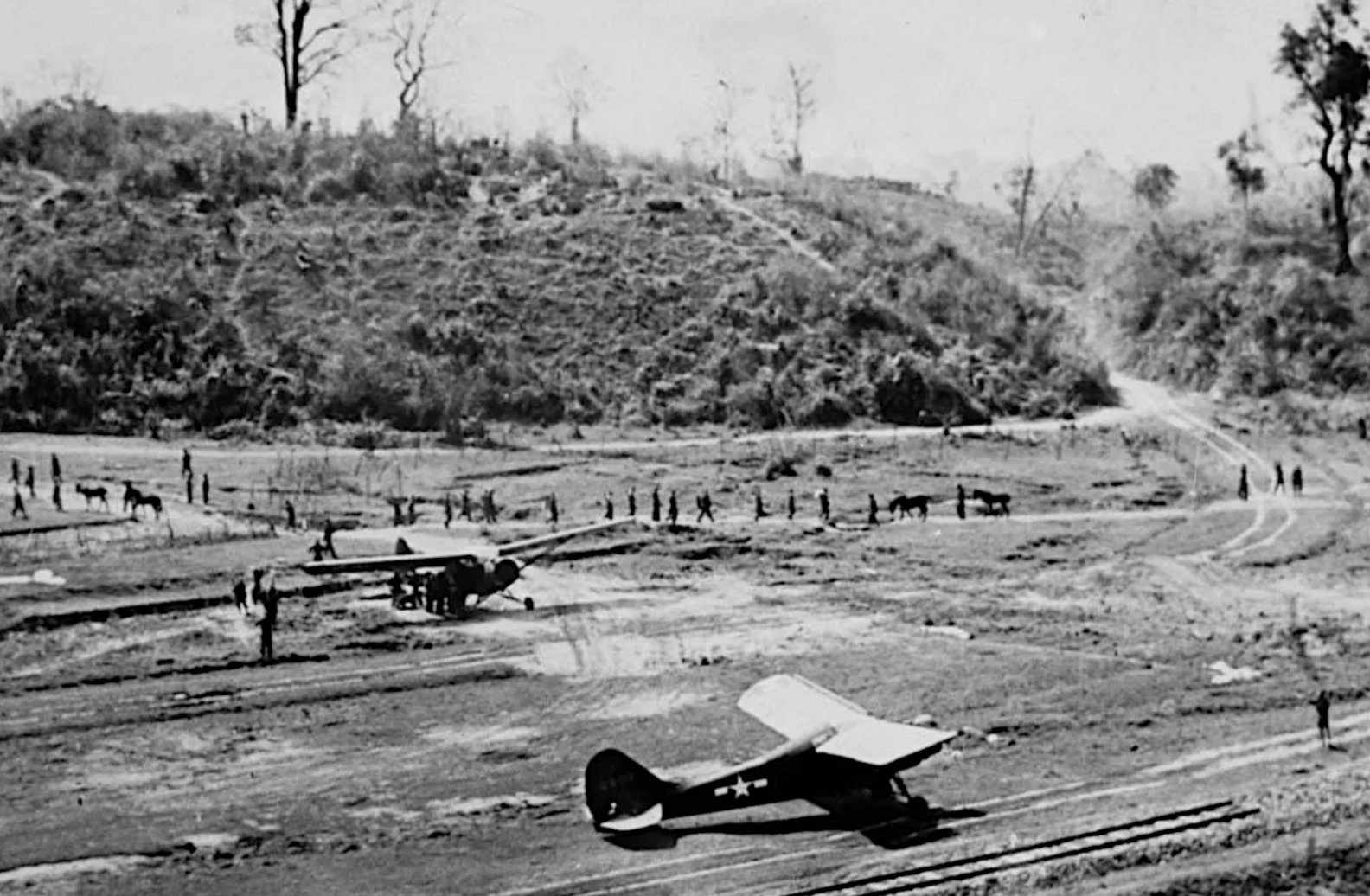
Two landing strips were created at White City, one for Dakotas & the other for light aircraft. It was turned into a powerful defensive position, with bunkers, barbed wire, mines & artillery comprising four 25 pdr howitzers, four 2 pdr anti-tank guns & four 40 mm Bofors anti-aircraft guns. Floater columns patrolled outside the wire, to attack in the flanks & rear any enemy units assaulting White City.

Broadway was also turned into a fortress, strengthened for a time by a flight of RAF Spitfires using it as a Forward Operating Base.
Both Broadway & White City repulsed attacks sustained over several weeks, inflicting heavy casualties on their assailants. Well over a thousand Japanese are thought to have been killed at White City. Calvert described White City as “an unpleasant place to be in”.
“There were upwards of a thousand dead Japs in various stages of decomposition on our wire. We had tried flamethrowers. We had a lot of quicklime dropped to us, but we could never get rid of that sickly smell of flesh rotting in the hot sun. Flies were everywhere & our water supply was tainted by the corpse-ridden ground. Our own men had been buried in a graveyard consecrated by our padres. My pilot told me ‘We can always find White City easily now. We navigate by smell.’ ” (34)
After their long & gruelling trek by foot, 16th Brigade established a stronghold dubbed Aberdeen on March 19-21. Gliders then brought in light bulldozers to help construct an airstrip, enabling C47 Dakotas to fly in 14th Brigade & part of 3rd (West African) Brigade from March 23. The rest of the West Africans were flown into Broadway.

On 24th March 1944, Maj General Wingate flew into Broadway in a B-25H Mitchell bomber to assess the situation. After visiting the White City & Aberdeen strongholds, he flew to Imphal to meet Air Marshall Baldwin. From there, he set off to Lalaghat air base with his Adjutant George Borrow & two London newspaper correspondents. However, the plane crashed in the hills above Bishenpur, near the village of Thiulon, killing everyone on board. The Chindits were stunned by the loss of their charismatic leader.
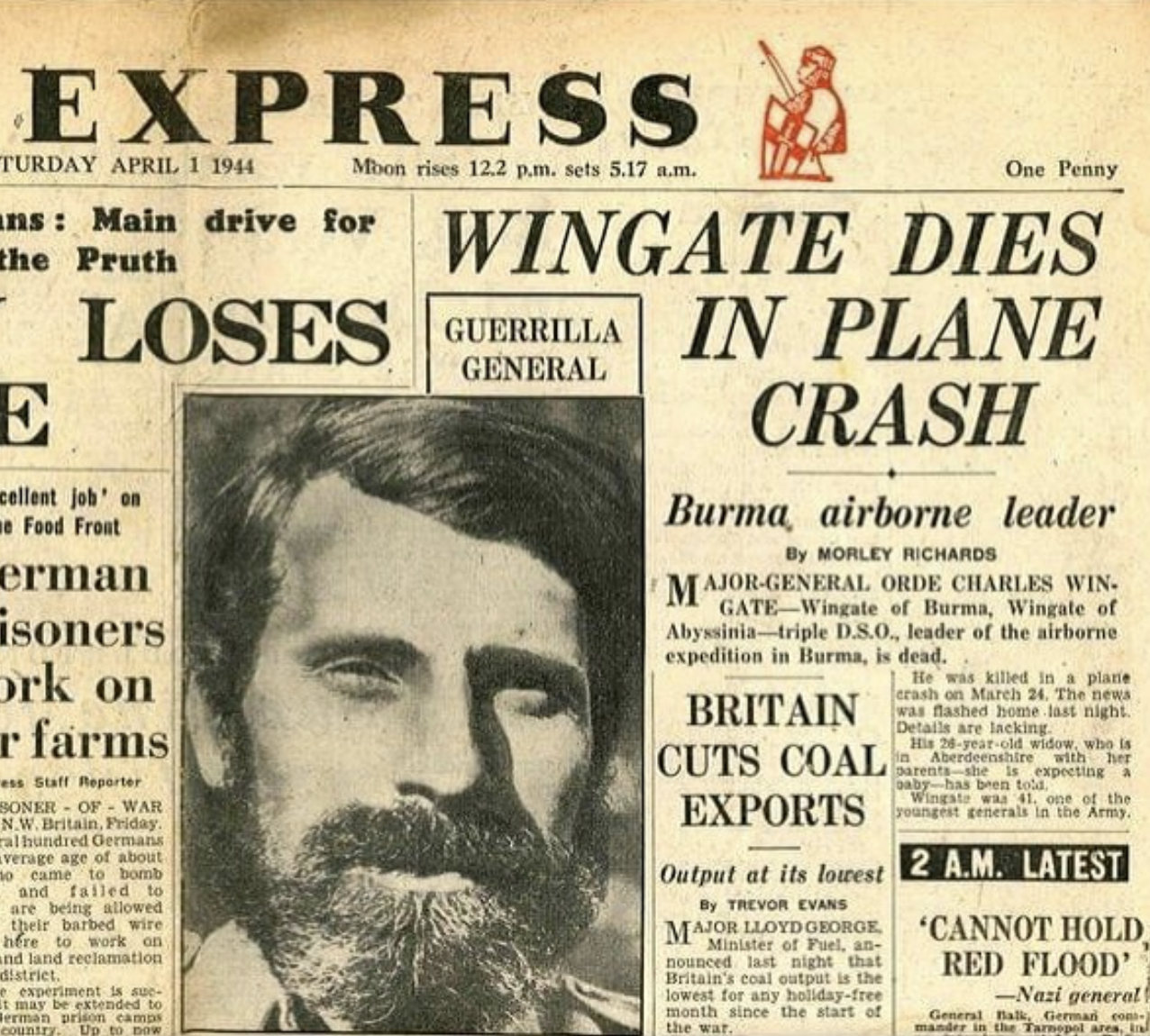
The cause of the accident is not known. There were reports of storms in the area & that one of the plane’s engines was not developing full power. It was also reported that the pilot protested that the plane was overloaded when the journalists were invited on board. Col Claude Rome, the Broadway commander, observed that the plane
“fairly staggered off the runway, using every inch of it.”
No attempt was made to inspect the engine when they landed at Imphal. When his meeting finished, Wingate was keen to leave despite the driving rain. They crashed twenty minutes later. The crew of a passing C47 Dakota witnessed explosions & flames.
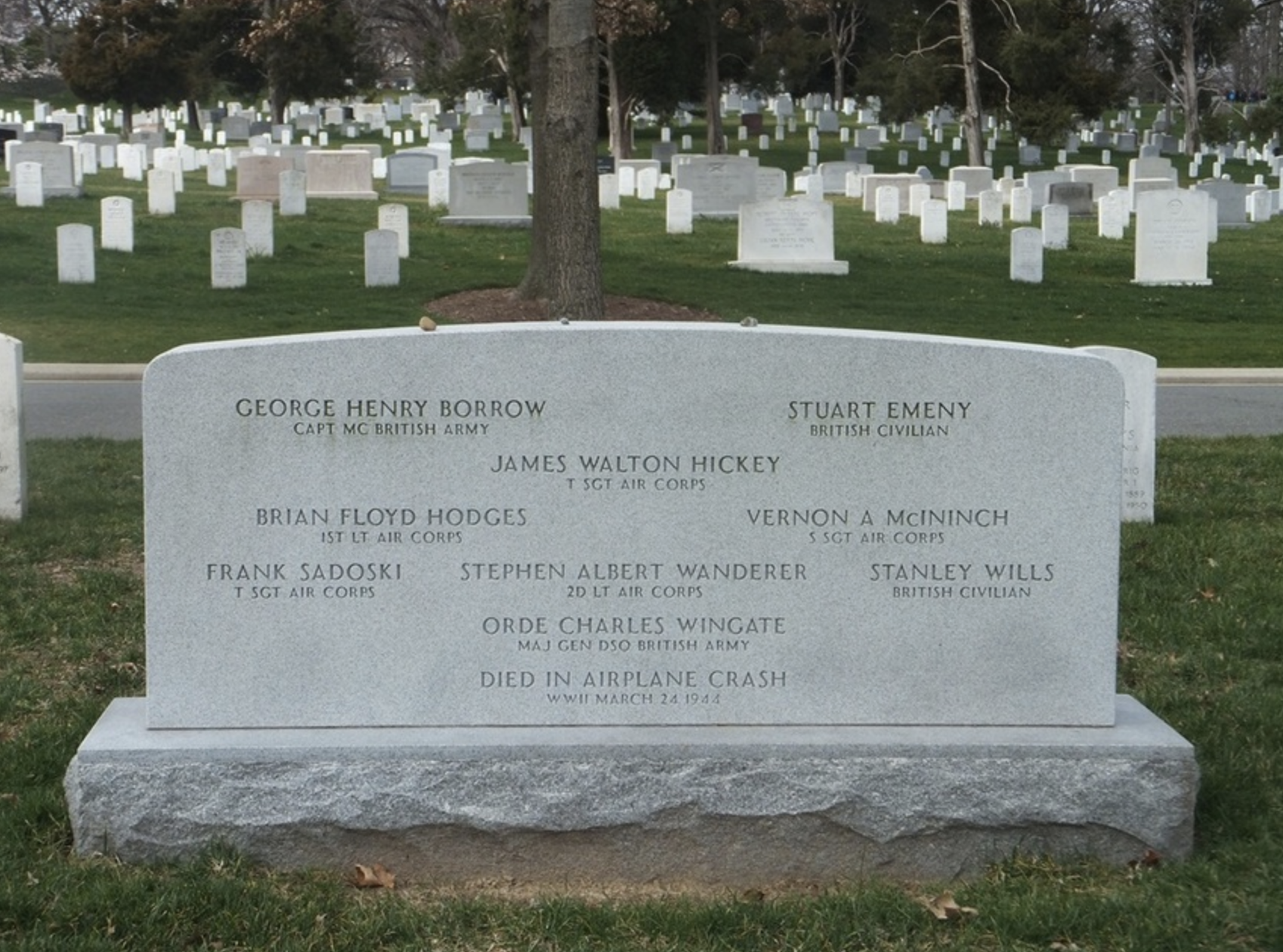
An expedition sent immediately to the crash site found scattered unidentifiable human remains. These were buried there upon a mound on which was placed a bronze plaque with the names of all who died in the crash.
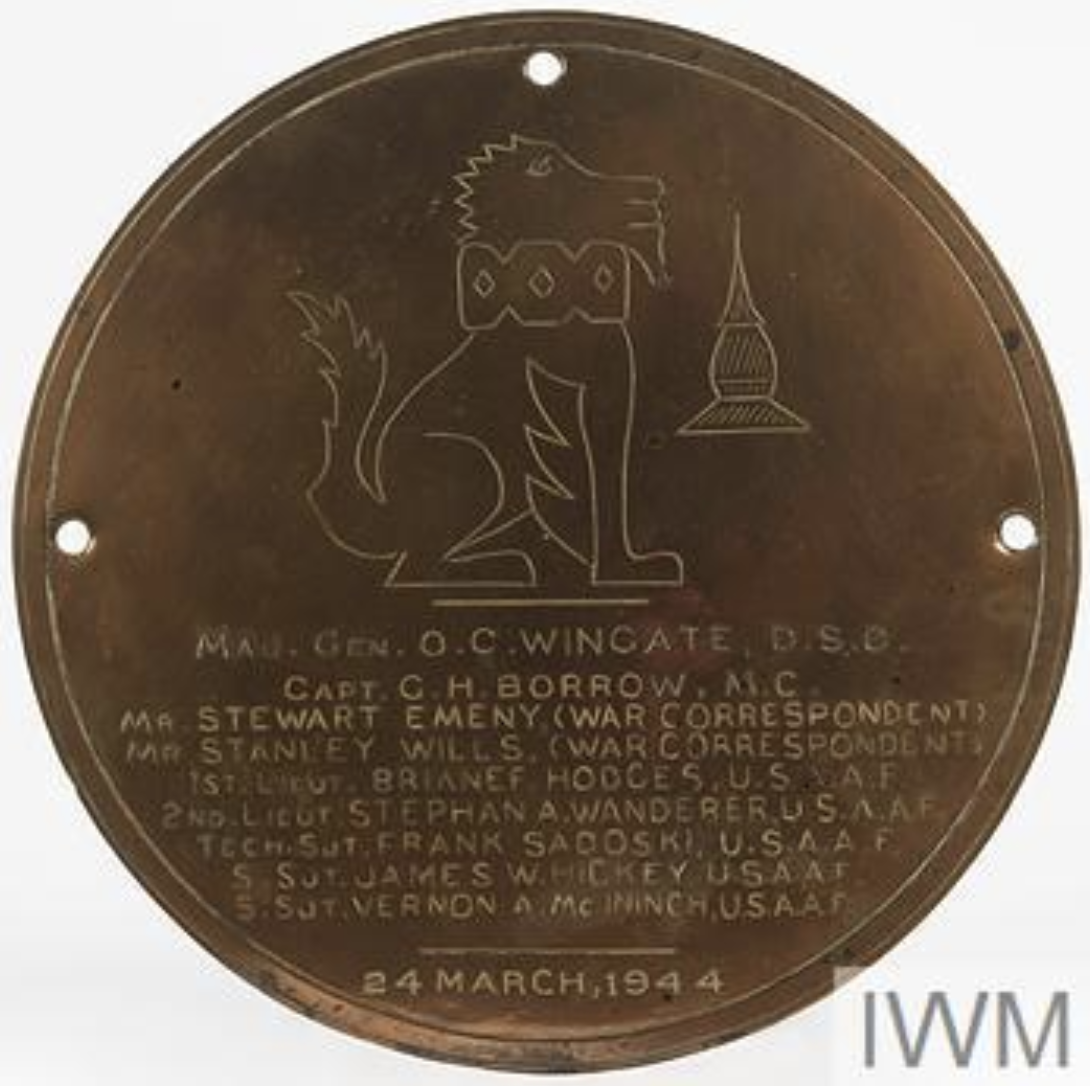
In April 1947, British War Graves authorities transferred the remains to a cemetery in Imphal. In November 1950, they were dug up & re-interred in Arlington Cemetery, Washington DC. This was justified by an agreement between Britain & the USA that if unidentified bodies were buried together, they could be re-interred in the USA if the Americans outnumbered the British, as in this case.
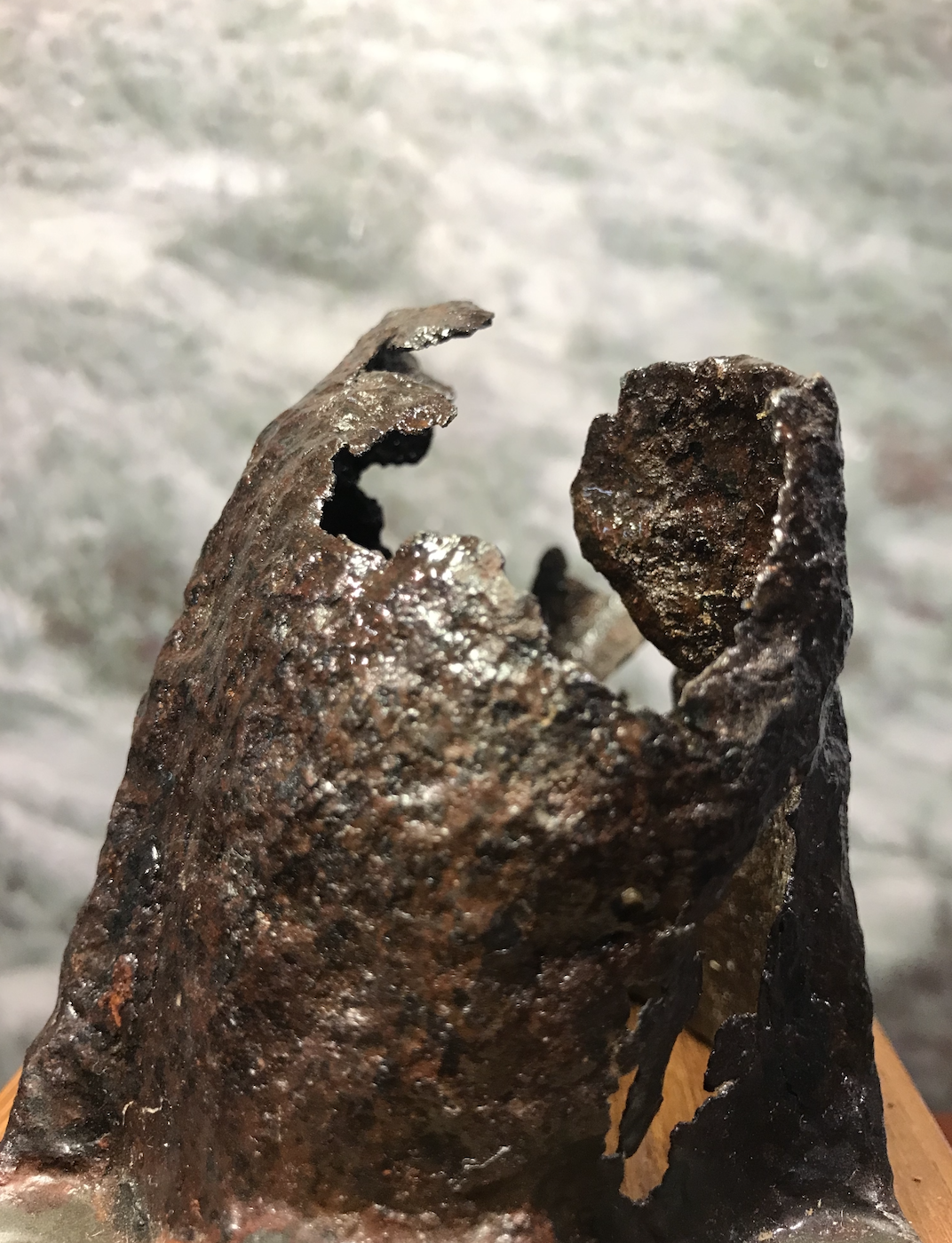
In 2019, WW2 battlefield researcher Yumnam Rajeshwor Singh located the site of the crash & recovered wreckage of the aircraft. Pieces of this were kindly donated to the Chindit Society & to the Kohima Museum.
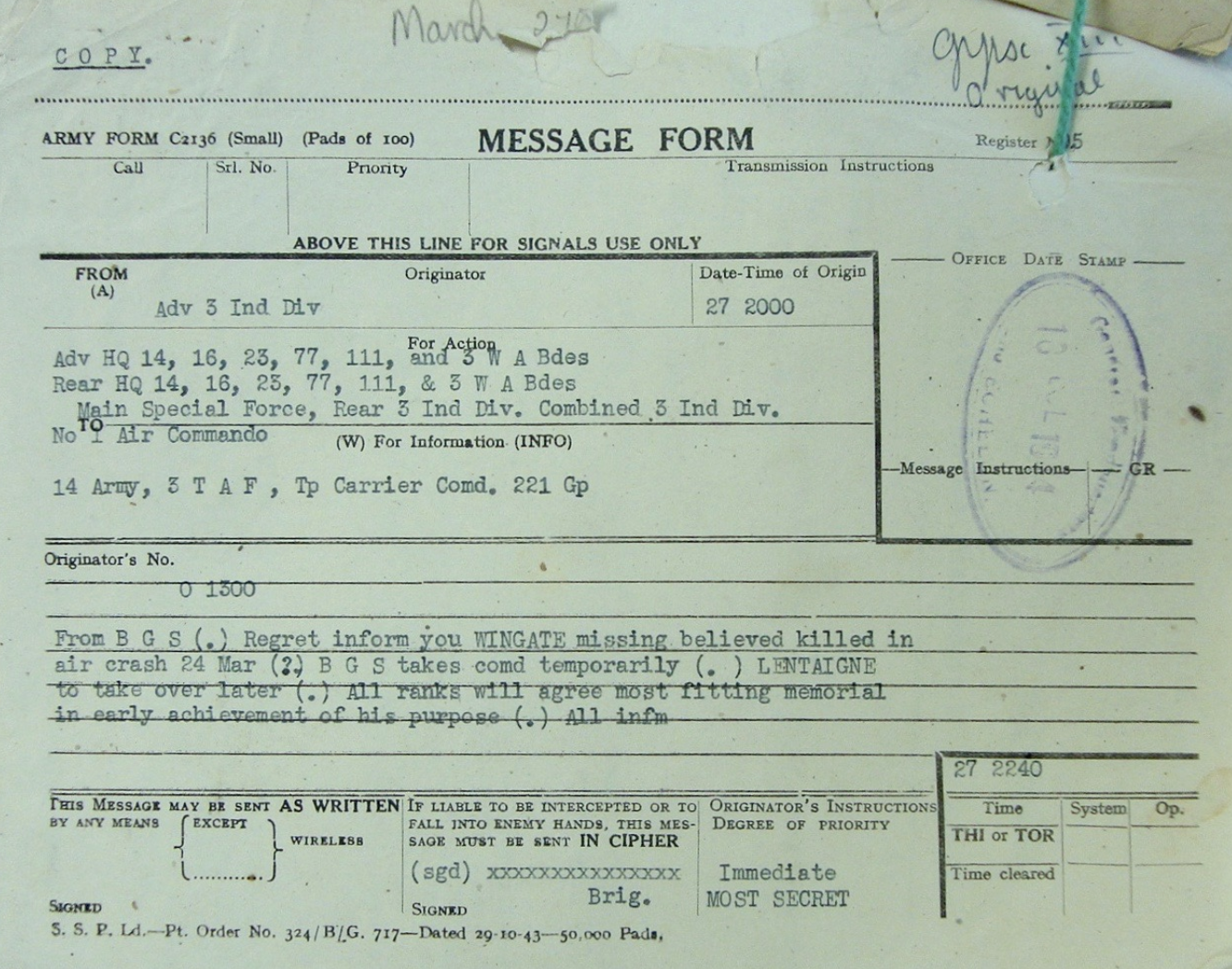
Brigadier ‘Joe’ Lentaigne, CO of 111th Brigade, was promoted to Major General & placed in command of Special Force. He was an experienced Gurkha officer with great personal bravery, having earned a DSO during the 1942 retreat & three times mentioned in dispatches. But he did not have the charisma of Wingate nor the personal support of Churchill that Wingate enjoyed.
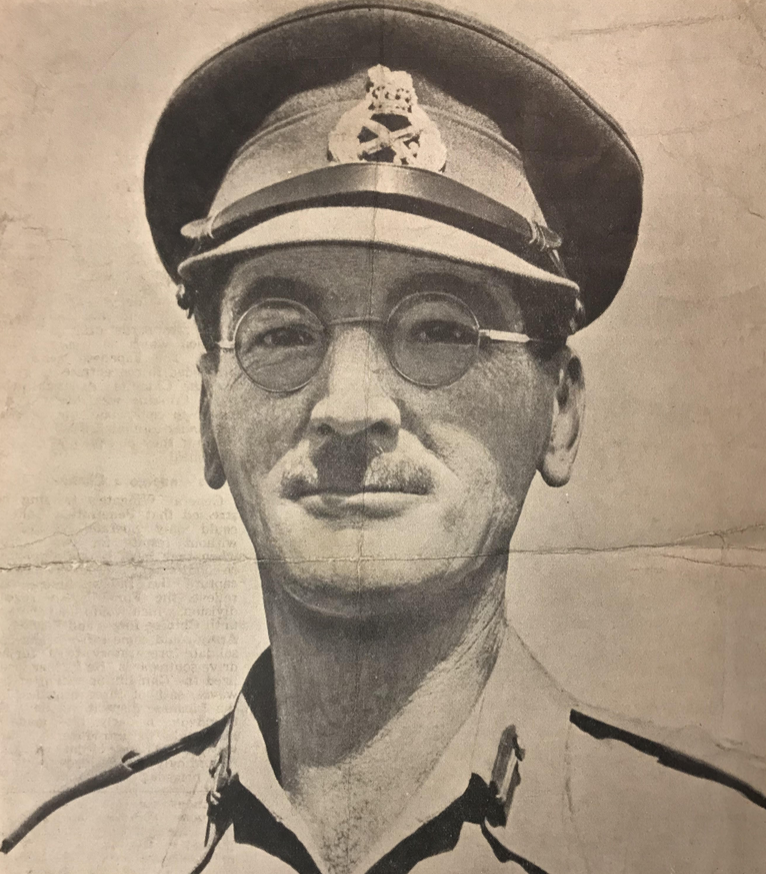
On May 1, command of the Chindits was transferred to the US General ‘Vinegar Joe’ Stillwell, despite his dislike of the British. 16th Brigade had been intended to disrupt the lines of communication of the Japanese 15th & 31st Divisions that were attacking Imphal & Kohima. Stilwell redirected them to support his US/Chinese forces instead. They attacked Indaw, but without much success. Exhausted & out of water, 16th Brigade withdrew to their Aberdeen stronghold & were eventually flown back to India.
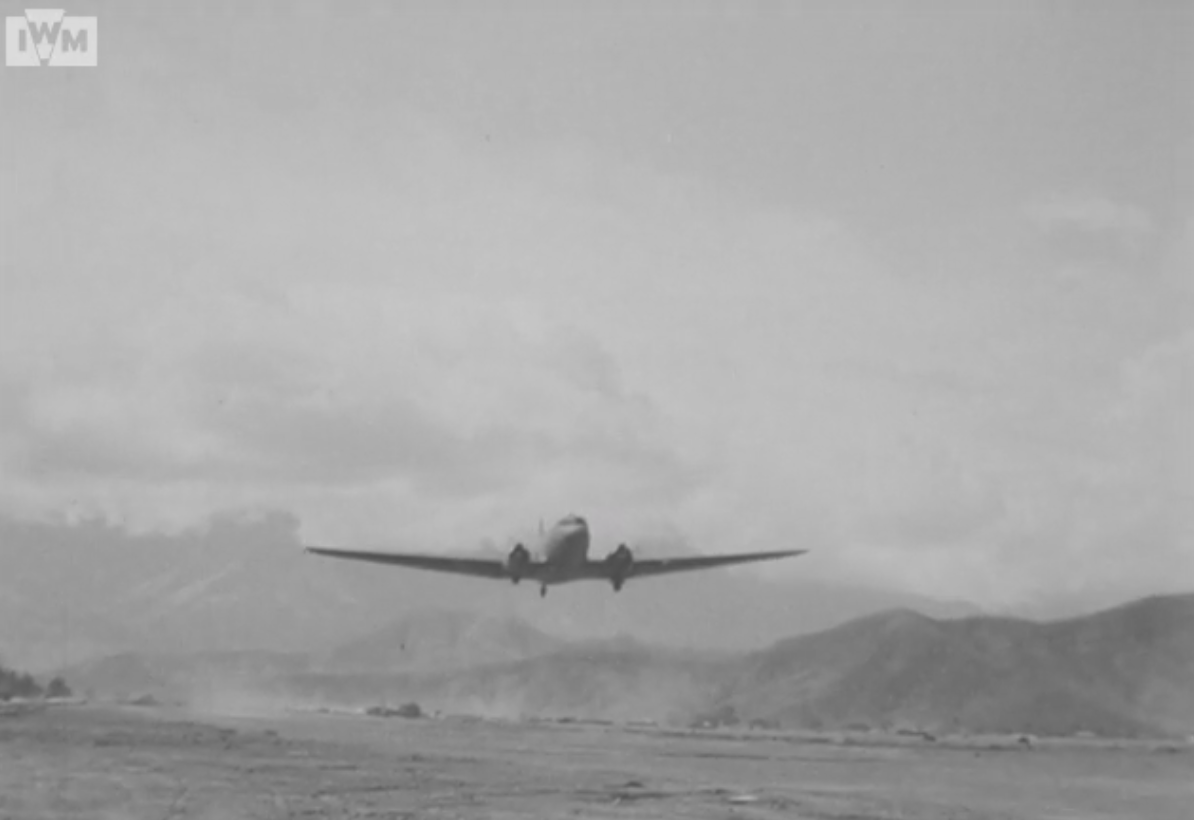
To support the US/Chinese drive towards Myitkyina, the Chindits were ordered north. Aberdeen, Broadway & White City were abandoned & a new stronghold was established by 111th Brigade, now commanded by Major John Masters. It was 40 miles north of White City & given the name Blackpool. Although it was intended to block the road & railway to Myitkyina, its site was not close enough to do this effectively.
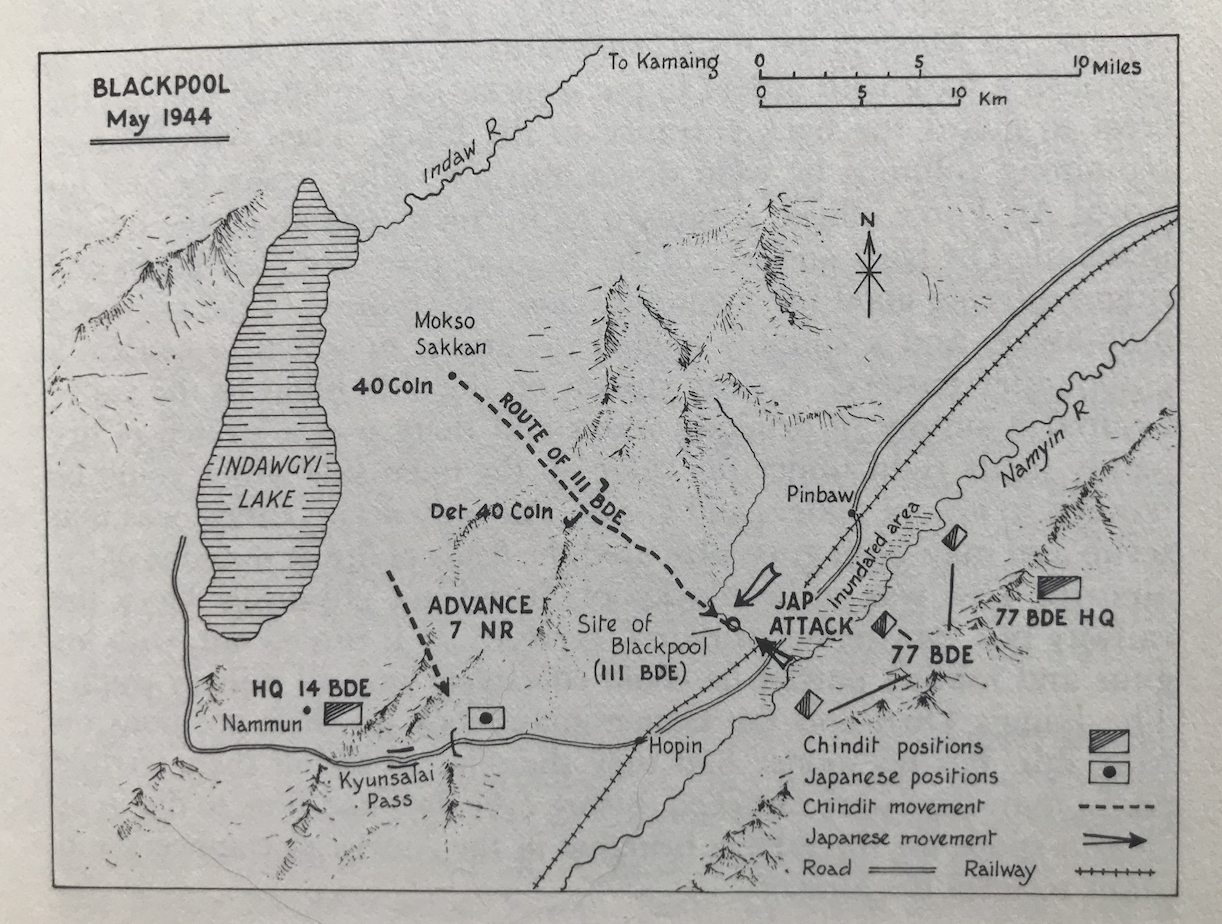
Blackpool quickly came under heavy attack. The situation worsened significantly when the monsoon broke, disrupting air support, resupply & evacuation of casualties. The torrential rain also prevented the timely arrival of supporting Chindit brigades.
To be defensible, Blackpool needed protection by ‘floating’ columns operating outside its defences. 77th Brigade was intended to protect its eastern flank, but could not gain access because the intervening area was inundated. A combination of flooding & the enemy blocked 14th Brigade’s progress towards Blackpool. The 7th Leicesters (47 Column) managed to occupy the Kyunsalai Pass just ahead of the Japanese. Although they lacked the strength to push through, holding the Pass protected Indawgyi Lake, where Chindit casualties were taken for evacuation.
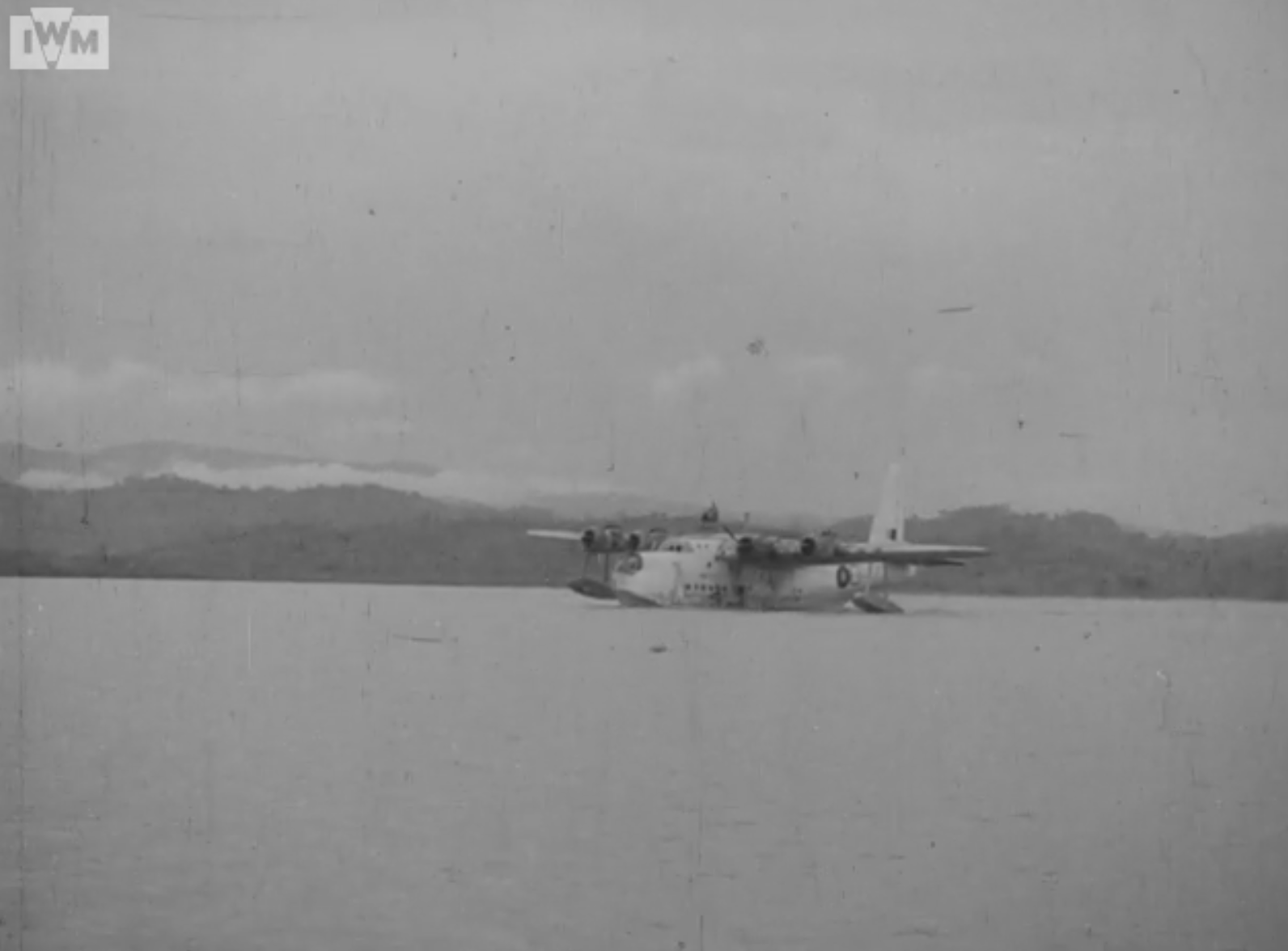
Two Sunderland flying boats of 230 Squadron RAF were used to evacuate Chindits from Indawgyi Lake. Named Gert & Daisy., they were based on the River Brahmaputra to operate anti-submarine missions in the Indian Ocean. From the Brahmaputra, they also flew rescue missions to Lake Indawgyi in Burma, from where they could evacuate up to forty casualties at a time. In total, 508 sick & wounded Chindits were evacuated from this lake by these flying boats.
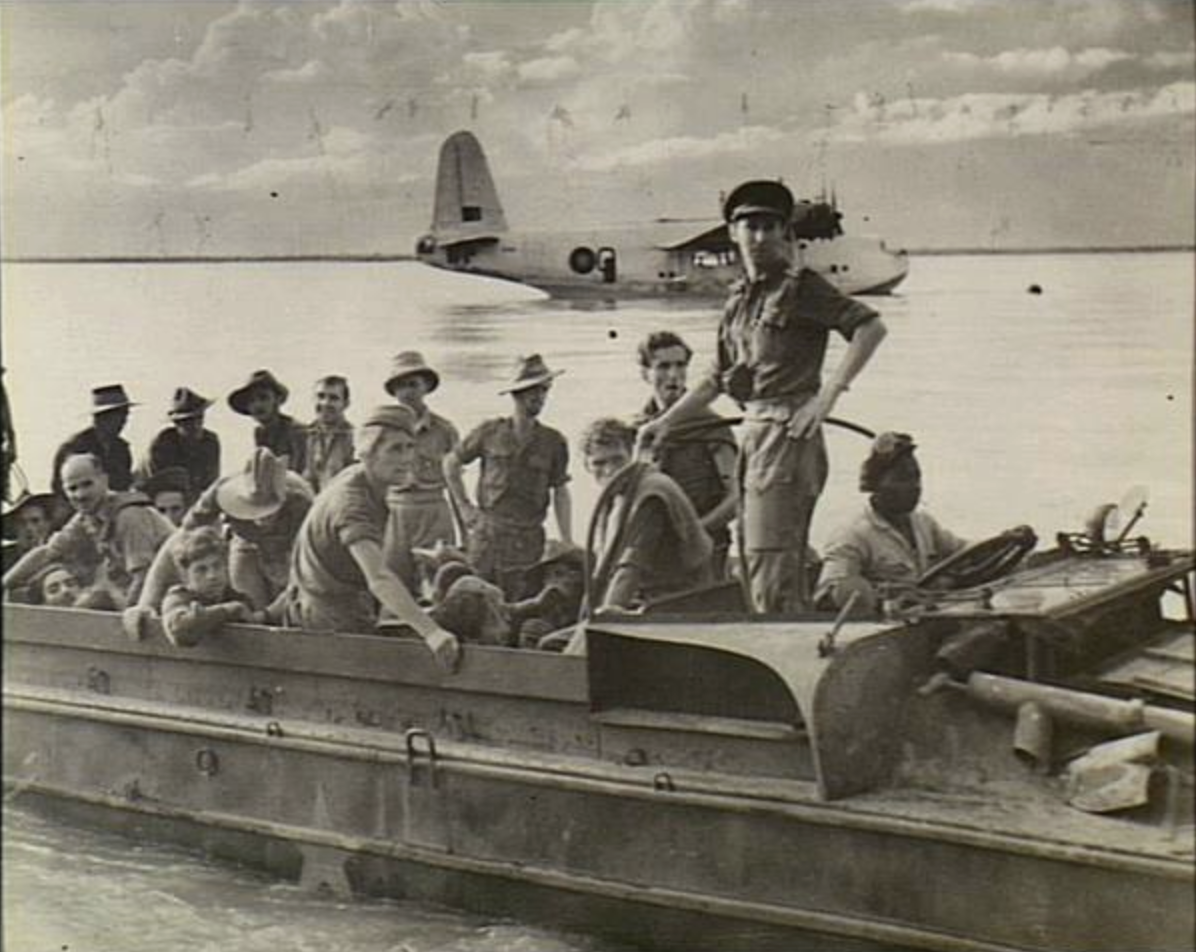
As casualties mounted at Blackpool & ammunition, food & medical supplies ran low, the remnants of 111th Brigade abandoned the stronghold on May 25 to avoid being overrun. They shot about twenty of their most seriously wounded to save them from capture. Shielded by 3rd (West African) Brigade, they reached the relative safety of Indawgyi Lake, where some of their sick or wounded were evacuated.
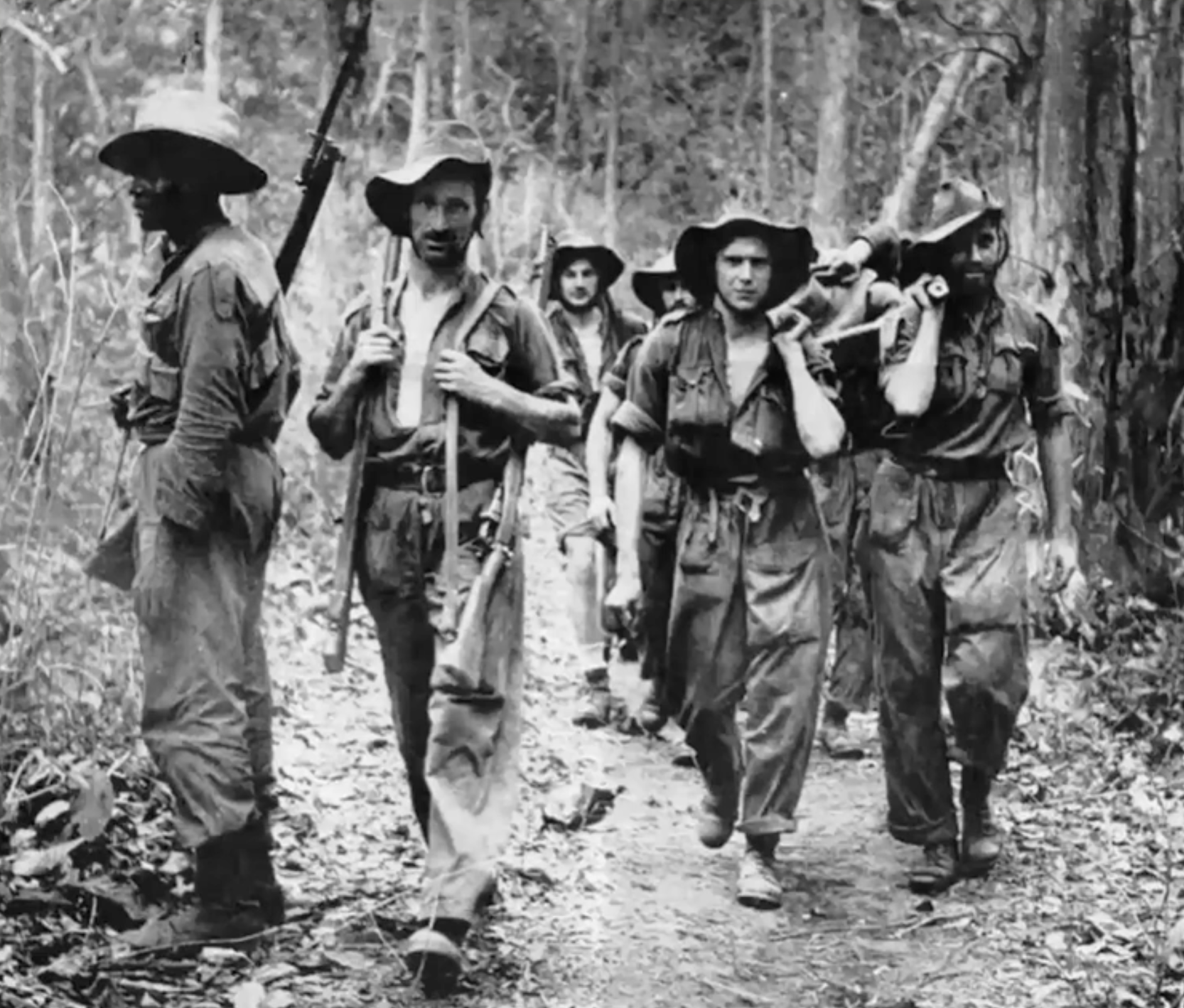
The final stage of Operation Thursday, conducted during the misery of the monsoon, caused heavy casualties & much bitterness. Slim later reflected
“It would have been wiser to take the whole of the Chindits out then; they had shot their bolt. So, too, had the Marauders (U.S. Special Force), who a little later packed in completely. Both forces, Chindits & Marauders, had been subjected to intense strain, both had unwisely been promised that their ordeal would be short, & both were asked to do more than was possible.” (24)
77th Brigade was ordered north to Mogaung, a small town on the road & railway route to Myitkyina. They were to assault it from the south-east, whilst the Chinese 38th Division attacked from the north & west. Capturing it took three weeks of heavy fighting, June 6-27, with Chindit battalions down to company strength ejecting superior numbers of Japanese. Victoria Crosses were earned in this bitter contest by Capt. Michael Allmand (posthumous) & Rifleman Tulbahadur Pun, both of 3/6 Gurkha Rifles.
As they approached Mogaung, 3/6 Gurkha Rifles were halted by heavy fire from enemy positions in front of a bridge at the village of Pinh Mi.
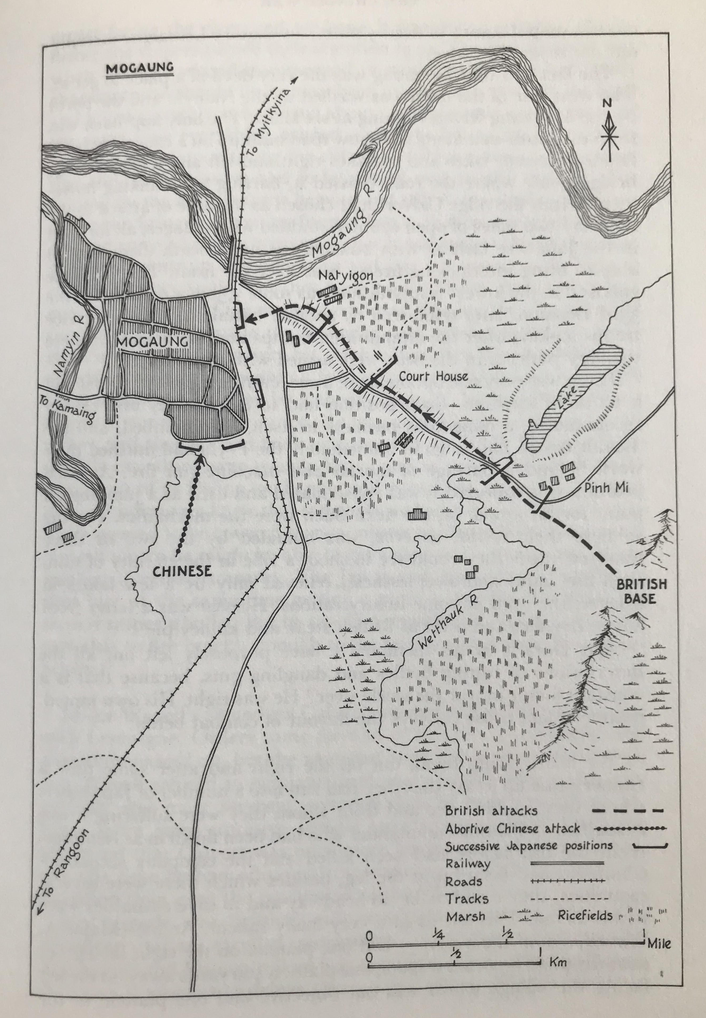
The approach to the bridge was very narrow, as the road was banked up with swamp on either side. Acting Captain Michael Allmand stormed the position alone, whilst hurling grenades, & then killed three Japanese with his kukri. Inspired by this courage, the Gurkhas cleared the bridge & village.
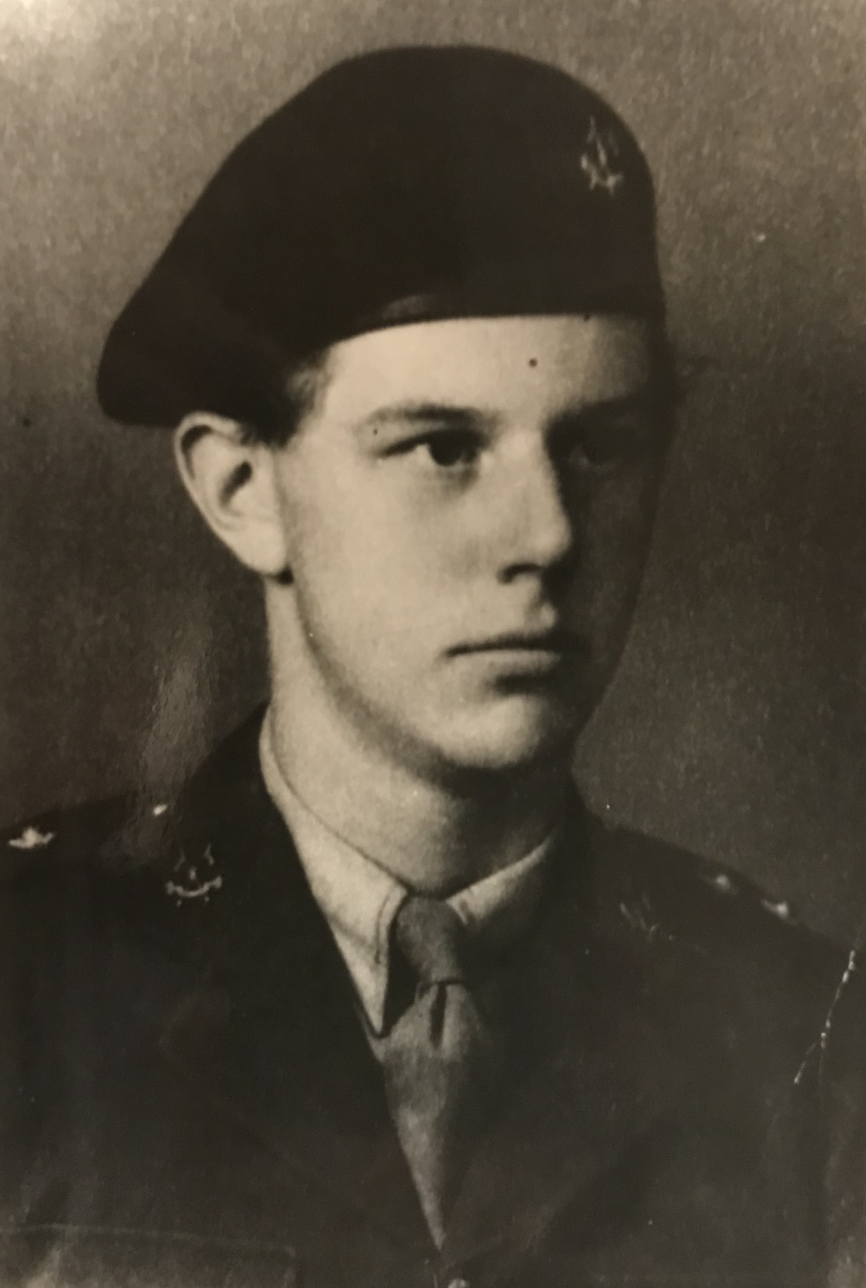
Two days later, Captain Allmand took over command of B company, due to heavy officer casualties. They were tasked with capturing Natyigon village & securing the bridge over the Mogaung River. They were held up by machine-gun fire from the railway embankment beside the bridge. Allmand waded alone through deep mud & knocked out the machine-gun nest with grenades, falling mortally wounded at the moment of his triumph.
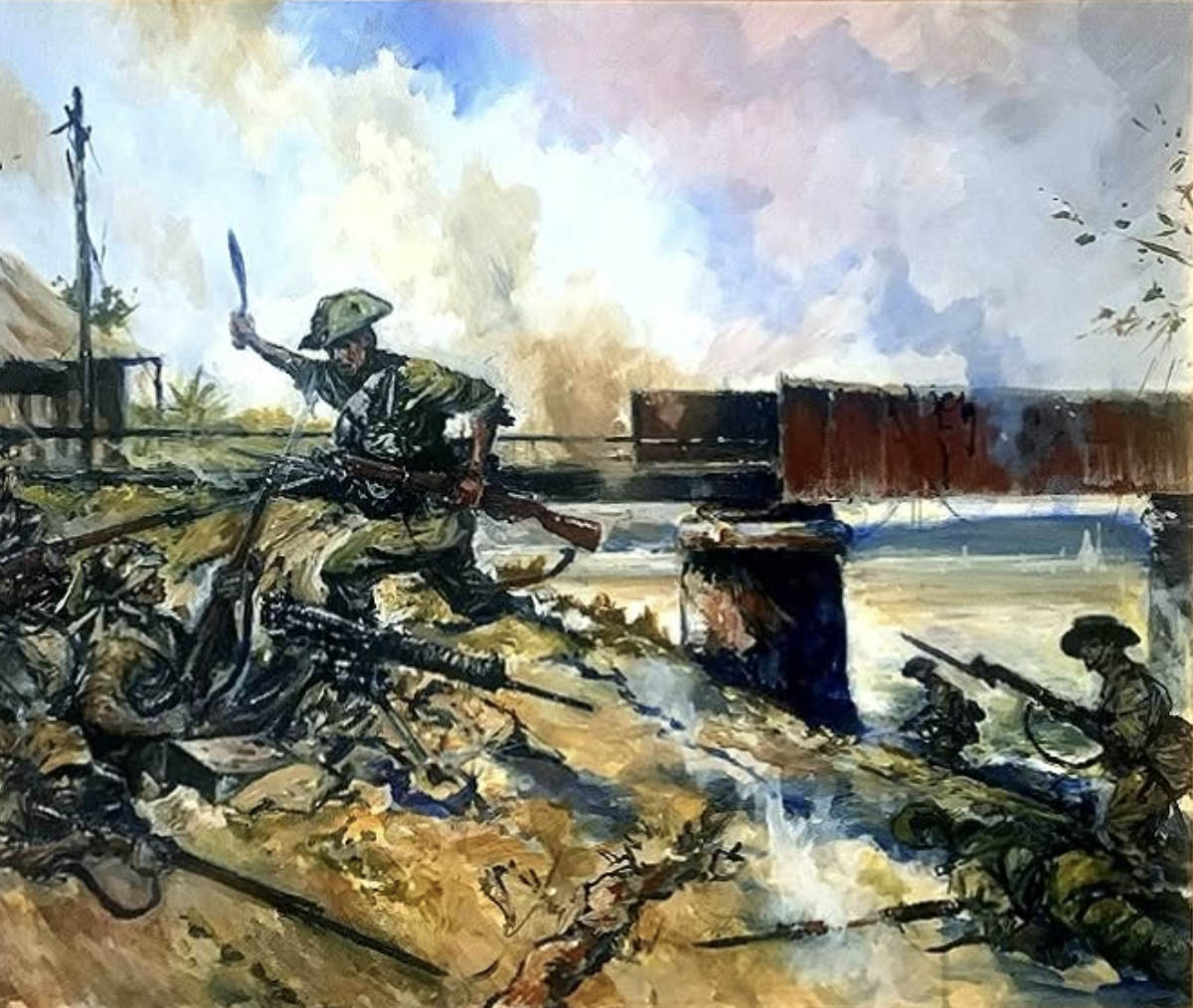
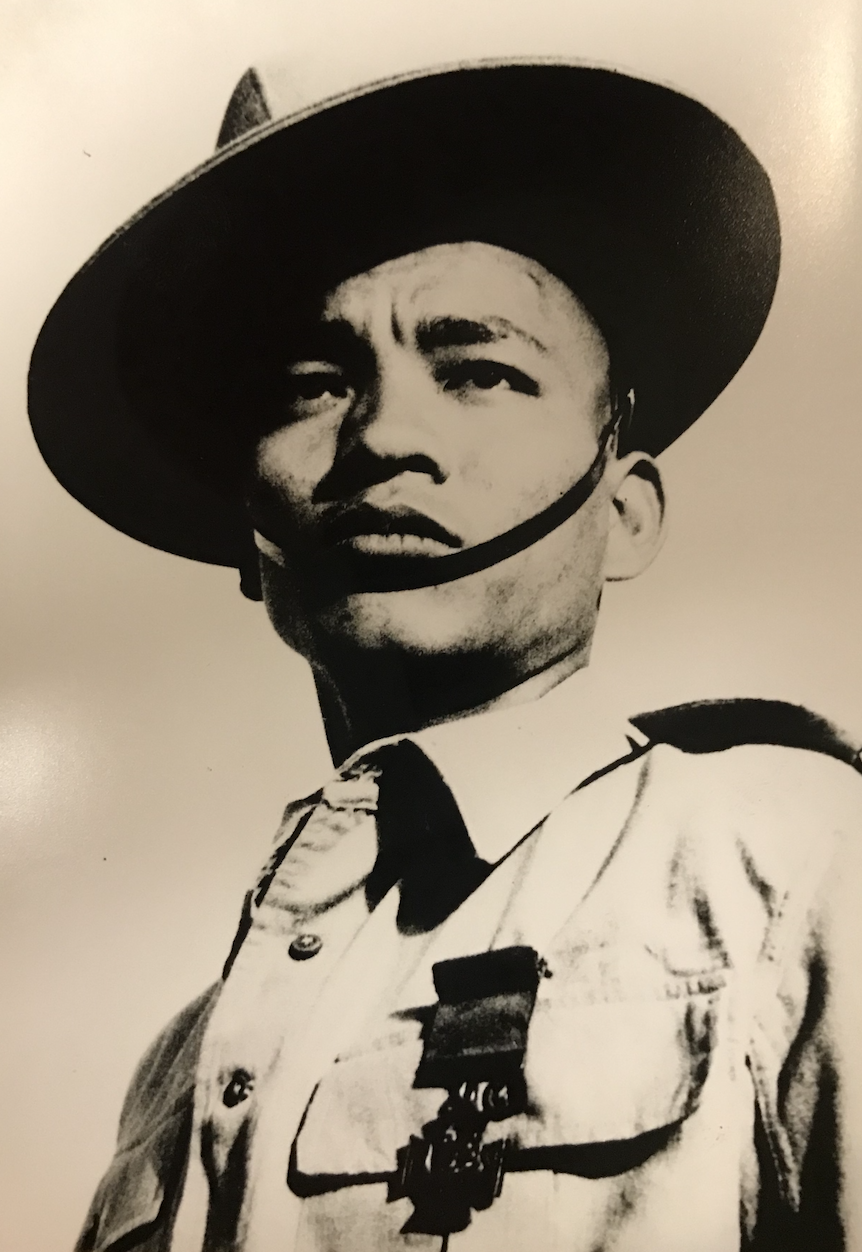
Still the Gurkhas were pinned to the ground by concentrated fire from a position dubbed the Red House. With nowhere to shelter, all but three of a section of B Company became casualties. But the section commander led the two remaining riflemen in a charge towards the Red House. Two were cut down, but Rifleman Tulbahadur Pun grabbed his comrade’s Bren gun & continued, firing from the hip. Ankle deep in mud, he surged thirty yards through a hail of bullets to reach the Red house. Three of the occupants fell to the unstoppable Gurkha & the remaining five fled.
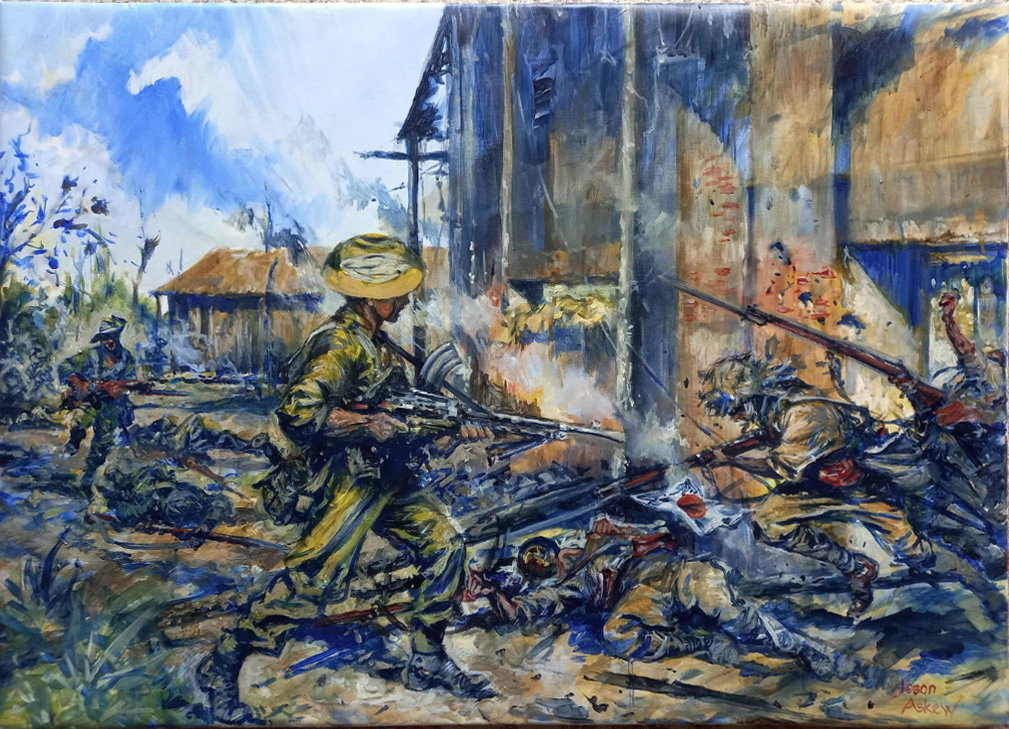
Having captured two enemy machine guns, Tulbahadur Pun was able to provide accurate supporting fire to enable his comrades to achieve their objective. He was awarded a Victoria Cross for his heroic conduct.
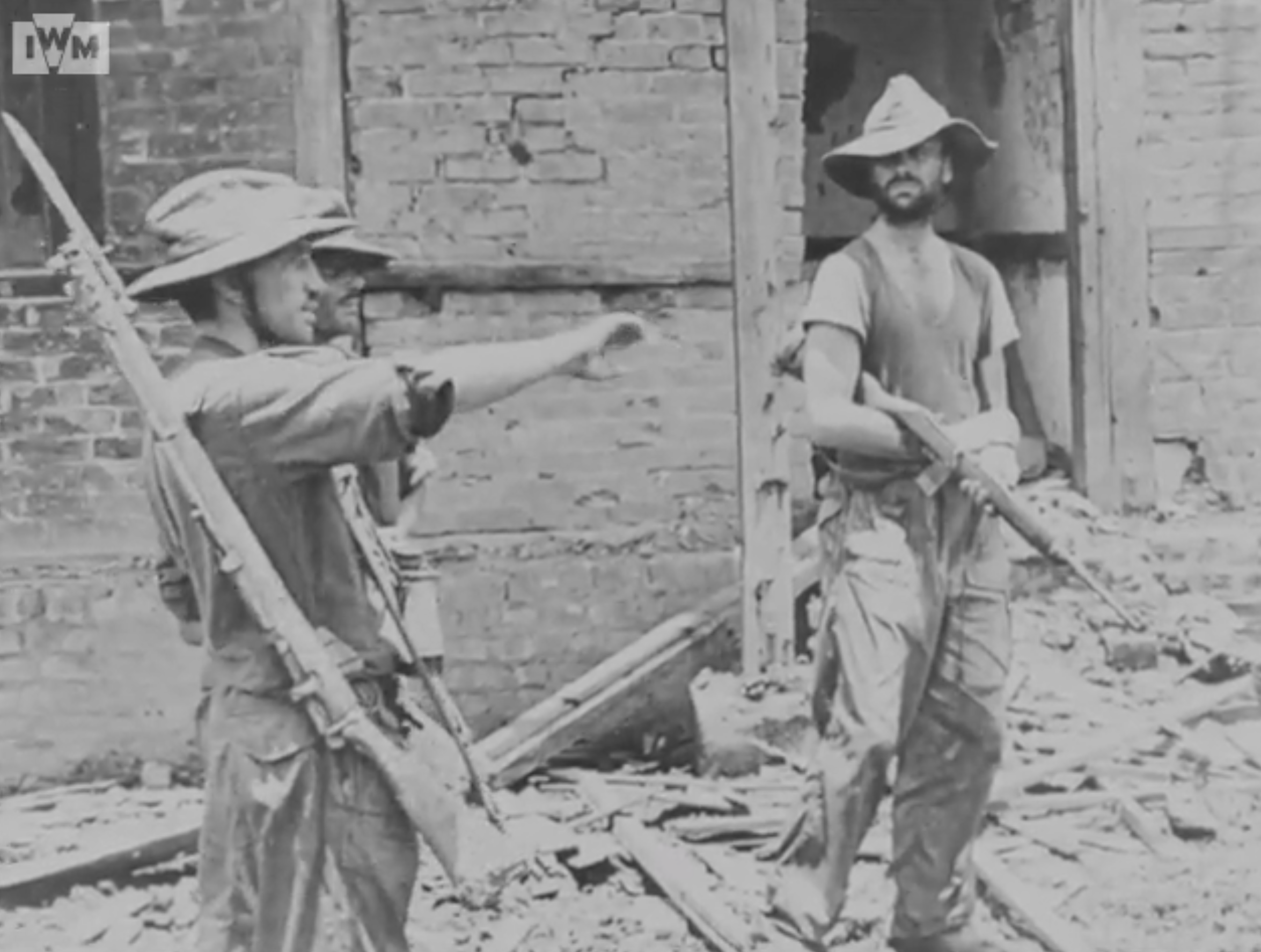
By the time Mogaung was taken, barely three hundred men were left standing in 77th Brigade. After an arduous march, they were flown back to India in early July.
For a few more weeks, 3rd (West African), 14th & 111th Brigades continued to harass the Japanese in support of Stilwell’s US/Chinese offensive on Myitkyina, which fell on August 3. As their enemy was pushed south, the Chindit’s campaign ended. Most had been operating for substantially longer than the three months that had been envisaged by Wingate. Exhausted, emaciated & disease-ridden, they gradually returned to India. They took months to recuperate & many were never again fit enough for combat.
23rd Brigade
During Operation Thursday, 23rd Brigade operated in the Naga Hills to the north & east of Kohima. This was a Chindit brigade, composed of men who had endured a gruelling training regime of exhausting marches through dense, unforgiving jungle. Corporal Stanley Hutson:
“We were force marched all day until we were ready to drop, then made to carry on through the night, with a possible river crossing so that we were wet through, cold, hungry & tired out, before making a mock bayonet charge as dawn broke. We practised receiving air drops of food & ammunition until we & the RAF were perfect. We were made to go without food for two or three days at a time & made to cover extra distance just to prove that we could do it. We were taught to read signs like Red Indians & to hide our tracks, so that if the Japs did cross them, they would be unable to follow us.” (3)
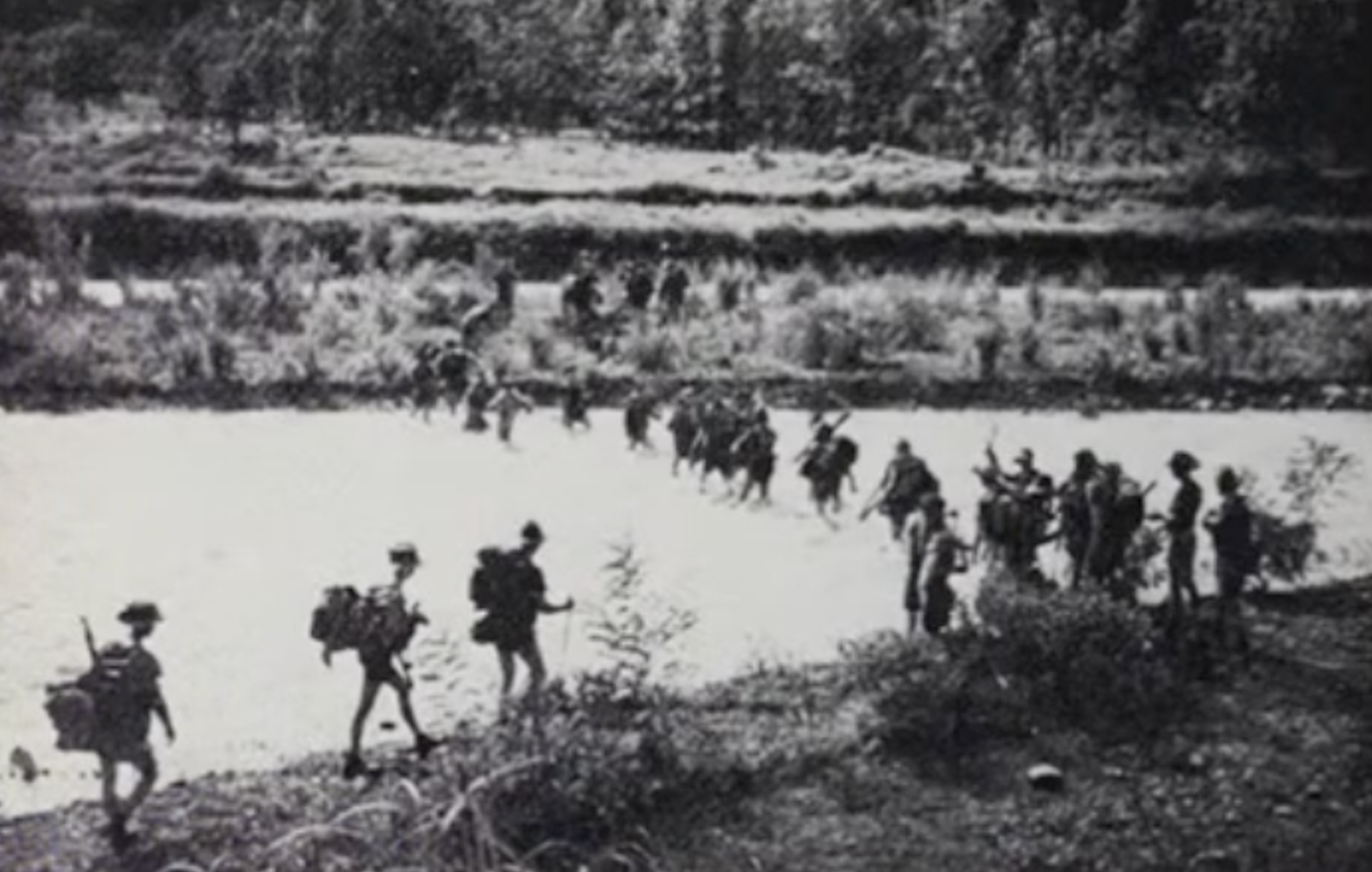
23 Brigade was 3000 men strong & organised into nine ‘columns’ of 300 to 400 men, drawn from 2 Duke of Wellington’s Regiment, 4 Border Regiment, 1 Essex Regiment, 60 Field Regiment RA & the Royal Engineers. Each column operated independently & was supplied entirely by air. It was commanded by Brigadier Lance Perowne, a tall & striking character, who had trained at Woolwich at the same time as Orde Wingate .
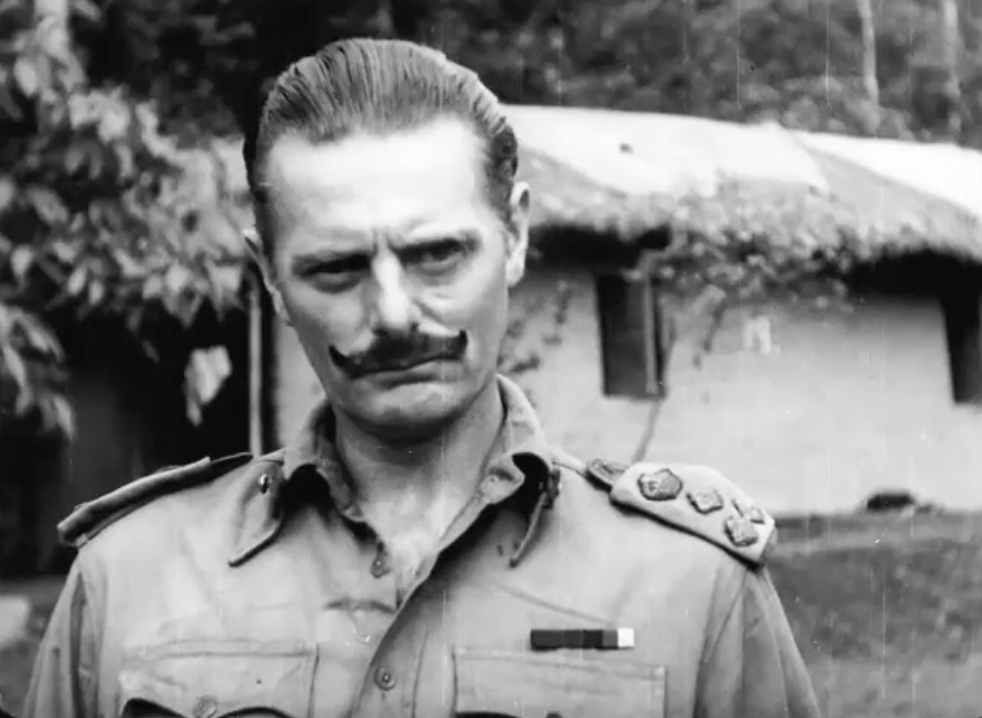
Originally one of six brigades in Wingates Special Force, 23 Brigade was transferred to Slim’s direct command on March 8 to protect the railway to Ledo & the eastern flank of Dimapur against attacks by Japanese who might approach it from the north, after bypassing Kohima. Wingate was furious.
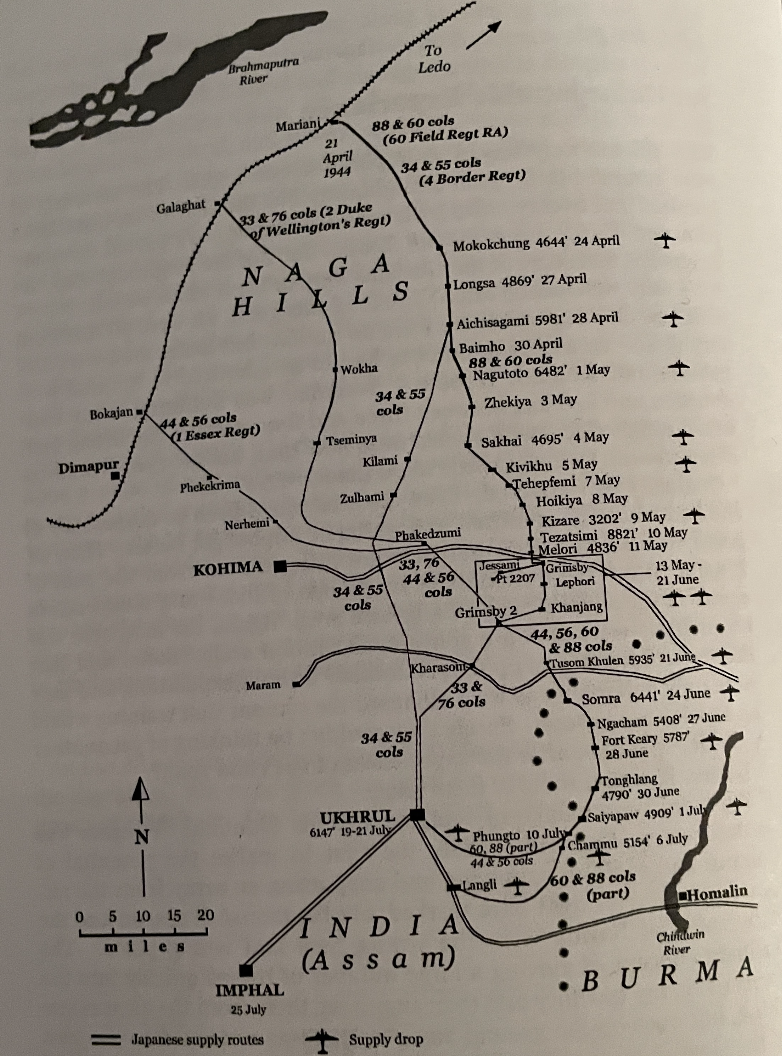
Begining on April 7, the columns trudged slowly eastwards through the dense rain forest that covered the Naga Hills, a series of sharp ridges & deep valleys containing fast flowing streams & rivers. The ridgelines lie at altitudes of up to 6,000 feet, so a day’s march of only a few lateral miles on a map could involve a 4,000 foot cimb & a similar descent. Lieutenant Philip Brownless:
“Moving across hundreds of miles of this mountainous, thickly jungle-covered country, with our mules, & carrying packs weighing more than 60 lbs, in addition to our rifles, grenades, ammunition & machine-guns, was an exhausting business. In places the mules had to be unloaded & they & their loads hauled up separately by the ropes used to tie on their loads. Several mules were lost falling down mountain sides.” (3)

The Chindits depended on supply by air. Whereas supply planes often landed during Operation Thursday, this was not possible for 23 Brigade, as there was insufficient flat land in the Naga Hills. Delivery had to be by parachute & the success rate was only 70%. Most supply drops were targeted to Naga villages, which were located on hill tops & friendly to the British.
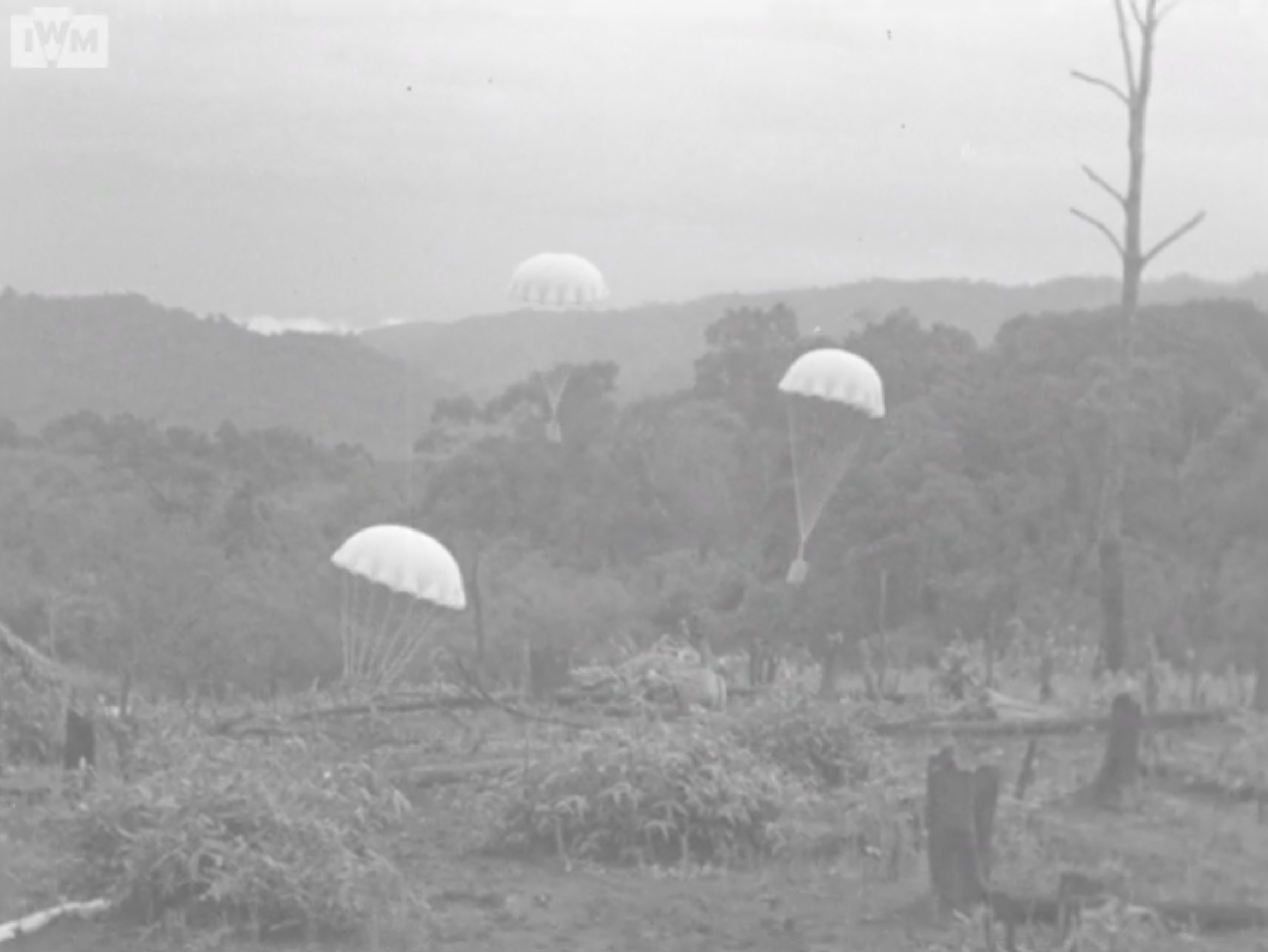
Drops to troops in valleys were less successful & bad weather also interfered with delivery. The two columns of 60 Field Regt went four days without rations before receiving a partial delivery on 5 July.
As they progressed, they fought intermittent skirmishes against Japanese foraging parties, to choke off potential sources of sustenance that might help feed the starving invaders. The war diaries record patrols, ambushes & the setting of booby traps on the tracks used by the Japanese & INA.
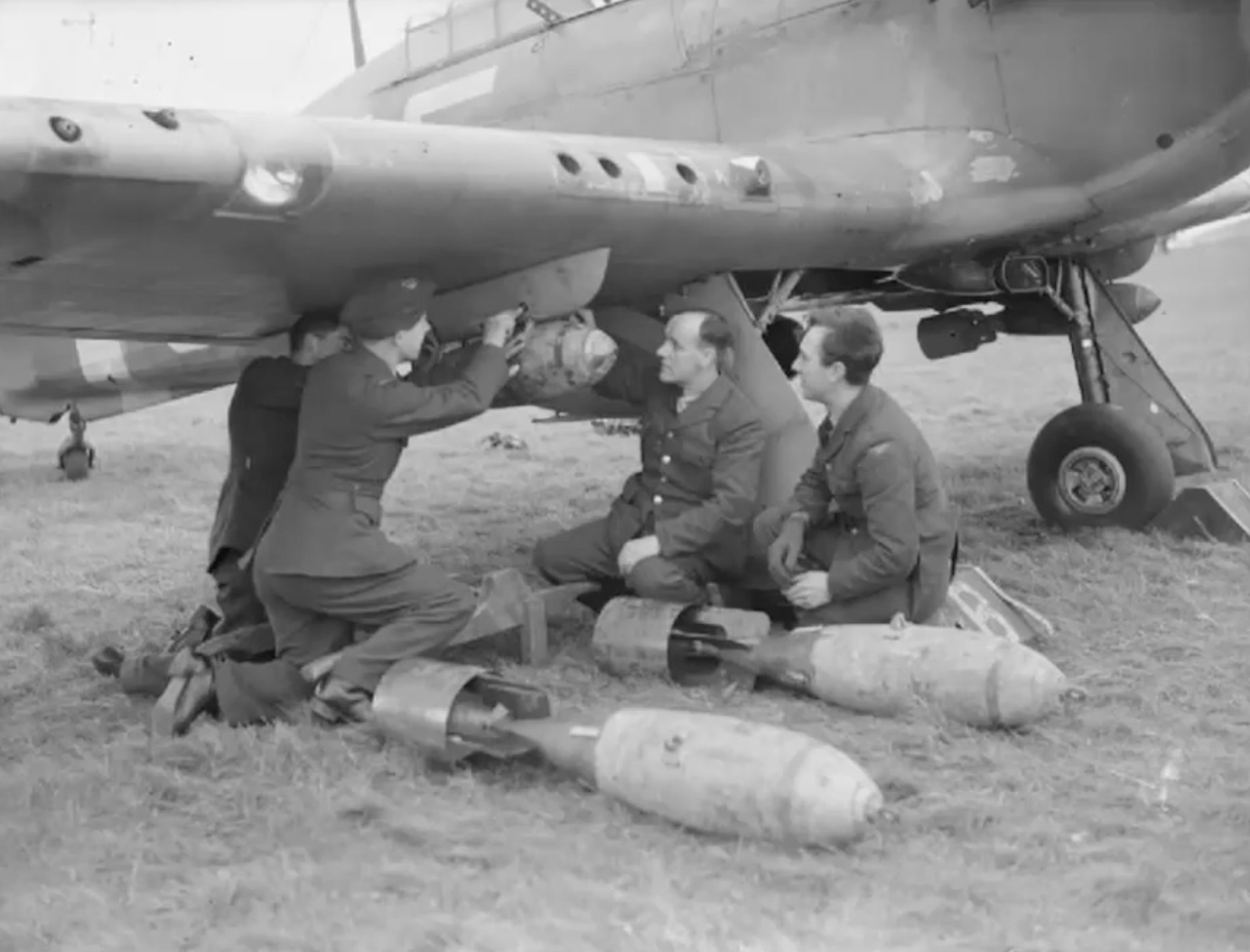
Attacks were made on dug in Japanese positions at several Naga villages, including Jessami & Phakekedzumi. These all failed, despite sometimes involving two or more columns. The lack of success in this context reflects the fact that Chindit columns lacked the firepower of normal infantry. For example, whereas a normal battalion would carry 63 Bren guns as standard, a Chindit column would only carry three. Even air support from RAF fighter-bombers was unable to make up for the deficit in firepower of Chindits required to carry their equipment through difficult terrain.
When the Japanese withdrew from Kohima, 23 Brigade was ordered to concentrate at Ukhrul to harass & destroy the fugitives. The Essex & 60 Field Regt columns marched through the Somra Tracts, which they referred to as the ‘Valley of Death’. Here the track was knee deep in mud, in which were found the corpses of mules & Japanese & even skeletons of refugees from the invasion of Burma in 1942. Private Ken Keen of 1st Essex:
“How we kept going, I honestly don’t know. I think it was the fear of being wounded & the Japs catching you. There was no chance of evacuating you. It’s unbelievable what the human body & flesh can stand, but at the back of your mind that knowledge was there, that you WOULD win & would be going home.” (3)
By the time the Chindits reached Ukhrul, most of the Japanese survivors had already passed, except for a few stragglers.
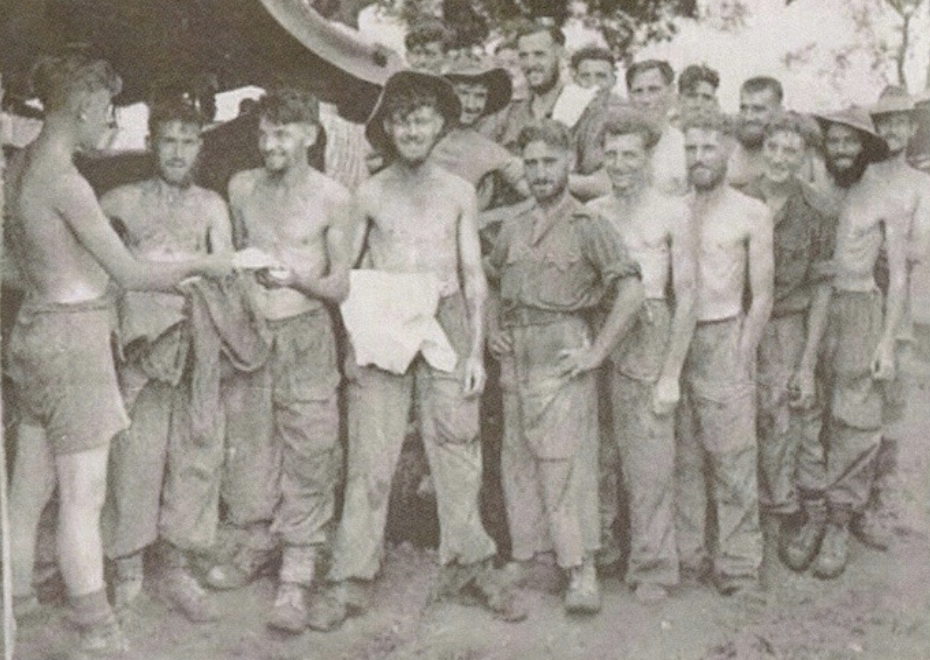
23 Brigade Casualties were 5%, much lower than those in Operations Longcloth (30%) & Thursday (27%). Nevertheless, exhaustion, sickness & malnutrition were prevalent. It took most units two to three months rehabilitation before they were well enough to begin light training.
Impact of the Chindits
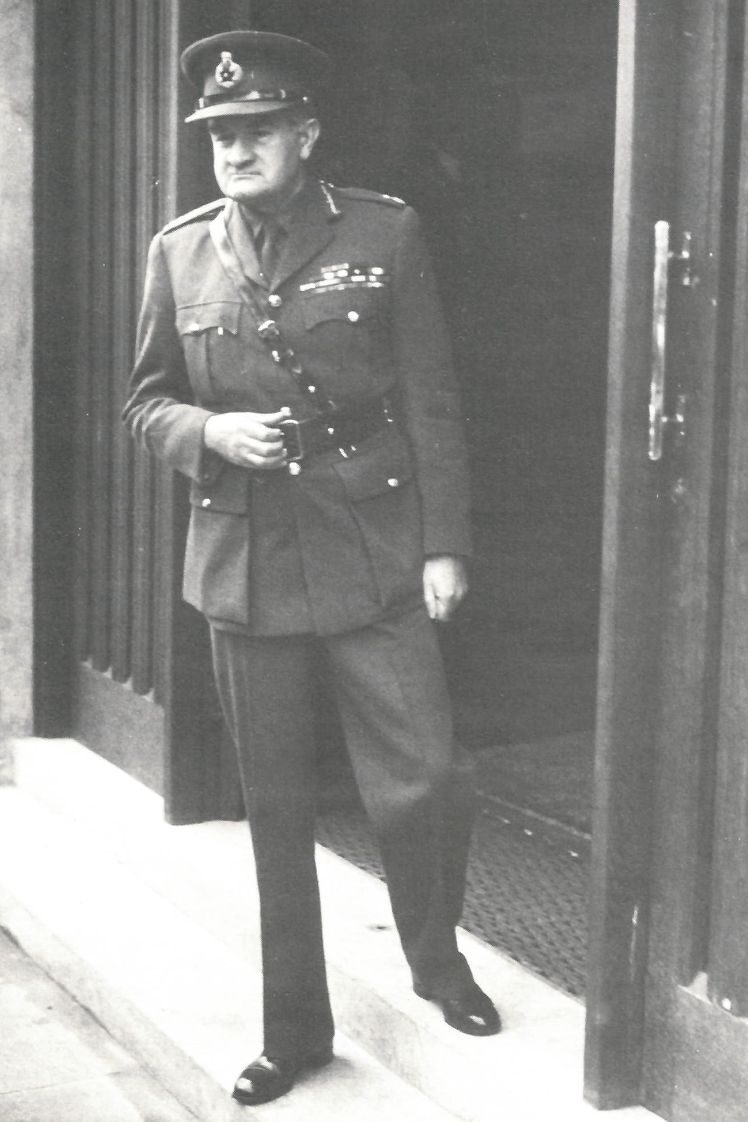
In his memoire “Defeat into Victory”, Field Marshal Slim wrote
“The Chindits gave a splendid example of courage & hardihood. Yet I came firmly to the conclusion that such formations, trained, equipped & mentally adjusted for one kind of operation were wasteful. They did not give, militarily, a worthwhile return for the resources in men, materiel & time that they absorbed.” (24)
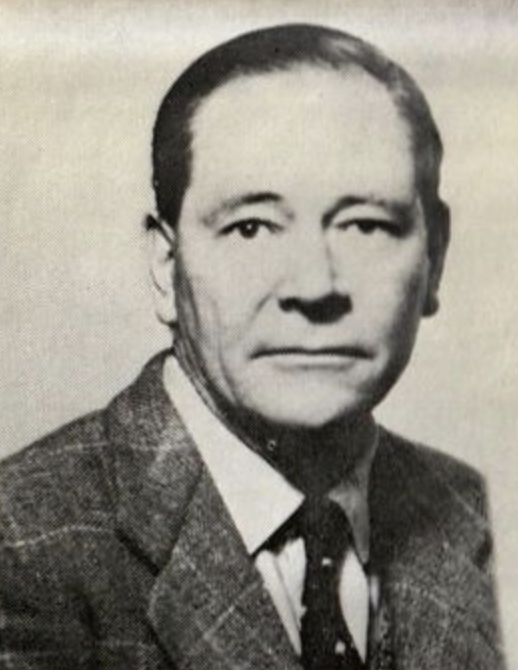
A less dismissive view was held by Sir Robert Thompson, Permanent Secretary of Defense for Malaya during the Emergency, one of the architects of the counter-insurgency plan. He had served as Calvert’s RAF Liaison Officer during Operations Longcloth & Thursday, earning the Military Cross & Distinguished Service Order in this role. He asserted that the Chindit concept was sound, but had been compromised by bad handling & use in roles for which they were not trained or equipped. Key examples were static defense of strongholds & assault of well-prepared enemy positions, as prevailed under Stilwell’s command.
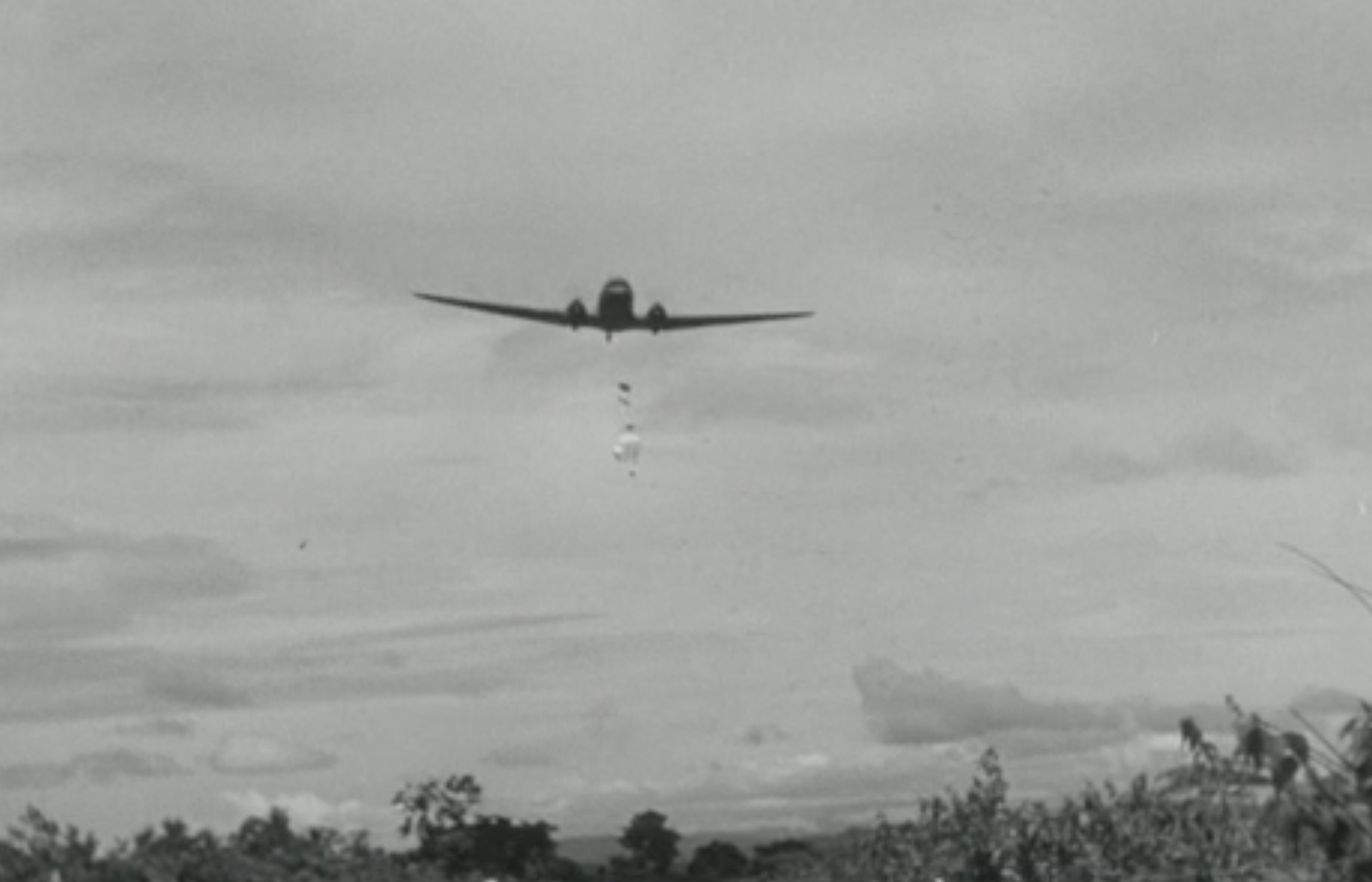
The relatively small scale of Operation Longcloth mitigated against any substantial or enduring military impact. However, it was an important step in demonstrating the viability of sustaining large units by air. With this experience, Slim prepared the resources to maintain a Division with its lines of communication cut.
This scenario came in February 1944, at the Battle of Admin Box. A situation that might otherwise have proved calamitous was turned, through aerial resupply, into 14th Army’s first decisive victory. After this success, supply by air became the foundation for British victory in Burma.
Lt General Mutaguchi, Commander of the Japanese 15th Army in Burma, was impressed by the Chindit’s ability to function effectively so far from any supply base. This encouraged his belief that an invasion in the opposite direction could also be successful, despite warnings that mountains & the Chindwin River would jeopardize his lines of communication. He ignored the crucial fact that Longcloth was only viable because of the Allied capacity for air transport at a massive scale. The Japanese air force had no chance of emulating this, but Mutaguchi used Operation Longcloth as precedent to justify his reckless gamble. As a consequence, his army collapsed in a logistic catastrophe after invading India in 1944.
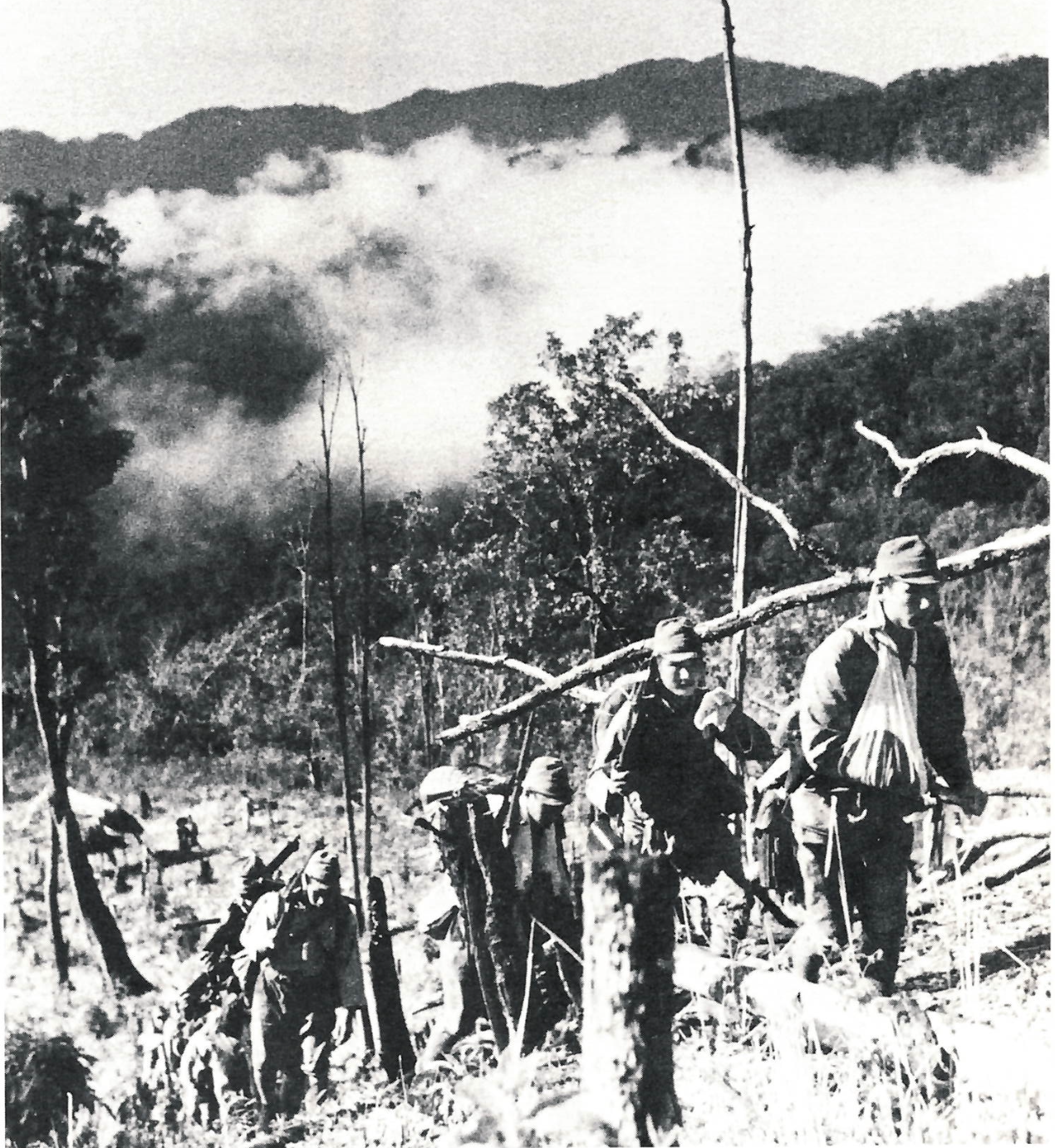
An RAF officer accompanying 16 Brigade found a large ammunition & stores dump north of Indaw. He plotted its position & later, in a light plane, led a force of bombers to this site to destroy it. When Japanese High Command were interrogated after the war, they said that the dump was the reserve ammunition for 31 Division & its destruction had “a very great effect on the fortunes of the Battle of Kohima.” (34)
After the failure of his invasion of India, Mutaguchi claimed that Operation Thursday had drawn off vitally needed Japanese units, helping tip the balance in favour of the allies. He later wrote
“The advance into Burma of General Wingate’s forces at the time of the Imphal campaign brought about serious failures in the strategy of the Japanese army. Wingate’s airborne tactics put a great obstacle in the way of our Imphal plan & were an important reason for its failure.”
In assessing this claim, one should consider if Mutaguchi was seeking to lessen the blame for his own cavalier neglect of logistical imperatives.
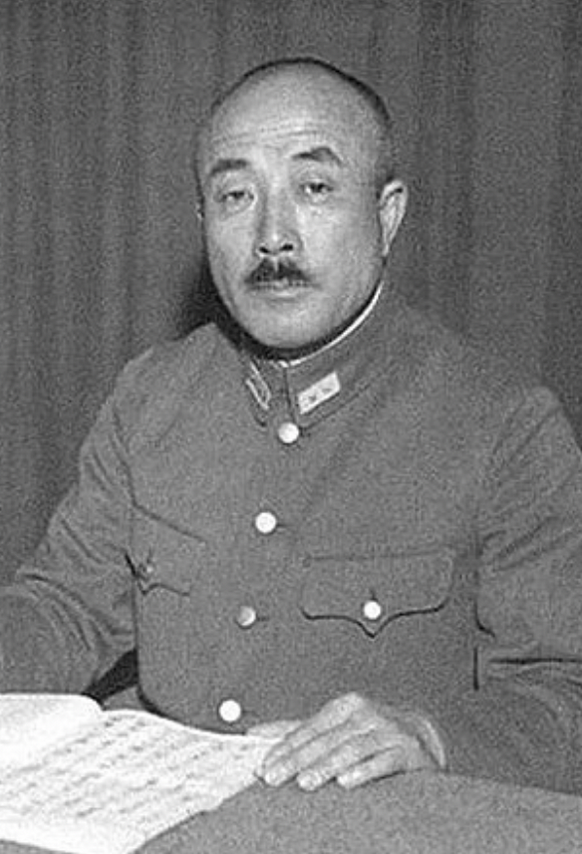
Operation Longcloth allowed Churchill to persuade President Roosevelt that the British could make an important contribution towards keeping the Chinese Nationalists in the war, thereby committing a million Japanese troops away from the US forces closing in on Japan. Recognition of this strategic potential led the US to send more resources to India & Burma.
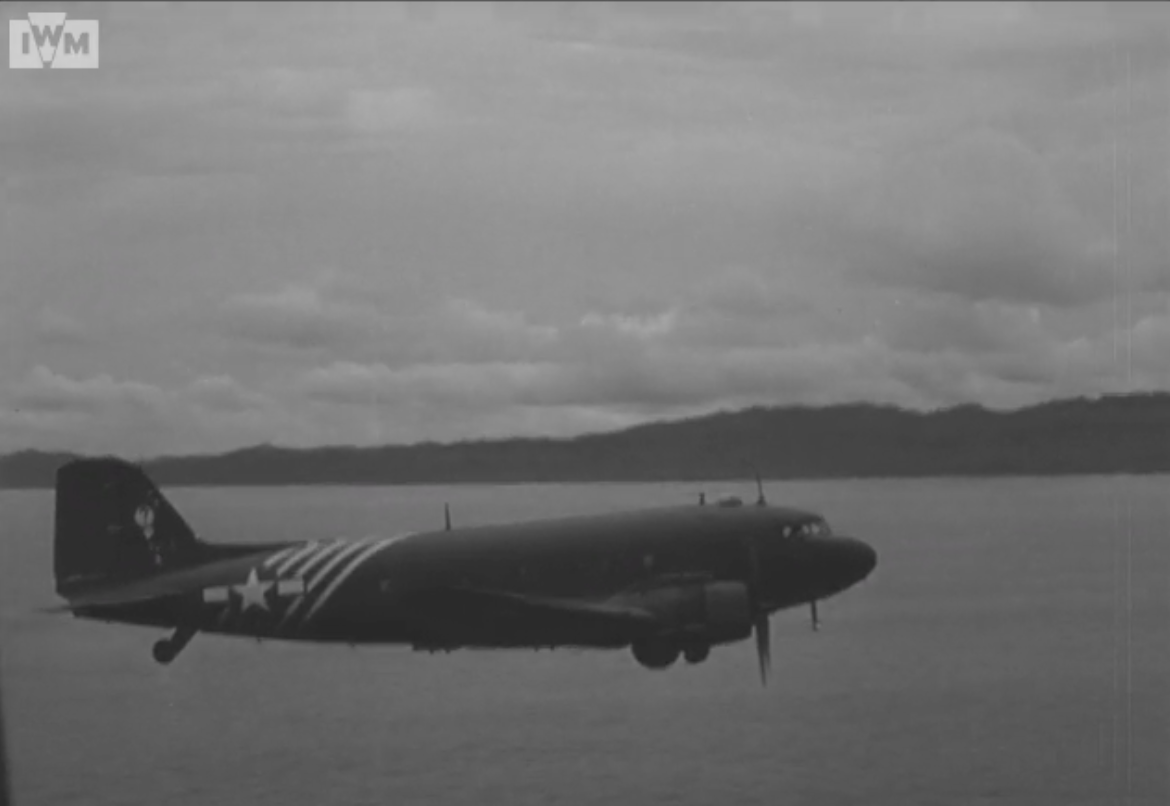
Operation Thursday had a major impact on Japanese air power in Burma. This had already been weakened by the contest for air domination above the Admin Box in February. In preparation for the invasion of India, the Japanese moved three Air Force squadrons forward to Shwebo & Onbauk airfields, which were better placed to attack Imphal. As Operation Thursday was completely dependent on air superiority, the USAAF 1st Air Commando Group attacked the enemy forward airfields in the days leading up to the glider landings. At least eighty enemy aircraft were destroyed, diverted or delayed from their planned roles supporting the Imphal offensive. What survived flew more than half their missions against the Chindits between March 10 & April 15, instead of attacking Imphal & Kohima.
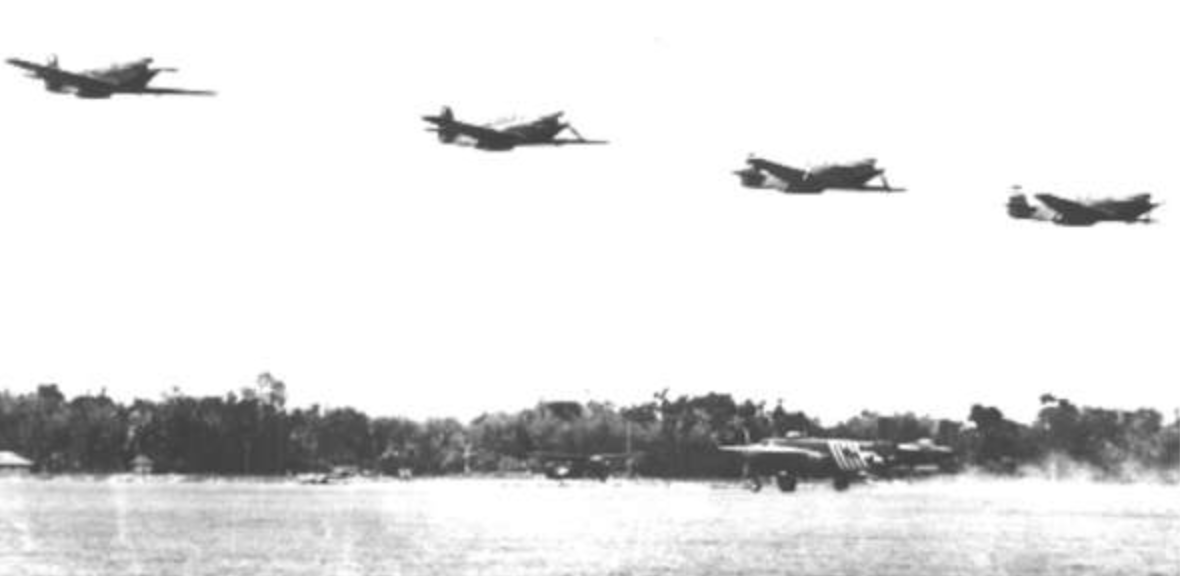
The Allied victory at Imphal would not have been possible without the air superiority that enabled delivery of unprecedented volumes of supplies & reinforcements. This aerial domination might not have been achieved had it not been for the Chindit operations bringing 1st Air Commando Group to the skies above northern Burma.