
For more details, click here
 Kohima Museum - York
For more details, click here
Fabulous day of Burma Campaign lectures at Cumbria’s Museum of Military Life in Carlisle on October 4. Book tickets at www.CumbriasMuseumofMilitaryLife.org


The Burma Campaign Society (BCS) was established in 2002 to promote understanding of Britain & Japan’s encounter during the Second World War.
To mark VJ80, BCS organised a visit to the UK by ten Japanese, aged from 12 to 78, whose fathers, grandfathers or great grandfathers once fought against the British. The purpose of their visit was to extend to the UK their work of “irei” – a Japanese word which means to console the spirits of the fallen; to pray for the repose of the souls of those who made the ultimate sacrifice in war.
On August 13, they laid a wreath at the Kohima Memorial beside York Minster. We were then delighted to welcome them at the Kohima Museum.

On August 15, the BCS group attended the national commemorative ceremony ‘Remembering VJ Day 80 Years On’ at the National Memorial Arboretum in Staffordshire. They paid their respects & forged connections with surviving British veterans & descendants of the fallen in Burma.
At the Arboretum, the BCS members prayed for the repose of the souls of the war victims at the Burma memorial, Chindit memorial & Thai Burma railway memorial.

Participating in the VJ Day ceremony was emotional for everyone. They were initially apprehensive about attending the historic ceremony as citizens of the former foe. They did not know what to expect or how the British would treat them.
Takuya Imasato (47) said he wanted his child to experience how the war is interpreted & commemorated in Britain. He commented that: “I did not feel any bitterness or animosities toward us.”
Another of the Japanese descendants at the ceremony, Hiroaki Fujimori (64), said some of the British people there approached him and shook hands, hugged him or even kissed him on the cheek: “I felt an overwhelming sense of welcome & kindness.”
Colonel Yoshiaki Himeda (56), of the Japanese Self Defence Force, said the ceremony was quite different from what he was used to in Japan: “It is as if a symbolic wall of the foe or friend quickly dissolved when I, in JDF uniform, saluted the military personnel & veterans in uniforms or with medals. There was more of a silent recognition, we were both children of men who endured something terrible.”

Chairperson of BCS Akiko Macdonald, who lives in the UK, said she was delighted with how the visit went. “Until now, I felt like I was alone, leading the society’s work of irei in the UK with the UK Burma veterans. My father survived, but in his post-war years, he suffered from survivor’s guilt & PTSD. In postwar Japan, if one returns home alive, he is not a war hero and is made to feel ashamed.”

Many BCS members grew up with fragmented stories, whispered but rarely discussed openly in postwar Japan. Wartime service, especially in campaigns marked by atrocities, was long treated with silence. Families often avoided the topic, torn between pride in their relatives’ endurance & discomfort over Japan’s imperial ambitions.
Yoshiko Fujiwara (70) reflected “We cannot change what happened, but we can listen, remember, & share. If my father fought in the atrocious conditions of Burma, perhaps our task is to fight against forgetting & to pay respect to those sacrificed. Now, as his descendants, we feel it is our duty to tell the story – not to glorify, nor to be ashamed, but to understand & have dialogues.”
The images & text above are taken, with permission, from an article in The Conversation by Kyoko Murakami. The full article can be read here.
Excellent VJ80 event at Bankfield Museum, Halifax, home of the Duke of Wellington’s Regiment Museum. 2 DWR fought at Kohima, covering the left flank in 23 LRP. Lots of interest in the Kohima Museum.


The guy on the next table belongs to an IJA living history group.


His Type 38 Rifle is much heavier than the Type 38 Carbine we have at the Kohima Museum.

And I know it’s a LMG, but a Bren Gun is quite heavy.


Kohima Museum will be remembering VJ80 with our friends at the fabulous York Army Museum.
Come and join us.

A great day at the fabulous York Army Museum, reminding visitors about the forgotten army & raising the profile of Kohima Museum.
A team from the Kohima Museum will be attending a Military Memorabilia Day on Saturday August 9th (10.00 – 15.00) at York Army Museum.

Want help researching military history or your military ancestors?
Drop into the Military Memorabilia Day. Bring along your archives, photographs & questions to put to experts from Kohima Museum, regimental museums, local archives, historical societies & regimental associations.
Drop in & chat to specialists, find out how to research your military ancestors, bring in objects, documents, medals or memorabilia you’d like to know more about and we’ll be very happy to help for FREE.
All welcome. No need to pre-book – just turn up at the fabulous York Army Museum in the centre of York.
Please don’t bring firearms!

The Kohima Educational Trust is delighted to announce a webinar on Thursday 24th July at 8pm with Dr Robert Lyman MBE, who will introduce guest speaker Lt Col Mike Tickner, who will discuss
“The Savage Wars of Peace: the Bloody Aftermath of VJ Day”
The war in the Far East ended abruptly, violently & chaotically following the nuclear bombs at Hiroshima & Nagasaki. While the Imperial Japanese Army had been defeated in Burma & was losing the war in the Pacific, her army in Malaya, Hong Kong, French Indo-China, the Netherlands East Indies, Manchuria & Siam was undefeated.
Many of these countries saw the end of the war as their chance for independence. Gurkha, Indian & British troops became responsible for restoring colonial rule & became locked into open combat.
The Allies’ most pressing task was recovering their prisoners of wars & civilian internees, knowing little about their condition or locations in camps across South East Asia, China & Japan.
Japan’s sudden surrender created a seismic resetting of the political and social order in the Far East as power vacuums were exploited for political gain & rapid decisions were made, with consequences which still reverberate today.
Find out more & register by clicking here
Kohima Museum’s Summer Exhibition ‘Victoria Crosses of the Burma Campaign’ opened on June 26th. It tells the stories of twenty VCs won during the Burma Campaign. Each story is described by the original citation in the London Gazette & also in cartoon form, as depicted in the Victor, a weekly comic published from 1961 until 1992. The comics were chosen to present the stories in a way that is more accessible to children & people for whom English is not their native language.

The exhibition also displays the VC won at Kohima by Captain John Randle, on loan from Captain Randle’s son.

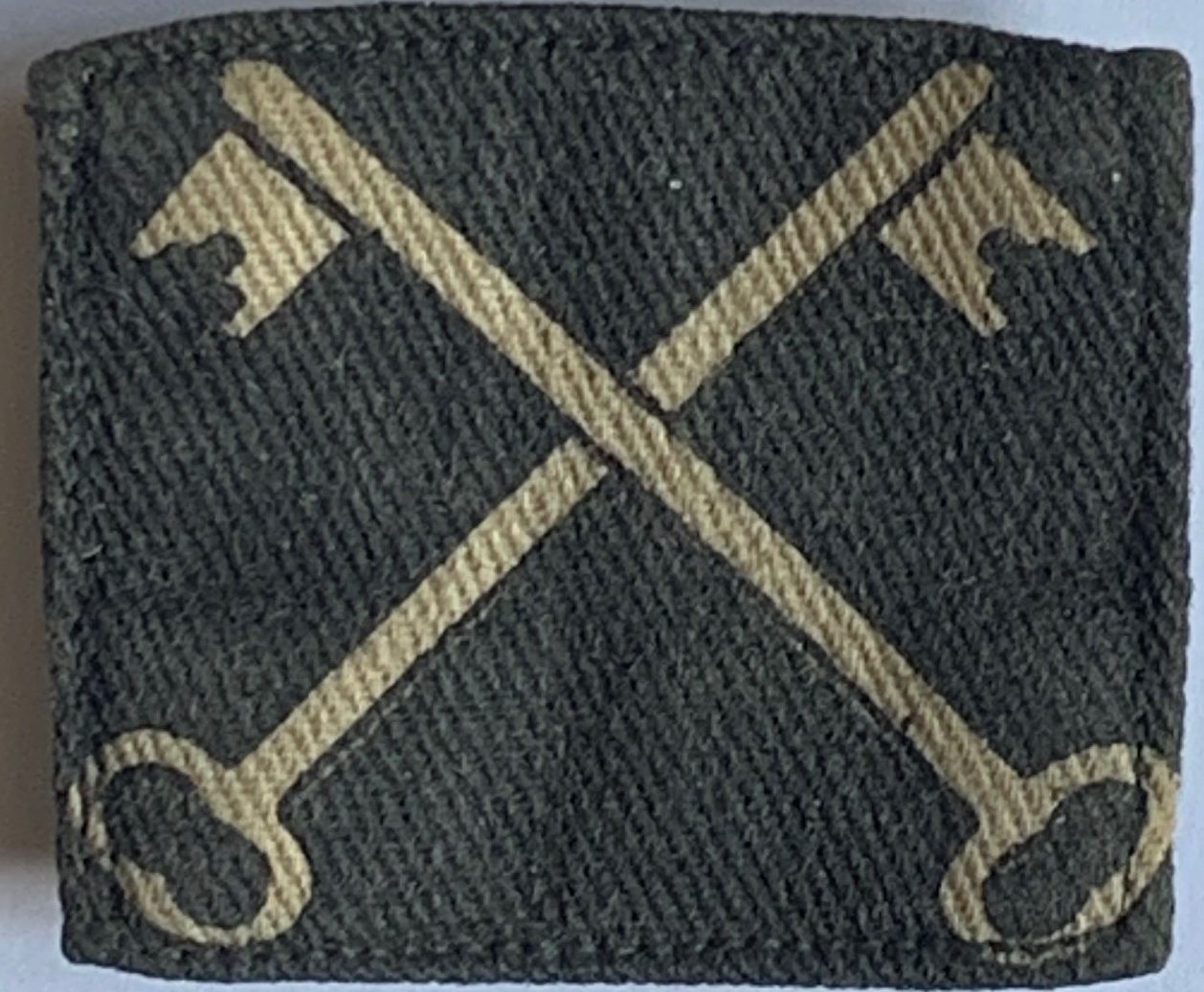
In addition, there are Captain Randle’s Royal Norfolk cap badge, crossed keys 2 Division insignia & a large flag that he captured from the anti-British Indian National Army. These artefacts have been donated to Kohima Museum by Captain Randle’s son, for which we are extremely grateful.


The flag required extensive renovation, which was funded by a grant to the museum from Arts Council England, awarded by Museum Development North.


The large number of visitors on June 26th included many relatives of Kohima veterans, as well as Mr Masaki Ikegami, Deputy Head of Mission at the Japanese Embassy.

The curatorial staff are delighted with the visitors’ numbers & enthusiasm.
